It was 11:51 on a Tuesday night. The house was silent, the only light coming from the cool glow of my monitor as I finalized a complex data set.
Then my phone buzzed against the desk.
It was a text from my mother, Angela.
There was no greeting, no question, just a notification.
We have reviewed the household budget. Effective immediately, your contribution is $1,600. Hunter needs organic meal prep for his rebranding phase.
$1,600 up from $900. All to fund the lifestyle of a twenty-nine-year-old man who refused to work.
I stared at the glowing screen and felt the quiet, heavy click of a lock turning in my mind.
I opened a new tab on my laptop and initiated protocol zero.
People ask me why I stayed. They look at my salary, my title, my credit score, and they ask why a twenty-six-year-old senior data analyst would choose to live in the dining room of her parents' Connecticut colonial.
They assume it was the housing market or convenience, or maybe a lingering attachment to my childhood home.
They are wrong.
I stayed because I was paying off a debt that didn't exist.
My workspace was a three-foot section of the mahogany dining table. My ergonomic chair was a rigid high-backed antique that dug into my spine during ten-hour shifts.
I had to wear noise-cancelling headphones, not to focus, but to drown out the sound of Hunter recording his mindset mastery vlogs in the study.
The room that was supposed to be mine, the room with the heavy oak door and the view of the garden.
But Hunter needed a quiet space to conceptualize his brand.
My mother had said, Isabella, you can work anywhere. You're so adaptable.
Adaptable? That was the word they used to dress up my erasure.
Every month on the first, I transferred $900 to my father's account.
I labeled it rent, but that wasn't accurate.
Rent implies a contract, an exchange of goods for services.
Rent tenants have rights. They have privacy.
They don't come home to find their lactose-free milk consumed and their parking spot taken because their landlord's son needed the driveway for a photo shoot.
I wasn't a tenant.
I was a silent investor in a business called the Anderson Family Image, and my dividends were zero.
I paid the electric bill, which surged every summer because Hunter insisted the house be kept at sixty-eight degrees.
I bought the groceries, organic free-range specific brands that Angela insisted upon, but never offered to pay for.
I covered the internet upgrades so Hunter could stream in 4K.
I did the math once late at night.
Between the direct payments and the incidental costs of keeping this household running, I was contributing nearly forty percent of my take-home pay to a house where I didn't even have a door to close.
And yet I stayed.
There is a concept in psychology called the servitude of expectation.
It is a specific kind of conditioning often reserved for daughters.
We are taught from the moment we can walk that our value is inextricably tied to our utility.
We are not loved for who we are.
We are loved for what we provide, the peace we keep, the burdens we shoulder, the checks we write.
I believed that if I just paid enough, if I was quiet enough, if I made their lives easy enough, I would eventually earn the right to be seen.
I thought I was buying their love installment by installment.
But love isn't a subscription service.
And looking around that perfectly curated dining room with its dust-free surfaces and stifling silence, I realized I wasn't paying rent.
I was paying a penalty for existing.
I was funding the very cage that kept me small.
I was the utility player, the one you only noticed when the service stopped working.
The house was quiet that Tuesday evening, but it wasn't peaceful.
It was the heavy, pressurized silence of a submarine diving too deep.
I could hear the hum of the refrigerator I had paid to repair last month.
I could hear the faint murmur of the television in the living room where my parents were watching a show I had paid the subscription for.
And I sat there in the dining room realizing that I had become a ghost in the only home I had ever known.
Invisible until the moment they needed to reach into my pocket.
Wednesday began with the kind of small, calculated cruelty that my family specialized in.
At ten in the morning, I was presenting a quarterly data review to my department head via Zoom.
It was a high-stakes call, one that could determine my trajectory for the next fiscal year.
I had the background blurred, my headset on, my voice steady as I explained the efficiency projections.
Then the front door slammed open.
Hunter stormed into the hallway, his voice booming as he shouted into his own phone.
Something about brand synergy and missed opportunities.
He didn't just walk past.
He stopped right behind me in the frame of my camera and started gesturing wildly.
Hunter, I whispered, muted, waving him away. I'm on a call.
He didn't even look at me.
He just leaned down right into my camera and said, Move your car. I need the driveway light for a story now.
My boss stopped talking mid-sentence.
My face burned.
I apologized, muted my video, and ran to move my sedan to the street so Hunter could film a thirty-second clip about productivity hacks.
When I came back, the meeting was over.
My boss sent an email suggesting we reschedule when I had a more professional environment.
That evening, the air in the house was thick enough to choke on.
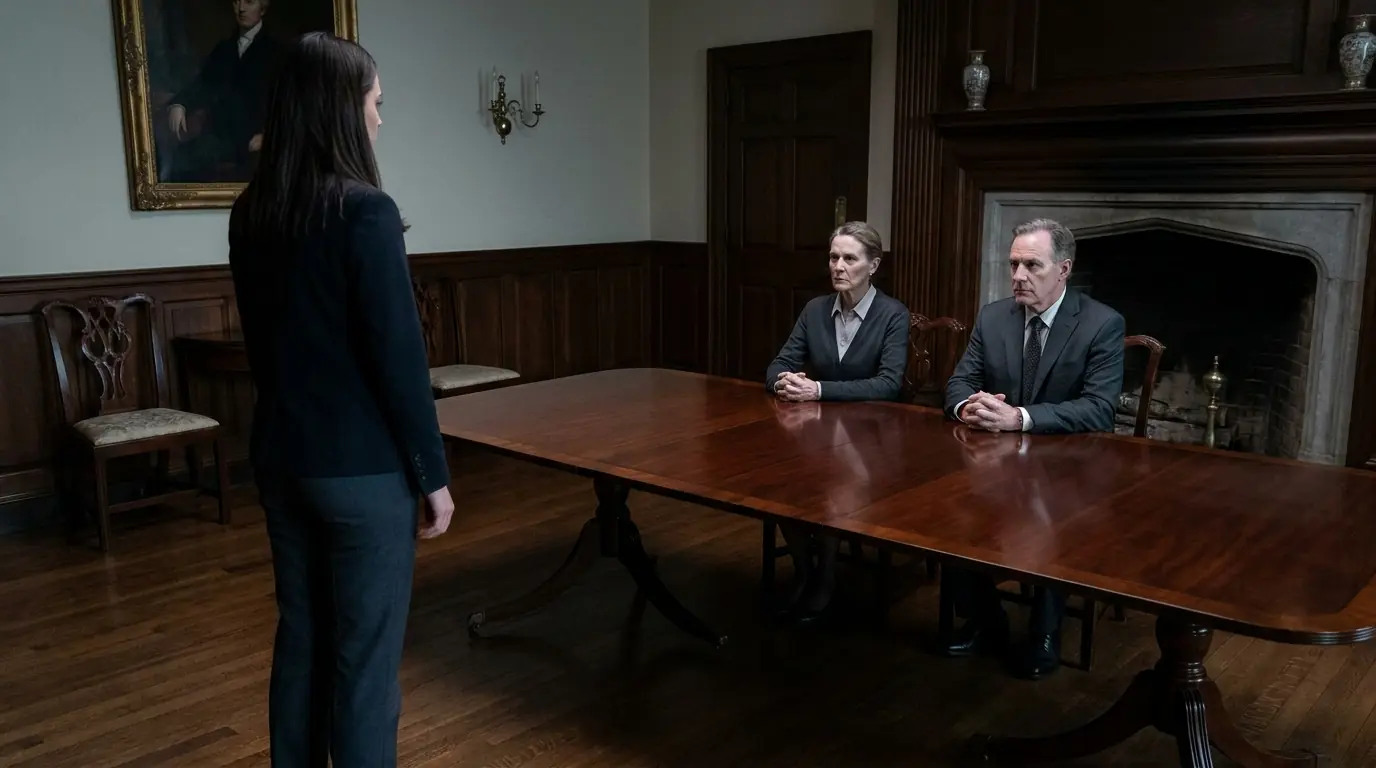
I came downstairs to find my parents, Angela and Edward, waiting at the dining table, my desk.
They were sitting with perfect posture, hands folded like a disciplinary committee.
Hunter was lounging on the sofa in the next room, scrolling on his phone, but I knew he was listening.
We need to talk about your contribution, my mother said.
Her tone was light, almost conversational, but her eyes were hard.
I stood by the doorway, not sitting.
I saw the text, I said. $1,600. That is nearly double what I pay now.
Costs have gone up, my father said, adjusting his glasses.
He didn't look at me.
He looked at a spot on the wall just above my left shoulder.
And with Hunter's new venture, we need to support him. He needs specific resources. Organic protein supplements. A faster server for his editing. It adds up, Isabella.
So, I am paying for Hunter's groceries now, I asked, my voice flat.
You are paying to live here, Angela snapped. You are paying for the roof over your head. Why must you make everything so transactional? We are family. We sacrifice for each other.
Sacrifice.
The word hung in the air, heavy and false.
I thought about the vacations I hadn't taken, the clothes I hadn't bought, the savings account that grew painfully slowly because every extra dollar went into this house.
I sacrifice every day, I said. I pay $900 a month to sleep in a dining room. I pay the electric bill. I buy the food.
I am not sacrificing anymore so Hunter can play influencer.
My father slammed his hand on the table.
It was a sudden, violent sound that made me flinch despite myself.
How dare you? he shouted. After everything we have done for you. We gave you everything. We raised you. And this is how you repay us? With selfishness? With greed?
Hunter laughed from the other room, a short, sharp bark of a laugh.
Told you she was stingy, he called out.
In that moment, watching my father's face turn red, watching my mother's lips thin into a line of pure disdain, something shifted.
I didn't feel guilty.
I didn't feel small.
I felt a strange, cold detachment.
I looked at them and I didn't see parents.
I saw a system in collapse.
In behavioral psychology, there is a phenomenon called the extinction burst.
It happens when a subject realizes that a behavior that used to produce a reward is no longer working.
Instead of accepting the change, they escalate.
They scream louder, push harder, get more aggressive, trying to force the old system back into place.
It is not a sign of strength.
It is a sign of panic.
They weren't angry because I was being unreasonable.
They were angry because the ATM was asking for a receipt.
They were terrified.
They knew deep down that without my compliance, their entire house of cards would fall.
The yelling, the insults, the demands, it was just noise.
It was the sound of a machine breaking down.
I looked at my mother, then at my father.
I didn't argue.
I didn't defend myself.
I didn't point out that Hunter was twenty-nine and unemployed.
I just nodded once.
Okay, I said.
Okay? my mother asked, blinking, thrown off by my sudden capitulation.
Okay, I repeated. I understand your position.
I turned and walked back up the stairs.
I didn't go to the dining room.
I went to the small guest bathroom, locked the door, and took a deep breath.
They thought they had won.
They thought they had bullied me back into submission.
They didn't know that okay was the most dangerous word I had ever spoken.
It wasn't an agreement.
It was a countdown.
I didn't pack that night.
Packing makes noise.
Packing signals intent.
Instead, I went to work the next morning as if nothing had happened.
I made coffee.
I moved my car for Hunter without him asking.
I was pleasant, compliant, invisible.
During my lunch break, I drove forty minutes to a complex I had bookmarked months ago.
It wasn't luxury.
It was a converted mill building, sturdy brick, and quiet hallways.
The property manager showed me a one-bedroom unit on the third floor.
It had a door that locked.
It had a kitchen that was mine.
It had silence.
I signed the lease on the spot, emptying my personal emergency fund to cover the deposit and first month's rent.
I didn't even wince at the number.
Freedom is expensive, but the alternative cost more.
The next three days were a military operation.
I brought empty boxes home from the office claiming I was organizing donations for a charity drive.
I labeled them carefully. Winter clothes. Old textbooks. Kitchen misc.
My parents watched me tape them up and nodded approvingly.
Good to see you decluttering, my father said, stepping over a box I had left by the door. Maybe you can help Hunter organize his equipment next.
I smiled.
Absolutely, I said.
Every morning I carried two boxes to my car.
Every evening I drove them to the new apartment before coming home.
I moved my books, my files, my winter coats.
I moved the small sentimental things, the photo of my grandmother, the award I won in college that my parents had never framed.
I left the furniture.
I left the bed.
I left anything that would leave a noticeable gap.
By Friday, my room, the dining room, looked exactly the same, but it was hollow.
The drawers were empty.
The closet held only the clothes I wore that week.
I transferred the utilities during a fifteen-minute break between meetings.
I forwarded my mail.
I updated my address with HR.
It was terrifying how easy it was to erase myself from a life I had supposedly been essential to.
On Saturday morning, the house was quiet.
My parents had gone to the country club for brunch, a ritual they maintained regardless of their financial struggles.
Hunter was asleep, recovering from a late night of networking.
I packed the last items into my laptop bag, my chargers, my current notebook, my toothbrush.
I took one last look around the dining room.
The high-backed chair stood empty.
The table was polished and bare.
There was no trace of me left.
I walked to the kitchen counter and placed the house key in the center of the fruit bowl.
Beside it, I left a single folded note.
I'm out. Good luck with the rebrand.
I didn't slam the door.
I didn't look back.
I walked to my car, got in, and drove away.
The silence inside the car was absolute.
No radio. No phone calls. Just the hum of the engine and the feeling of the road beneath me.
I drove to the mill building, walked up the three flights of stairs, and unlocked the door to my apartment.
It was empty.
It echoed.
It was perfect.
I sat on the floor in the middle of the living room and listened.
No television. No demands. No Hunter shouting about lighting.
Just the sound of my own breathing.
I checked my phone.
It was noon.
They would be home soon.
They would see the key.
They would read the note.
And for the first time in twenty-six years, I wasn't afraid of their reaction.
I was just gone.
The first night in my new apartment, I didn't sleep.
Not because I was afraid and not because I missed them.
I didn't sleep because I had a question that wouldn't settle.
Why $1,600?
It was a specific number.
Not $1,500. Not $2,000.
$1,600.
In data analysis, specific numbers aren't accidents.
They are results.
I sat on the floor of my empty living room, the smell of fresh paint and freedom filling the air.
I opened my laptop.
I logged into my bank portals, my credit monitoring services, and the shared family cloud drive I still had access to because of course, I was the one who managed the passwords.
I did what I do best.
I ran the numbers.
I started building a spreadsheet.
I titled it the ledger.
In column A, I listed every financial contribution I had made over the last four years.
Rent, utilities, groceries, emergency repairs, the loans to Hunter that were never repaid.
In column B, I listed the return on investment, the emotional support, the gratitude, the safety.
Column B remained entirely blank.
There is a concept I call the balance sheet of love.
We are taught that family is not a transaction.
That love shouldn't be measured in dollars and cents.
But that is a lie told by the people doing the taking.
When one side gives everything, money, labor, sanity, and the other side gives nothing but demands, that isn't a relationship.
It is embezzlement.
I looked at the totals on my screen.
I wasn't just a daughter.
I was a nonprofit organization.
And my parents were the corrupt board of directors draining the endowment.
But the math still didn't add up.
Even with Hunter's unemployment, my father's pension and my mother's part-time income should have covered the base mortgage.
They didn't need my $1,600 to survive.
They needed it for something else.
I dug deeper.
I pulled my full credit report, something I hadn't done in two years, because my score was always perfect.
I scrolled past the student loans I had paid off, past the credit card I paid in full every month, and then I stopped.
There, listed under secured loans was a line item I didn't recognize.
Second mortgage, home equity line of credit.
Opened three years ago.
Co-signatory: Isabella Anderson.
I stared at the screen.
I hadn't signed a mortgage three years ago.
Three years ago, I was working eighty-hour weeks to secure my promotion.
I clicked on the details.
The loan amount was $60,000.
The status was delinquent.
Ninety days past due.
My blood ran cold.
It wasn't the panic of a victim.
It was the icy clarity of a forensic accountant finding the smoking gun.
I accessed the digital loan documents through the bank's portal.
The password was my mother's birthday.
Naturally.
I downloaded the original application.
There it was, my signature, or rather a shaky, tracing-paper version of my signature dated on a day when I was at a conference in Boston.
They had forged my name.
They had taken out $60,000 of equity against the house using my credit score to secure the rate.
But where did the money go?
I cross-referenced the date of the loan with the family calendar.
Three years ago.
That was the year Hunter took a sabbatical to find himself in Europe.
Except looking at the withdrawal history, the money didn't go to airlines or hostels.
It went to a law firm in Stamford, a firm specializing in criminal defense.
I pieced it together in minutes.
Hunter hadn't gone to Europe.
Hunter had gotten into trouble, a DUI, maybe fraud, something expensive enough to require a five-figure settlement to keep quiet.
My parents had bailed him out.
They had mortgaged their home and my future to keep their golden child's record clean.
And now the money was gone.
The payments were three months behind.
The bank was calling.
That's why the rent hike.
That's why the desperation.
They didn't need organic meal prep.
They needed $1,600 to cover the monthly vigorish on the debt they had stolen from me.
I looked at the signature again.
That jagged, fake loop on the I.
It wasn't just a financial crime.
It was a declaration.
It said that my credit, my financial future, my very identity was theirs to use as collateral for Hunter's mistakes.
I closed the laptop.
I didn't feel sad anymore.
Sadness is for people who have lost something.
I hadn't lost anything.
I had just found the truth.
I wasn't their daughter.
I was their co-signer.
And I was about to default.
My phone started ringing at eight the next morning.
I was already at my new office, a real office with a door and a lock, organizing my files.
I looked at the screen.
Mother.
I let it ring.
Then father.
Then Hunter.
They called in a cycle over and over, a frantic digital drumbeat.
By ten, they were desperate.
They weren't just calling.
They were texting.
Where are you? We need to talk. The bank called.
They didn't know I knew.
They just knew the ATM was out of order.
At eleven, the receptionist buzzed my desk.
Isabella, there are some people here to see you. They say it's a family emergency.
I told her to let them wait.
I printed out a single document from my laptop.
I put it in a crisp manila envelope.
Then I walked out to the lobby.
They were standing by the glass doors, looking out of place in the sleek modern entryway.
My mother was wearing her country club distress face, perfectly applied makeup, slightly furrowed brow.
My father looked red and sweaty.
Hunter was pacing, filming something on his phone, probably a vlog about resilience in the face of adversity.
When they saw me, they rushed forward.
Isabella, my mother cried, reaching for me. Thank God. We've been worried sick. Why did you leave like that? You can't just disappear.
I stepped back, avoiding her grasp.
I didn't disappear. I moved out.
Moved out? my father sputtered. You can't move out. We have obligations, the house, the expenses.
The expenses are no longer my problem, I said calmly.
Hunter stopped filming and shoved his phone in his pocket.
Look, sis, stop being dramatic. Just come home, transfer the money, and we can forget this whole tantrum happened. I've got a big launch coming up, and I need the Wi-Fi upgraded.
There will be no transfer, I said. And there will be no upgrade.
You ungrateful little, my father started, stepping closer, his voice rising.
The receptionist looked up, alarmed.
We sacrificed everything for you, my mother wailed, playing to the audience in the lobby. We gave you a home. We supported you. And you abandon us when we need you most.
I looked at them.
Really looked at them.
The fear in their eyes wasn't love.
It was the panic of parasites realizing the host was dying.
You didn't support me, I said, my voice steady and loud enough for the room to hear. You stole from me.
I handed the envelope to my father.
He took it, confused.
What is this?
That, I said, is a copy of the home equity line of credit application dated three years ago. The one with my forged signature.
The color drained from his face so fast I thought he might faint.
My mother gasped, her hand flying to her mouth.
Hunter looked away suddenly, very interested in the floor.
I also included a copy of the police report I filed this morning, I continued. Identity theft and fraud. The detective was very interested in the timeline, especially the part where the funds were used to pay a law firm in Stamford.
Isabella, my father whispered, his voice trembling. You, you called the police on your own family.
You stole $60,000 from me, I said. You mortgaged my future to pay for Hunter's crimes, and then you tried to extort me for more to cover your tracks.
We were protecting the family, my mother hissed. We had to. Hunter, he has a future.
And I don't? I asked.
The question hung in the air.
Simple and devastating.
They didn't answer.
They couldn't.
I am not your retirement plan, I said. I am not your ATM, and I am certainly not your co-signer.
The police have the evidence.
The bank has been notified of the fraud.
I suggest you get a lawyer. A real one this time.
I turned around.
Isabella, wait. My mother screamed. Please, we'll lose the house.
I paused at the security door.
I looked back at them one last time.
Then I guess you better start packing, I said.
I swiped my badge.
The door clicked open.
I walked through and let it close behind me.
The heavy thud of the latch engaging was the best sound I had ever heard.
The leaves outside my window turned from green to gold and then to a stark, beautiful gray.
Inside, the walls of my apartment changed, too.
I spent a weekend painting them a deep, calming blue, the color of the ocean at night, the color of ink on a ledger.
It was the first design choice I had made in my adult life that wasn't dictated by someone else's preference or budget.
The silence in my life was no longer heavy.
It was spacious.
The fallout from that morning in the lobby was quiet, but total.
I didn't hear it directly.
I heard it through the grapevine, filtered through the few relatives who still spoke to me.
The bank foreclosed on the colonial three months later.
My parents tried to sell, but with the second mortgage and the market dip, they walked away with nothing.
They moved into a two-bedroom condo in a less prestigious zip code.
I heard my mother tell people they downsized to simplify.
Hunter didn't get his rebrand.
The last I heard, he was working at a high-end electronics store in the mall, wearing a blue polo shirt and explaining warranty options to customers who didn't care about his vision.
It wasn't a punishment I inflicted.
It was just reality finally catching up to him.
Without my subsidy, the entrepreneur had to become an employee.
I didn't feel triumphant.
I didn't feel vindictive.
I just felt light.
One evening, with the snow falling softly against the glass, I opened my laptop.
I pulled up the ledger.
I looked at the rows and columns that had defined my existence for so long.
The red ink. The deficits. The family debt tab that I had carried like a physical weight.
I highlighted the entire column labeled family support.
I didn't archive it.
I didn't save a backup.
I hit delete.
The numbers vanished.
The total at the bottom recalculated, shifting from a deficit to a surplus.
It was just pixels on a screen, but it felt like taking a breath after holding it for twenty-six years.
We are often told that cutting off family is a failure, that it is an act of cruelty.
But sometimes the most loving thing you can do is stop funding the dysfunction.
By closing the bank of Isabella, I forced them to finally face their own balance sheet.
I forced them to live within their means, emotionally and financially.
Maybe they will learn.
Maybe they won't.
But that is no longer a variable in my equation.
I realized then that self-worth isn't something you earn by overpaying.
You can't buy your way into being loved.
You can't lease respect.
Self-worth is an asset you already own.
And you have to protect it from anyone, even the people who gave you life, who tries to treat it like a liquid asset.
Breaking the cycle of financial abuse wasn't just about saving my credit score.
It was the ultimate act of self-love.
It was the moment I decided that my future was worth investing in.
I closed the laptop.
I walked to the window and looked out at the city lights.
I was alone, but I wasn't lonely.
I was solvent.
I was safe.
I was free.
If you've ever had to audit your own family to save your sanity, share this story.
You are not an ATM.
You are a person.