1. “I Love You Exactly as You Are.”
Every child needs to know they are loved before they become anything else.
Before the grades, trophies, good manners, achievements, talents, and plans for the future, there is a child standing in front of us who needs to hear, “I love you exactly as you are.”
This sentence does not mean the child never needs to grow. Loving someone as they are does not require accepting harmful behavior, laziness, dishonesty, cruelty, or disrespect. We can love a grandchild completely while expecting them to apologize, repair mistakes, work hard, and develop better habits.
The words address identity, not every action.
They say, “You do not have to become a different person to deserve a place in my heart.”
Children often receive messages about who they should be. They should be quieter, more outgoing, more athletic, more focused, less sensitive, more ambitious, or more like a sibling. Even well-meaning adults can make children feel as if love is waiting for them at the end of an improvement plan.
Grandmothers can create a different space.
We can look at the thoughtful child who needs time before joining a group and say, “I love the careful way you observe the world.”
We can tell the energetic grandchild, “Your excitement brings life into this house.”
We can reassure the sensitive child, “Your tender heart is not something you need to apologize for.”
Every personality has strengths and challenges. A shy child may need encouragement to speak, but they should not be made to feel defective for needing time. A confident child may need to learn humility, but their boldness does not have to be crushed. A deeply emotional child may need help with regulation, but their feelings are not evidence that something is wrong with them.
“I love you exactly as you are” gives children enough security to grow.
People often assume unconditional love will make children complacent. In reality, children are more willing to face weaknesses when they know those weaknesses will not cost them belonging. Shame makes people hide. Security makes honesty possible.
A grandchild who knows they are loved can say, “I made a mistake,” without believing the mistake has made them unlovable.
The sentence also protects children from comparison. Grandparents may be tempted to compare siblings and cousins because differences are easy to notice. One child receives higher grades. Another visits more often. One is affectionate, while another keeps feelings private.
Comparison can quietly turn family love into a competition.
“I love you exactly as you are” tells each grandchild that they are not required to outperform another person to be valued.
This message becomes especially important when children enter adolescence. Their bodies change, their confidence may become fragile, and social comparison becomes intense. They may feel too tall, too short, too quiet, too different, or not enough in ways they cannot explain.
Grandma may not be able to erase those insecurities, but she can become one steady voice that does not evaluate them according to appearance, popularity, or performance.
“You are growing and changing, but there is nothing you have to become before I can love you.”
A child who repeatedly hears this may eventually learn to offer the same acceptance to themselves.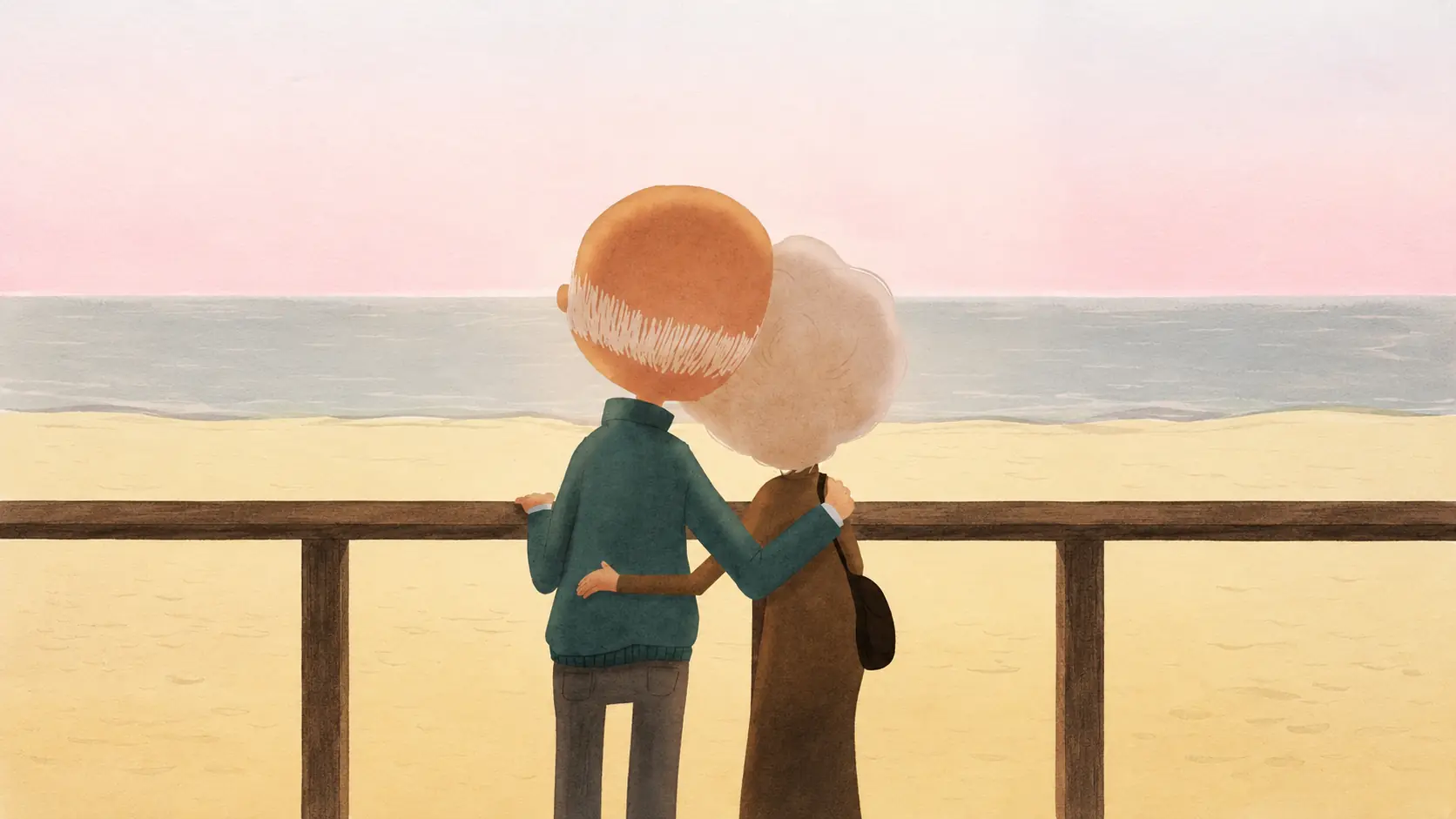
2. “You Never Have to Earn My Love.”
Many children learn to connect love with performance without anyone intending to teach it.
Adults become especially warm after good grades, excellent behavior, a successful game, or an impressive performance. When the child struggles, disappoints, or makes a serious mistake, the atmosphere becomes colder. The family may still love them, but the child experiences affection as something that expands and contracts according to achievement.
“You never have to earn my love” separates affection from approval.
Grandma may not approve of the choice, but love remains.
She may say, “I am disappointed that you lied, and we need to address it. You still do not have to earn my love.”
The consequence may remain. Trust may need to be rebuilt. The child may need to apologize and repair what happened. Unconditional love does not remove responsibility. It makes responsibility safer to face.
A grandchild who believes love can disappear may become skilled at hiding mistakes. They may lie, blame others, or perform perfection because the risk of being honest feels too great.
But a child who knows Grandma’s love is steady can bring her difficult truths.
They may begin with, “You’re going to be mad,” or, “Please don’t hate me.”
Grandma can answer, “I may have strong feelings about what happened, but I will not stop loving you. Tell me the truth so we can decide what comes next.”
Those words do not guarantee an easy conversation. They guarantee that the relationship will not be used as a threat.
Grandmothers must be careful about joking that affection depends on behavior. Statements such as “Grandma won’t love you if you don’t give me a hug” may sound playful, but a young child may not understand the joke.
Affection should never be used to force physical contact, obedience, or emotional performance.
A grandchild should know they can decline a hug and remain loved. They can feel angry and remain loved. They can disagree respectfully and remain loved.
This message also matters when grandchildren become adults. Adult grandchildren may choose careers, relationships, lifestyles, or places to live that are different from what Grandma imagined. She may have legitimate concerns or feel disappointed.
Love does not require pretending every choice is wise. It does require refusing to make belonging a reward for agreement.
A grandmother can say, “I see this differently, and I want to be honest about my concerns. You never have to earn my love by becoming exactly who I expected.”
That kind of love creates room for truth on both sides.
Many people spend adulthood trying to earn approval from voices that no longer even speak. They work harder, accomplish more, care for everyone, and still feel that rest must be deserved.
A grandmother’s words can interrupt that pattern.
“You have responsibilities. You should keep growing. But love is not a prize waiting for you after perfect performance. You already have mine.”
3. “I’m So Grateful I Get to Be Your Grandma.”
Children need to know not only that they are loved, but that their presence brings joy.
There is a subtle difference between being cared for and being enjoyed.
A child may know Grandma will feed them, protect them, and remember their birthday. But do they know she feels grateful that they exist? Do they see delight in her face, or do they mostly hear instructions and corrections?
“I’m so grateful I get to be your grandma” tells a child that the relationship is a gift, not a burden.
This message matters because children notice how adults react when they arrive. They notice whether the room seems brighter or more stressful. They notice whether Grandma puts down the phone, opens her arms, smiles, and uses their name with warmth.
The words say, “Being your grandmother is not merely another responsibility. It is one of the beautiful parts of my life.”
This should not place emotional pressure on the child. They are not responsible for Grandma’s happiness or loneliness. We should never suggest that grandchildren must visit, call, or behave a certain way to keep us emotionally stable.
Healthy gratitude sounds like appreciation, not obligation.
“I miss you when you’re away, but I am proud that you are building your own life.”
“I love our time together, and I understand that you have other people and responsibilities.”
Gratitude gives freedom. Guilt creates debt.
Grandmothers can express this message during ordinary moments. It does not need to wait for a birthday or graduation.
While preparing a snack, Grandma might say, “I was thinking today about how lucky I am to know you.”
During a quiet car ride, she might say, “I’m grateful I get to watch you grow.”
After a difficult day, she can still say, “Today was hard, but I am never sorry that I am your grandma.”
That last message is important. Children sometimes believe difficult behavior makes adults regret them. A grandchild may overhear exhausted comments or sense that their needs are inconvenient.
Grandma can separate the difficulty of the moment from the value of the relationship.
“This behavior needs to change, but you are not a problem I wish away.”
Gratitude also helps grandmothers resist taking the relationship for granted. Childhood can feel repetitive. The same games, stories, jokes, and questions return. Yet each stage passes quietly.
One day, the child will not ask Grandma to watch every trick. They will not need help opening the snack or tying the shoe. Their visits may become less frequent as their world expands.
Saying “I’m grateful I get to be your grandma” brings our attention back to the present.
It reminds the child that they are treasured.
It reminds Grandma that the ordinary moment is temporary.
4. “Your Thoughts and Feelings Matter to Me.”
Children do not always express thoughts and feelings in mature ways. They interrupt, exaggerate, withdraw, cry, or speak with a tone that makes listening difficult.
Yet beneath the imperfect communication is often a simple request: “Please take my inner world seriously.”
“Your thoughts and feelings matter to me” does not mean the child’s feelings decide every rule. A grandchild can feel angry about bedtime, and bedtime can remain. They can believe a boundary is unfair, and Grandma can still enforce it.
Feelings deserve acknowledgment, not automatic control.
Grandma might say, “I hear that you are disappointed. Your feelings matter, and the answer is still no.”
This teaches an essential life lesson: people can care about how we feel without giving us everything we want.
Listening helps children understand themselves. A young grandchild may know only that something feels bad. Grandma can help name the experience.
“You seem frustrated because the game ended.”
“Did that make you feel left out?”
“Are you angry, or did your feelings get hurt?”
Naming feelings does not make children more dramatic. It gives them a language that may reduce the need to communicate through behavior.
An older grandchild may need Grandma to listen without immediately offering advice. Many adults rush to solve because we want to remove pain. But quick advice can make children feel unheard.
A grandmother can ask, “Would you like ideas, or do you need me to listen first?”
That question respects the child’s developing ability to understand what kind of support they need.
Their thoughts matter too.
Grandchildren are growing up in a world different from the one Grandma knew. They may have perspectives shaped by technology, school, friendships, and cultural changes that she does not immediately understand.
Listening does not require agreeing with every opinion.
It means saying, “Explain how you see it. I want to understand before I respond.”
This attitude keeps the relationship open as grandchildren grow. A child who feels dismissed during small conversations may hide larger struggles later. A child who knows Grandma can listen without mocking may come to her with concerns about friends, school, identity, relationships, or mistakes.
Grandma should also respect privacy. Saying thoughts matter does not entitle us to every thought. Children and teenagers need appropriate personal space. We can make ourselves available without demanding disclosure.
“You do not have to tell me everything before you are ready. I am here when you want to talk.”
There are times when thoughts and feelings signal serious distress. Persistent hopelessness, fear, withdrawal, or statements about self-harm should not be dismissed as drama. The parents or guardians need to know, and the family may need professional support.
Taking feelings seriously sometimes means admitting that love and listening alone are not enough.
But in ordinary life, the message remains powerful.
“You may not always have the perfect words. You may not always be right. But your inner life is not an inconvenience to me.”
5. “I Believe in You, Even When You Don’t Believe in Yourself.”
Every child experiences moments when confidence disappears.
A grandchild struggles with reading, fails a test, misses the winning shot, receives a rejection, or compares themselves with someone who appears more capable. They may decide, “I can’t do it,” “I’m not good enough,” or “There is no point trying.”
In those moments, Grandma can hold hope until the child is ready to hold it again.
“I believe in you” should not become pressure. It should not mean, “You must succeed because I have declared that you will.”
A child may try hard and still fail. Some goals change. Some abilities require more support, and some paths are not the right fit.
Healthy belief focuses on the child’s capacity to learn, adapt, endure, and discover what comes next.
“I believe you can keep learning.”
“I believe you can face this disappointment.”
“I believe you can ask for help.”
“I believe this mistake is not the end of your story.”
This kind of confidence is larger than predicting a specific outcome.
Grandmothers have the gift of perspective. We have seen lives take unexpected turns. The child who struggled in school may become skilled in a trade, business, art, care work, or leadership. The teenager who did not know what they wanted may find direction slowly.
We know that one season does not define an entire life.
But perspective should not cause us to minimize the child’s present pain. Before saying, “You’ll be fine,” we can acknowledge what happened.
“I know you are disappointed. I saw how much this mattered to you. I still believe in your ability to find the next step.”
Belief is most credible when paired with practical support.
A grandchild struggling academically may need tutoring, evaluation, a different study method, or help speaking with a teacher. A child who lacks confidence socially may need encouragement to try one manageable interaction rather than being pushed into a large group.
“I believe in you” should not be used to deny genuine needs.
Sometimes believing in a child means recognizing that determination alone cannot solve everything and helping them access appropriate support.
Grandma should also avoid comparing her confidence with the child’s fear.
“Why don’t you believe in yourself? You have everything.”
The child may then feel ashamed not only of the struggle but of struggling at all.
A gentler response is, “You do not have to feel confident today. We can take one step while confidence catches up.”
That teaches courage. Courage is not always feeling certain. Sometimes it is acting carefully while uncertainty remains.
Grandchildren also watch whether Grandma believes in their ability to take responsibility. If she fixes every problem, speaks for them constantly, or protects them from every consequence, the hidden message may be, “You cannot handle life without me.”
Support should strengthen competence, not create dependence.
“I will help you prepare, but you can have the conversation.”
“I’ll stand beside you while you try.”
“Think about what you believe the first step should be.”
Belief becomes visible when Grandma allows the child to practice.
Years later, when the grandchild faces difficulty alone, they may remember her steady voice: “You have survived hard things. You can learn what you do not yet know. One setback cannot tell the whole story.”
6. “It’s Okay to Make Mistakes. They’re How We Learn.”
Children often believe adults value perfection because adults react strongly to mistakes.
A drink spills, an assignment is forgotten, an object breaks, or a poor decision creates consequences. The child sees the adult’s face change and may immediately move into fear, denial, or blame.
“It’s okay to make mistakes” does not mean mistakes are meaningless. Some mistakes are small. Others can cause serious harm. Learning requires honesty, accountability, repair, and a plan to act differently.
The message is not, “Anything you do is fine.”
It is, “Making a mistake does not make you a hopeless person.”
Grandma can say, “This choice hurt someone, so we need to take responsibility. You are still capable of learning from it.”
That separates shame from accountability.
Shame says, “I am bad.”
Responsibility says, “I did something wrong, and I can decide what to do next.”
Children who fear mistakes may avoid new experiences. They choose only tasks they already know they can complete. They hide errors, cheat, or blame others because failure feels like a threat to their identity.
A grandmother can model a healthier approach by allowing her own mistakes to be visible.
“I forgot the appointment, so I need to apologize and make a better reminder system.”
“I misunderstood you. I’m sorry.”
“I used the wrong ingredient, so the cake did not turn out. Let’s see what we can learn.”
Children benefit from seeing that adults do not become worthless when something goes wrong.
They also learn that mistakes are not erased by pretending.
Repair is part of learning.
If a grandchild damages something, they may need to help replace or fix it. If they hurt another person, they need to listen to the impact and offer a sincere apology. If they break trust, privileges may change while trust is rebuilt.
Grandma can guide the process without humiliating.
“What happened?”
“What were you trying to do?”
“Who was affected?”
“What can you do to repair this?”
“What will you try next time?”
These questions turn a mistake into a lesson.
Children also need permission to make age-appropriate mistakes without adults constantly rescuing them. A grandchild may forget a school item after several reminders. Bringing it to school every time may prevent discomfort, but it may also prevent learning.
Sometimes natural consequences teach responsibility more effectively than lectures.
Grandma can remain compassionate.
“I know this is frustrating. What reminder could help tomorrow?”
We should distinguish between safe learning mistakes and situations where adults must intervene. Children cannot be allowed to make dangerous mistakes merely to learn a lesson. Safety and development matter.
But where risk is manageable, experience helps knowledge become wisdom.
Grandmothers can reduce fear by responding to accidents differently from deliberate choices. A spilled drink after careless behavior may need cleanup and a reminder. It should not be treated as a moral failure.
“It was an accident. Let’s clean it together.”
Those words teach that problems can be solved without panic.
A child raised around calm repair may become an adult who can admit error, accept feedback, and change direction.
That is far more valuable than appearing perfect.
7. “You Make This World Brighter Just by Being in It.”
Children need to know their worth is not limited to what they produce.
Modern life often measures people through achievement, appearance, popularity, productivity, and income. Children begin receiving these messages early. They see who gets praised, chosen, followed, invited, and rewarded.
“You make this world brighter just by being in it” offers another measure of value.
It tells the grandchild, “Your existence adds something that cannot be replaced.”
This does not mean the child is the center of the universe or more important than everyone else. Healthy worth does not require superiority.
It means every person brings a unique presence into the lives around them.
Grandma can make the message specific.
“You notice when someone is lonely.”
“Your laughter changes the mood of the room.”
“You ask questions that make me think.”
“You are gentle with animals.”
“You bring creativity into our family.”
Specific observations help children understand how their presence affects others.
The sentence is especially important for children who are not receiving public recognition. Not every child wins awards, excels in sports, or earns the highest grades. Some qualities are quieter and less measurable.
A child may be loyal, patient, observant, forgiving, imaginative, or courageous in private ways.
Grandma can notice what the world may overlook.
This message can also help grandchildren during seasons when they feel useless or invisible. Teenagers may question whether they matter. Adult grandchildren may experience unemployment, illness, grief, or a loss of direction.
Their value has not disappeared because productivity has changed.
“You are still important to us while you are finding your way.”
Grandmothers should speak these words without making the child responsible for staying cheerful. A grandchild can brighten the world and still have sad, angry, or difficult days.
They do not have to perform happiness to remain valuable.
The message should never become, “You make my world brighter, so you must always be available to me.” That turns appreciation into pressure.
Healthy love says, “Your life is your own, and I am grateful that it exists.”
Children who know they matter may be better able to recognize the value of others. They do not need to diminish someone else to feel significant.
Grandma can connect the lesson to kindness.
“You bring something special into the world, and so does the child sitting beside you.”
Worth is not scarce.
One person’s light does not reduce another’s.
8. “I’ll Always Be a Safe Place for You to Come Home To.”
Home is more than an address. It is the experience of knowing there is a place where the truth can be spoken, the weary heart can rest, and mistakes can be faced without immediate rejection.
When Grandma says, “I’ll always be a safe place for you to come home to,” she is not necessarily promising that the grandchild can live in her house without limits forever. She is promising emotional safety, honesty, and connection.
Safety does not mean the absence of boundaries.
A grandchild may come home after making a serious mistake and still face consequences. An adult grandchild who needs temporary help may be welcomed with clear expectations. A family member engaging in harmful behavior may require firm limits.
A safe place is not an enabling place.
It is a place where dignity survives accountability.
“You are welcome here, but you cannot bring violence, abuse, or ongoing dishonesty into this home.”
“I will help you find a path forward, but I cannot make every decision for you.”
Boundaries protect the safety being promised.
For younger grandchildren, coming home may mean knowing Grandma’s house contains familiar routines, a listening ear, and affection that does not require performance.
They can say, “I had a bad day,” without immediately hearing how they should have handled it better.
They can admit, “I messed up,” without being labeled as a failure.
Grandma can listen first, then guide.
For teenagers, safety may mean knowing they can call if a ride becomes unsafe. It is important for young people to understand that avoiding immediate punishment is less important than getting out of danger.
Grandma might say, “If you are ever somewhere unsafe, call a responsible adult. We will deal with the decisions afterward. First, we get you home safely.”
This should be coordinated with the parents, but the central principle is clear: safety comes before pride.
For adult grandchildren, the idea of home changes again. They may not need a room. They may need a conversation where they can admit uncertainty, grief, financial trouble, relationship pain, or fear about parenting.
Grandma does not need to solve everything.
She can become the place where the grandchild does not have to pretend.
The word “always” should be used with integrity. We cannot promise unlimited physical ability, time, or resources. Age, health, and circumstances change.
But we can promise the spirit of the relationship.
“As long as I am able, you can bring me the truth.”
“I may not know how to fix it, but I will listen.”
“You may be far away, but you still belong in this family.”
Eventually, Grandma may no longer be physically present. Yet the sense of safety she created can remain inside the grandchild.
They may ask themselves, “What would Grandma say?”
If her voice was steady and compassionate, it may continue guiding them home emotionally long after her house is no longer available.
9. “I’m Proud of the Person You’re Becoming, Not Just What You Achieve.”
Children need recognition for achievements. It is appropriate to celebrate a good grade, graduation, performance, promotion, or completed goal.
But achievement cannot be the only place where pride appears.
If Grandma says “I’m proud of you” only when the grandchild wins, the child may begin to believe worth depends on success. They become afraid to fail because failure threatens not only the result but the relationship.
“I’m proud of the person you’re becoming” directs attention toward character.
Grandma can be proud when a child tells the truth despite fear.
She can notice when a grandchild includes someone who is lonely, keeps a promise, tries again, accepts responsibility, or handles disappointment with maturity.
These moments may never appear on a certificate, but they shape the adult the child will become.
“I’m proud of how kind you were to your cousin.”
“I’m proud that you admitted what happened.”
“I’m proud that you kept practicing even when it was frustrating.”
“I’m proud of the way you respected that person’s boundary.”
Specific praise teaches children which qualities matter.
Character-based pride does not mean ignoring effort or achievement. It means achievement is placed inside a larger picture.
A child who wins can be asked, “How did you treat your teammates?”
A child who earns a high grade can be praised for preparation and honesty, not simply the number.
A child who loses can still hear, “I am proud of the courage it took to try.”
Grandmothers should avoid using pride to control adult grandchildren. Statements such as “You would make me proud if you chose this career” can make affection feel conditional.
We can express hopes without making our approval the center of another person’s life.
“I have opinions because I care, but this is your decision. I am proud when you live with integrity and take responsibility for your choices.”
This respects adulthood.
It is also important to allow grandchildren to develop values that may not look identical to Grandma’s. Families pass down principles, but each generation interprets and applies them in new circumstances.
Grandma can remain honest about what she believes while continuing to recognize compassion, courage, discipline, and sincerity in a grandchild’s life.
The phrase “the person you’re becoming” reminds us that growth is unfinished.
Children will have setbacks. Teenagers may act with maturity one day and astonishing impulsiveness the next. Adult grandchildren may change direction more than once.
Becoming is not a straight line.
Pride should not trap the child in a fixed role. The responsible grandchild should still be allowed to need help. The successful one should be allowed to fail. The cheerful one should be allowed to feel sad.
We are proud of a person, not a performance they must maintain forever.
10. “No Matter What Happens, We’ll Figure It Out Together.”
Life eventually presents every child with problems that cannot be solved by a simple sentence.
They will face disappointment, conflict, loss, illness, financial difficulty, uncertainty, and choices with no perfect answer. There will be moments when they feel overwhelmed by the size of what has happened.
“No matter what happens, we’ll figure it out together” offers companionship in the face of uncertainty.
It does not promise that Grandma can fix everything.
She cannot guarantee that the relationship will be restored, the job will return, the illness will disappear, or every consequence will be avoided.
The promise is about process.
“We will tell the truth.”
“We will identify what can be done.”
“We will ask for help when necessary.”
“We will take one step, then the next.”
Together does not mean Grandma takes over. A grandchild must gradually learn to make decisions, accept consequences, and solve problems.
The grandmother’s role changes with age.
For a young child, she may help repair a broken toy or plan an apology.
For a teenager, she may listen, offer perspective, and involve the parents.
For an adult grandchild, she may ask thoughtful questions while respecting that the final decision belongs to them.
Support should communicate confidence.
“I will not abandon you, and I believe you can participate in finding the answer.”
This phrase becomes especially meaningful after a mistake.
A grandchild may confess something with the expectation that the family will see only disaster.
Grandma can respond, “This is serious. We cannot pretend it did not happen. But panic will not help us. We will tell the truth, understand the consequences, and decide what responsible action looks like.”
That calmness can prevent fear from creating additional dishonesty.
Together also means recognizing when the family needs outside help. Some situations require a teacher, doctor, counselor, attorney, financial professional, or other qualified support.
Grandma should not pretend love makes her an expert in everything.
“We will figure it out together” may mean, “We will find someone who knows more than we do.”
That is wisdom, not failure.
This sentence is also comforting in grief, where there may be nothing to solve.
The family cannot fix a death or remove every sorrow. But they can figure out how to move through the next day together.
“We do not have to know how the whole future will look. We can face today.”
Children who hear this learn that uncertainty does not automatically mean catastrophe. Problems can be divided into steps. Help can be requested. Difficult feelings can be carried in relationship.
Eventually, the grandchild may speak the same words to someone else.
“We will figure it out together.”
That is how resilience travels through generations.
The Words That Become a Grandchild’s Inner Voice
Children borrow our words before they develop their own.
At first, Grandma says, “I love you exactly as you are.”
Years later, the grandchild may tell themselves, “I do not have to become someone else to deserve love.”
Grandma says, “You never have to earn my love.”
The child learns, “My worth is not decided by one achievement or mistake.”
Grandma says, “Your thoughts and feelings matter.”
The child learns to notice what is happening inside instead of burying every emotion.
Grandma says, “I believe in you.”
The child hears hope during failure.
Grandma says, “Mistakes are how we learn.”
The child becomes more willing to admit error and repair harm.
This is how spoken love becomes emotional structure.
The phrases do not work because they are perfect. They work when they are supported by behavior.
“I love you exactly as you are” must be accompanied by respect for the child’s personality.
“You never have to earn my love” must remain true after disappointment.
“Your feelings matter” requires actual listening.
“I’ll always be a safe place” requires protecting privacy, avoiding humiliation, and responding responsibly to difficult truth.
“No matter what happens, we’ll figure it out together” requires showing up when life is inconvenient.
Children notice whether actions and words match.
Grandmothers also need to avoid overwhelming grandchildren with constant emotional speeches. A few sincere words spoken naturally often carry more power than long declarations that make the child uncomfortable.
The message can be written in a birthday card, spoken in the car, whispered at bedtime, or offered while washing dishes together.
Ordinary settings make the words feel real.
Some grandchildren may respond with affection. Others may become quiet, shrug, or change the subject. Teenagers may appear embarrassed.
Do not assume the words were wasted.
Children sometimes protect themselves from tenderness because receiving it feels vulnerable. The sentence may remain even when the immediate response is small.
Say it without demanding anything back.
“I wanted you to know. You do not have to answer.”
That makes the gift freely given.
What Grandmothers May Need to Say to Their Grown Children Too
These messages are not only for grandchildren.
Many grandmothers have grown sons and daughters who still need to hear that love is not based on achievement. They may be parents themselves, carrying responsibilities no one fully sees. They may still wonder whether we are proud of them or whether old disappointments define the relationship.
It is never too late to speak more clearly.
“I loved you then, even when I did not express it well.”
“You should not have had to earn my affection.”
“Your thoughts and feelings matter to me now.”
“I am proud of the person you have become.”
Some conversations may also require apology.
A grandmother may realize she compared siblings, used harsh words, dismissed feelings, or offered approval mainly after achievement. She cannot rewrite childhood, but she can acknowledge its truth.
“I wish I had told you more often that I loved who you were, not only what you accomplished.”
“I can see that I sometimes made my approval feel conditional. I am sorry.”
An apology should not demand immediate comfort or forgiveness. The adult child may have feelings that take time to express.
Listen.
Repairing the relationship with grown children can also make the grandparent-grandchild relationship healthier. Grandchildren benefit when the adults around them are honest, respectful, and willing to change.
We should not use grandchildren as substitutes for unresolved relationships with our children. They are not opportunities to prove that we could have parented perfectly.
They are people deserving love in their own right.
Our role is to support the parents, honor appropriate boundaries, and contribute warmth without competition.
Love Must Remain Strong Enough to Tell the Truth
Beautiful words should never become empty reassurance.
A grandmother who loves deeply must sometimes say difficult things.
“I love you exactly as you are, and the way you treated that person was wrong.”
“You never have to earn my love, but trust must be rebuilt after dishonesty.”
“Your feelings matter, and so do the feelings of the people you hurt.”
“I believe in you, which is why I will not do everything for you.”
“We will figure it out together, but I cannot protect you from every consequence.”
This is mature love.
It does not abandon tenderness when responsibility appears. It does not abandon responsibility in order to appear tender.
Children need adults who can hold both.
If every word is praise, praise loses meaning. If every conversation is correction, the relationship becomes heavy.
Grandma can create balance by noticing the whole child.
Correct the behavior.
Celebrate the growth.
Listen to the pain.
Protect the boundary.
Remain connected.
The child learns that truth and love do not have to be enemies.
Before the Words Become Memories
Grandchildren grow quietly.
The child who once climbed into Grandma’s lap becomes too tall to carry. The little voice changes. The drawings become school projects, then résumés, applications, wedding plans, or photographs of children they are raising themselves.
Grandma may assume there will always be another opportunity to say what matters.
But time does not make promises.
Speak now.
Do not wait until the graduation to say, “I believe in you.”
Do not wait until the child is heartbroken to say, “You never have to earn my love.”
Do not wait until they leave home to say, “You make the world brighter.”
These words belong in ordinary life.
Say them after breakfast.
Say them while driving.
Write them in a note.
Offer them after an argument has been repaired.
Say them when the child has accomplished nothing special.
That is when unconditional love becomes most believable.
One day, grandchildren may forget the exact sentences. But they will remember the emotional meaning.
They will remember that Grandma’s love did not disappear when they struggled.
They will remember that she listened.
They will remember that her pride was not limited to grades, trophies, money, or status.
They will remember that home remained emotionally available.
They will remember that when life became confusing, she helped them find the next step instead of making them feel foolish for being lost.
This is the legacy hidden inside language.
A grandmother may not leave great wealth. She may not be able to solve every problem or witness every stage of the grandchild’s life.
But she can place words in their heart that continue working after the conversation ends.
“I love you exactly as you are.”
“You never have to earn my love.”
“I am grateful I get to be your grandma.”
“Your thoughts and feelings matter to me.”
“I believe in you.”
“It is okay to make mistakes.”
“You make the world brighter.”
“You can always bring me the truth.”
“I am proud of who you are becoming.”
“We will face what comes next together.”
These are not merely beautiful things to say.
They are promises about the kind of relationship we are willing to build.
They tell a child that love can be steady without becoming controlling, encouraging without becoming demanding, and honest without becoming cruel.
And long after Grandma’s voice is no longer close enough to hear, those words may continue speaking:
“You are loved. You are valuable. You are not alone. There is still a way forward.”