1. “What Do You Think Makes Someone a Good Person?”
Children often begin with simple definitions of goodness.
A good person shares. A good person follows rules. A good person does not hit. A good person helps others.
These answers are meaningful because they reveal the moral structure children are building from what they see and hear. But as grandchildren grow, Grandma can help them understand that goodness is deeper than looking well behaved.
A child may follow rules mainly because they fear punishment. Another child may break a rule while trying to protect someone. A person can behave politely in public and still treat family members poorly in private.
“What do you think makes someone a good person?” invites a grandchild to consider character rather than appearance.
Grandma can follow with gentle questions.
“Can a good person make a bad choice?”
“What should someone do after they hurt another person?”
“Does being good mean never becoming angry?”
“Can someone seem nice but still be unkind?”
The goal is not to confuse a young child. It is to help them understand that goodness includes honesty, responsibility, empathy, courage, and repair.
A grandmother can explain that good people are not perfect people. Everyone becomes impatient, selfish, jealous, or afraid at times. Character is often revealed in what a person does after recognizing a mistake.
Do they tell the truth?
Do they apologize?
Do they try to repair the harm?
Do they change their behavior?
This distinction protects children from believing one mistake defines their whole identity. A grandchild who lies should be held responsible, but they should not be labeled forever as a liar.
Grandma can say, “You made a dishonest choice. What would a good person do now?”
The question invites responsibility without shame.
This conversation also allows Grandma to challenge the idea that goodness is the same as being agreeable. Some children are praised as good because they are quiet, compliant, and easy for adults to manage. But a child may need to speak up when another person is being mistreated.
Kindness can require saying, “That is not right.”
Goodness may mean refusing to join in gossip, telling an adult when someone is unsafe, including a child everyone else ignores, or admitting the truth when silence would be easier.
Grandma can share examples from ordinary life rather than offering only abstract definitions.
“A good person returns money they were given by mistake.”
“A good person notices when someone is left out.”
“A good person does not use another person’s weakness for a joke.”
“A good person can disagree without becoming cruel.”
Grandchildren should also learn that people are more complicated than a single label. We should be cautious about calling some people entirely good and others entirely bad. Harmful actions need to be named clearly, and children must be protected from unsafe people. But moral understanding includes recognizing that human beings can contain strengths, wounds, poor choices, and the possibility of change.
Grandma might say, “We judge behavior carefully, but we should be thoughtful about deciding we know everything inside another person.”
The question can return many times throughout childhood. After a story, movie, family event, or school conflict, Grandma can ask, “Who acted like a good person in that moment? What made you think so?”
The grandchild begins learning to examine choices rather than relying only on appearances.
One day, when they face pressure to choose between popularity and integrity, they may remember that goodness is not simply being liked.
It is becoming the kind of person whose actions make other people safer, stronger, and more respected.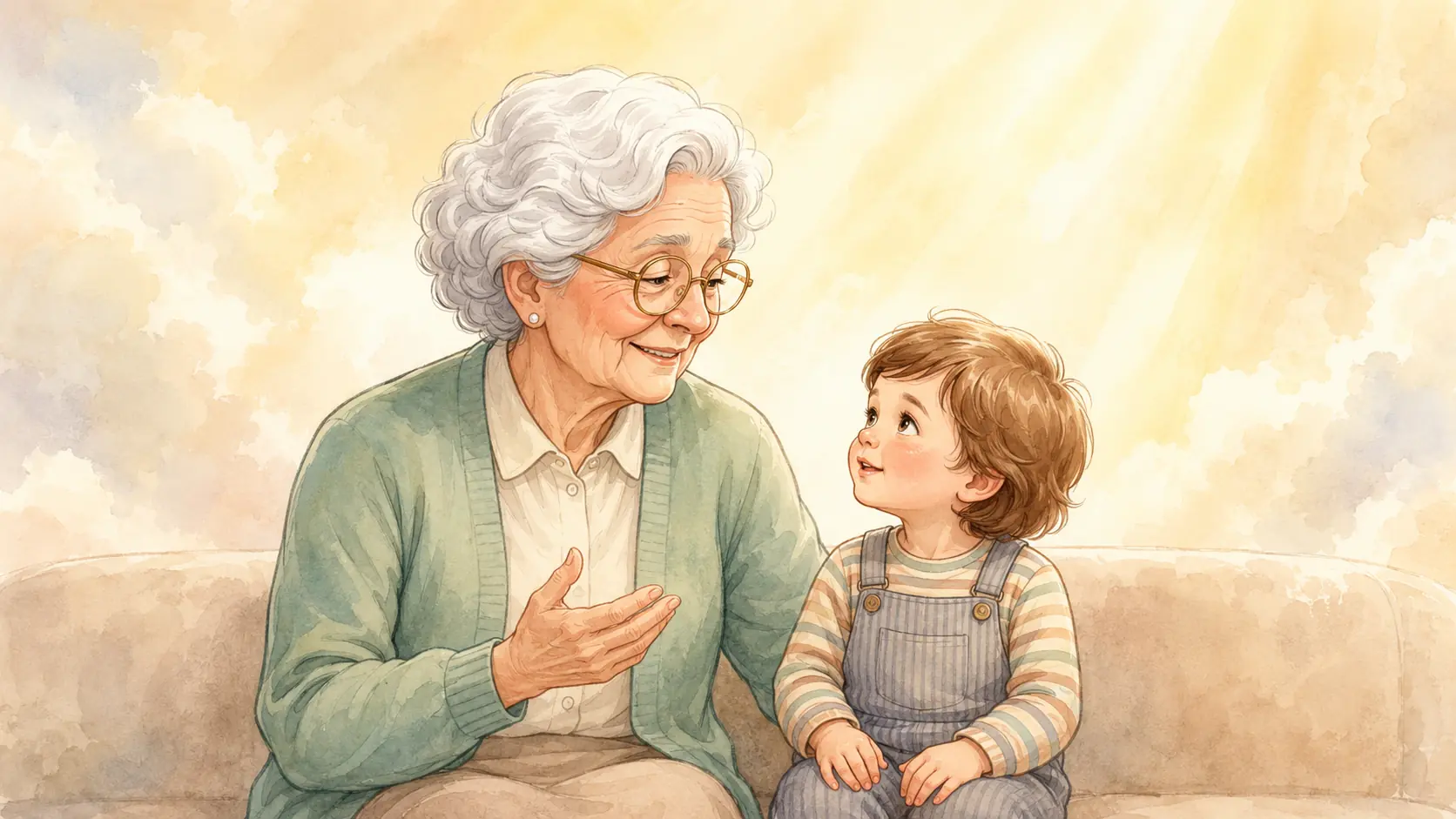
2. “If You Could Change One Thing About the World, What Would It Be?”
This question allows Grandma to see what captures a grandchild’s compassion.
A young child may say they would make sure no animals were homeless. Another may want everyone to have enough food. One grandchild may wish wars would stop, while another wants to remove homework, sickness, bullying, or loneliness.
The answer may sound imaginative or impossible. Resist the urge to explain immediately why the world cannot work that way.
First ask, “Why did you choose that?”
The reason often reveals more than the original answer.
A child who wants to end homelessness may have noticed someone sleeping outside. A grandchild who wants everyone to have a friend may be feeling lonely themselves. A child who wants adults to stop arguing may be carrying worry about conflict at home.
Grandma should listen for the feeling beneath the idea.
The conversation can move gently from imagination toward action.
“If we cannot change the whole world today, is there one small thing we could do?”
The child who cares about animals might help choose supplies for a shelter. The grandchild concerned about hunger could help prepare food for a community pantry. A child who dislikes loneliness might invite someone new to join a game.
This teaches that caring about a large problem does not require solving everything alone. Compassion can become a practical next step.
Grandmothers should be careful not to make children responsible for carrying adult problems. A child should not feel that global suffering rests on their shoulders. The purpose is to develop hope and agency, not guilt.
Grandma can say, “You are not expected to fix the whole world. But your choices can make one small part of it kinder.”
This question also teaches children that change often begins with noticing.
People become accustomed to unfair systems, unkind traditions, and the idea that certain problems have always existed. Children sometimes see these things with fresh eyes.
They ask why some people have more than they need while others have very little. They question why someone is excluded because of appearance, ability, language, or family circumstances. Their questions may make adults uncomfortable, but discomfort can be the beginning of reflection.
A wise grandmother does not silence a child merely because the subject is complicated.
She might say, “That is an important question. I do not have a complete answer, but we can learn more together.”
This models intellectual humility.
Grandma can also share how the world changed during her lifetime. She may remember technologies, opportunities, laws, family roles, or attitudes that once seemed permanent. Some changes brought progress; others created new challenges.
Her stories help grandchildren understand that the world is not fixed. People can challenge harmful ideas, create better systems, and influence future generations.
But change requires patience. Grandchildren may become frustrated when caring deeply does not produce immediate results.
Grandma can explain, “Many important changes happen because people keep doing small, faithful things over a long time.”
The question may also lead to gratitude. After discussing what they would change, Grandma can ask, “What is something about the world you hope never changes?”
Perhaps the child names trees, family love, laughter, oceans, dogs, music, or the way people help after emergencies.
They learn to hold two truths: the world contains suffering that deserves action, and beauty that deserves protection.
A grandchild who is invited to imagine a better world may grow into an adult who does not accept cruelty simply because it is common.
They learn that hope is not pretending everything is fine.
Hope is believing something can become better—and being willing to help.
3. “Why Do You Think People Grow and Change as They Get Older?”
Children often imagine adulthood as a finished state. Adults know everything, understand themselves, and no longer change.
Grandmothers can gently challenge that idea.
People grow and change because life continues teaching them. Experiences alter priorities. Relationships reveal strengths and weaknesses. Loss, love, responsibility, failure, and forgiveness can change the way someone sees the world.
When Grandma asks, “Why do you think people grow and change as they get older?” she invites the child to consider development as a lifelong process.
A young grandchild may say people change because they learn more. That is a beautiful beginning.
Grandma can ask, “Do people always change for the better?”
The answer opens a deeper conversation. Experience alone does not automatically create wisdom. Some people become more compassionate after hardship. Others become bitter. Some learn from mistakes. Others repeat them while blaming everyone else.
Growth requires reflection.
Grandma might say, “Getting older gives us more experiences, but we still have to decide what those experiences will teach us.”
This is an important message for a 65+ audience because grandmothers can model that learning does not end with age. We can change our minds, apologize for past behavior, learn new ways to communicate, and reconsider traditions that caused harm.
A grandmother can tell a grandchild, “I understand some things differently now than I did when I was younger.”
That admission does not weaken her wisdom. It strengthens it.
Grandchildren benefit from seeing that adults are not trapped by old patterns. If Grandma used to respond impatiently but is learning to listen, she can say so. If she once believed expressing feelings was weakness, she can explain how her understanding changed.
The child learns that personal growth is possible at every age.
The question can also help children understand changes in themselves. A grandchild may miss who they were when younger or feel confused by new emotions, interests, and responsibilities.
Grandma can reassure them that growing does not mean losing the person they were. It means adding understanding, skills, and new parts of identity.
“You may not enjoy the same games forever, but the joy you felt was still real.”
“You may become more independent, but needing support does not disappear completely.”
“You can change your opinion when you learn something new.”
Children sometimes fear that changing their mind makes them dishonest or weak. Grandma can explain that thoughtful change is often evidence of maturity.
However, changing to gain approval is different from growing through understanding.
A child should not believe they must erase their personality to become worthy. Grandma can say, “Growing means becoming more fully yourself, not becoming whoever everyone else wants you to be.”
People also change because relationships affect them. Being loved safely can make someone more trusting. Being hurt may make someone cautious. Taking care of another person can deepen patience.
Grandma can ask, “Who has helped you grow?”
The answer may include a teacher, friend, parent, sibling, coach, or even someone who challenged them.
This leads to another meaningful lesson: we influence the growth of people around us. Our words may become part of someone else’s story.
A grandchild who understands this may become more careful with how they treat others.
The question reminds both generations that becoming is never finished.
Grandma is still becoming.
The grandchild is still becoming.
And love allows them to witness that growth in one another.
4. “Is Being Kind More Important Than Being Right?”
This question rarely has a simple answer.
Kindness matters deeply. But truth matters too. Sometimes being kind means correcting false information, setting a boundary, or challenging harmful behavior. Agreeing with everything is not genuine kindness.
At the same time, people can be technically right and still use the truth cruelly.
A child may win an argument by embarrassing a sibling. They may point out another person’s mistake in front of everyone because the facts are on their side. They may say, “I’m just being honest,” after using honesty as a weapon.
“Is being kind more important than being right?” helps grandchildren consider how truth is delivered.
Grandma can ask, “Can you be right and still be unkind?”
Most children can think of examples.
A classmate answers a question incorrectly, and another child laughs while giving the correct answer. The second child is right about the facts but wrong in how they treat the person.
A sibling breaks a rule, and the child reports it repeatedly because they enjoy seeing the sibling punished. The rule was broken, but the motivation may not be kind.
Grandma can explain, “Truth should help, protect, or guide. It should not become an excuse to humiliate.”
But she should also ask, “Can kindness ever require telling someone something they do not want to hear?”
A friend may be making a dangerous choice. A child may be harming someone. A family member may need to hear that their words were hurtful.
Remaining silent to avoid discomfort may look kind, but it can allow harm to continue.
This teaches grandchildren that kindness is not always softness. Sometimes it requires courage, honesty, and boundaries.
The key questions become:
“Is what I am saying true?”
“Does it need to be said?”
“Am I the right person to say it?”
“Can I say it in a way that protects dignity?”
“What is my purpose—helping or winning?”
Grandma can model this during family disagreements. If a grandchild speaks rudely, she can say, “Your point may be worth discussing, but kindness matters in how you say it.”
She does not dismiss the content merely because the tone was poor, nor does she ignore the tone because the child had a point.
Both truth and kindness matter.
The conversation also helps children understand why adults sometimes hold boundaries. Saying no may disappoint a grandchild, but a safe and necessary no can be an act of care.
Grandma might say, “It would feel nicer in this moment if I said yes, but kindness is not giving someone everything they want. Sometimes kindness protects the future.”
Grandchildren should also learn that kindness toward others should not require abandoning kindness toward themselves. They do not have to tolerate bullying, unwanted touch, manipulation, or disrespect in order to be considered nice.
A child can say, “That is not okay,” walk away, or seek help.
Boundary-setting can be kind because it prevents resentment and makes relationships more honest.
Grandma can conclude that being kind and being right should not always be opponents. Wisdom tries to hold truth and compassion together.
“You do not have to choose between lying kindly and speaking truth cruelly. Look for a truthful way to be humane.”
That lesson may shape how the grandchild communicates for the rest of their life.
5. “How Do You Know When Something Is Fair?”
Children often understand fairness as sameness.
If one grandchild gets two cookies, everyone should get two. If one cousin stays awake later, everyone should have the same bedtime. If Grandma spends time helping one child, she should spend the exact same number of minutes with every other child.
Exact equality is easy to measure. But real fairness can be more complicated.
“How do you know when something is fair?” allows grandchildren to examine why a decision feels right or wrong.
Grandma can begin with examples.
“If one child needs glasses, should everyone receive glasses?”
“If your cousin has a broken leg, is it fair that they get more help walking?”
“If an older child has more freedom, should they also have more responsibility?”
These examples teach that fairness sometimes means meeting different needs rather than giving identical treatment.
However, Grandma must be careful not to use this idea to excuse favoritism. Children notice when one grandchild consistently receives more attention, praise, gifts, or patience without a clear reason.
Fairness requires self-examination from adults too.
A grandmother can ask, “Do you ever feel I treat you unfairly?”
The answer may be uncomfortable, but it can be valuable.
Perhaps the child believes Grandma always assumes one cousin caused the trouble. Maybe she praises academic success more than kindness or creativity. Maybe an older grandchild is expected to give way every time because they are older.
Grandma can listen without immediately defending herself.
“Tell me what made you feel that way.”
Sometimes the child’s interpretation is incomplete. Other times, they are noticing a real pattern. If Grandma was unfair, she can repair it.
“You are right. I listened to your cousin first and made a decision before hearing you. I am sorry.”
This models justice more powerfully than any lecture.
The question also helps children distinguish fairness from preference. A situation does not become unfair simply because they dislike it. Bedtime may feel disappointing but still be appropriate. A consequence may be unpleasant but connected to a broken agreement.
Grandma can ask:
“Was the rule explained?”
“Did everyone know what would happen?”
“Did the adult listen to both sides?”
“Does the consequence fit what happened?”
“Is anyone being treated differently because of prejudice or favoritism?”
These questions build moral reasoning.
Children also need to understand that life will not always produce fair outcomes. Someone may work hard and still lose. A kind person may be excluded. A family may face illness or hardship they did not cause.
Grandma should not use “life isn’t fair” to dismiss pain. She can say, “This truly does feel unfair, and I am sorry. Let’s think about what can be changed and what we need help carrying.”
Fairness involves both action and compassion.
A grandchild who learns to think carefully about fairness may become an adult who notices injustice without assuming every disappointment is oppression.
They learn to ask not only, “Did I get what I wanted?” but, “Were people treated with dignity, honesty, consistency, and appropriate care?”
6. “What Do You Think Happens When We Help Someone?”
A child may initially answer that helping makes the other person happy. That is true, but the effects of help can extend much further.
Helping can reduce someone’s burden, restore hope, create trust, and remind a person they are not alone. It can also change the person who offers the help.
Grandma can ask, “How do you feel after helping someone?”
A grandchild may say proud, useful, happy, tired, or even uncomfortable. This creates an opportunity to discuss healthy helping rather than presenting service as something simple and endlessly pleasant.
Helping sometimes requires effort. Carrying groceries, including a lonely child, listening to someone who is sad, or giving time may interrupt personal plans.
But help should not require a child to ignore safety or take on adult burdens.
Grandma can explain, “Helping is good, but children are not responsible for fixing every problem.”
A grandchild can offer kindness to a struggling parent, but they should not become that parent’s counselor. They can support a friend, but serious concerns need trusted adults. They can assist a grandparent, but they should not be guilted into giving up their whole childhood.
Healthy help respects both people.
The question can also lead to a discussion about what kind of help is actually useful. Adults sometimes assume they know what another person needs and take over without asking.
Grandma can ask, “Can help ever make someone feel smaller?”
For example, completing every task for a child may send the message that they are incapable. Giving unwanted advice may feel less helpful than listening. Offering charity without dignity may embarrass the person receiving it.
A thoughtful helper asks, “What would be useful?” or “Would you like help?”
Grandchildren can learn that helping is not about becoming the hero. It is about supporting another person’s needs.
Grandma can model this by allowing the child to contribute meaningfully.
“Would you help me set the table?”
“Could you carry this light bag?”
“Would you show me how this phone feature works?”
When Grandma accepts appropriate help, the grandchild learns that relationships are mutual. Children are not only people who receive care; they have something valuable to offer.
Be specific when thanking them.
“You helped me finish faster.”
“You noticed I needed a hand without being asked.”
“Your kindness made that child feel included.”
This helps the grandchild see the effect of their action.
The conversation can also address helping someone who cannot repay us. True generosity is not a transaction. We should not help only when praise, gifts, or favors will return.
At the same time, no one should repeatedly exploit another person’s kindness. Boundaries are part of healthy generosity.
Grandma might say, “A kind heart needs wise boundaries, or people may take more than is healthy.”
When grandchildren understand what happens through help, they begin to see that small actions matter. Holding a door, making space at a table, defending someone being mocked, or checking on a lonely friend can alter the emotional direction of a day.
Help rarely changes the whole world at once.
It changes one moment for one person.
And sometimes that is where larger change begins.
7. “Can Two People Both Be Right About the Same Thing?”
Children often assume disagreement means one person must be right and the other wrong.
Sometimes that is true. Facts matter. If one child says the glass is empty and another says it is full, evidence can settle the question. Harmful behavior should not be excused as merely another perspective.
But many conflicts involve experience, interpretation, preference, or incomplete information.
Two children may remember the same game differently. One believes a cousin excluded them. The cousin believes the child walked away voluntarily. Both may be describing how the moment appeared from their position.
“Can two people both be right about the same thing?” helps grandchildren understand perspective without abandoning truth.
Grandma can use simple examples.
“One person thinks the room is cold, and another thinks it is comfortable. Can both be telling the truth about how their bodies feel?”
“One child loves a movie, and another dislikes it. Does one opinion have to be wrong?”
“Two people see an argument from different sides. Could each notice something the other missed?”
These examples teach that personal experience can differ.
This is an important relationship skill. Many conflicts become destructive because each person believes acknowledging the other perspective will erase their own.
Grandma can say, “Understanding their side does not mean your side disappears.”
A grandchild might say, “I felt ignored when she kept talking.”
The other child might say, “I thought you did not want to answer.”
Both experiences can be discussed.
Grandma can help them use language such as:
“This is what I noticed.”
“This is how it felt to me.”
“I may not know what you intended.”
“Tell me what you remember.”
This reduces accusations and creates curiosity.
However, Grandma should make clear that perspective does not excuse harm. If one child hits another, they cannot simply say, “From my perspective, it was fine.” Feelings and intentions matter, but impact and boundaries matter too.
Two people can disagree about why something happened while agreeing that harm needs repair.
The question also prepares children for a diverse world. People grow up in different families, cultures, communities, and circumstances. They may hold different traditions, preferences, and viewpoints.
A grandchild does not need to abandon personal values to listen respectfully.
Grandma can explain, “You can believe something strongly and still ask why another person sees it differently.”
This protects against arrogance without teaching that every idea is equally true or safe.
Thoughtful discernment asks:
“Is this a fact we can verify?”
“Is this a personal preference?”
“Is this a different experience?”
“Does this belief harm someone?”
“What information might each person be missing?”
Grandmothers can model this within generational differences. We may disagree with grandchildren about technology, family customs, clothing, communication, or social changes.
Instead of assuming youth knows nothing or age knows everything, both generations can become curious.
Grandma can say, “I see it differently because of what I experienced. Tell me what shaped your view.”
The grandchild learns that disagreement does not have to become disrespect.
Two people may not both be completely right, but they may both hold part of the truth.
Wisdom often begins when we become humble enough to look for the part we have not yet seen.
8. “What Makes Someone Feel Loved?”
Children’s answers to this question can surprise adults.
A grandmother may expect them to mention gifts, vacations, or special treats. Instead, a grandchild may say, “When someone listens,” “When they remember my favorite thing,” “When they sit with me,” or “When they are happy to see me.”
These answers reveal how children actually experience love.
Adults often express love through sacrifice. We work, cook, clean, drive, plan, and worry. Those actions matter deeply, but children may not understand the invisible effort. They experience what is emotionally visible.
Grandma can ask, “What makes you feel loved by me?”
Listen carefully.
Perhaps the child loves baking together. Maybe they value the way Grandma waves from the door, asks about school, reads a book with expression, or prepares a familiar snack.
The answer may also reveal a gap.
A grandchild may say, “I feel loved when you do not compare me to my cousin,” or, “When you listen without checking your phone.”
Grandma should resist defensiveness.
The question is useful only when the child can answer honestly.
She can say, “Thank you for telling me. I want to remember that.”
This does not mean Grandma must fulfill every request. A child may feel loved when receiving expensive gifts, but love cannot be measured only through buying. Grandma can help distinguish momentary pleasure from deeper care.
“Gifts can show love, but can someone love you even when they cannot buy what you want?”
The conversation may include different ways love appears: words, time, practical help, affection, protection, and respect.
Children should also learn that people may express love differently. A grandfather may show love by fixing a bicycle. A parent may show love by working long hours and still attending a school event. A sibling may save a seat without saying anything emotional.
Recognizing these forms helps children appreciate care that does not look exactly like their preferred expression.
But this idea should never be used to excuse harmful behavior. “They love you in their own way” is not a reason to tolerate abuse, humiliation, manipulation, or repeated disrespect.
Love must include safety and dignity.
Grandma can ask, “Can someone say they love you and still behave in an unloving way?”
The answer is yes. Words matter, but actions give words credibility.
This leads to important lessons about boundaries. Children do not owe hugs, secrets, or obedience to unsafe requests merely because someone says they love them. Genuine love respects a no.
Grandma can tell the grandchild, “Love should not make you afraid to have boundaries.”
The question also encourages children to think about how they make others feel loved.
“What makes your brother feel cared for?”
“What could you do when a friend is sad?”
“Does everyone enjoy affection in the same way?”
A grandchild may learn to ask before hugging, listen instead of immediately solving, or remember something meaningful to another person.
One of the greatest gifts Grandma can offer is the experience of love that does not require performance.
“You do not have to earn my affection by being perfect, successful, or always cheerful.”
When a child understands what makes love feel real, they become better able to recognize healthy relationships and create them.
9. “What Do You Think Makes You, You?”
This question invites a grandchild to explore identity beyond appearance, grades, and roles.
A young child may answer with a favorite color, a talent, a family name, or something they enjoy. An older grandchild may mention beliefs, memories, relationships, personality, culture, goals, or values.
Every answer opens another door.
“Would you still be you if your favorite thing changed?”
“Are you the same person at school and at home?”
“Which qualities do you hope never to lose?”
“What have you learned about yourself recently?”
Children are constantly receiving labels. The smart one. The shy one. The athletic one. The difficult one. The responsible one. Even positive labels can become restrictive.
A child called the smart one may become afraid of struggling. The responsible grandchild may feel they are never allowed to need help. The funny child may hide sadness because everyone expects laughter.
Grandma can help grandchildren understand that identity is larger than one trait.
“You may be good at school, but that is not all you are.”
“You may feel shy in groups and still be courageous.”
“You made a poor choice, but that choice does not define your whole character.”
This protects the child from reducing themselves to performance or mistakes.
Family history can also be part of identity. Grandmothers are often keepers of stories, recipes, traditions, photographs, and memories of people the child never met.
Sharing these things gives grandchildren a sense of belonging to something larger than themselves.
But family legacy should not become a cage.
A child may have interests, opinions, or dreams different from previous generations. Grandma can honor heritage without demanding imitation.
“You come from this family, and you are also becoming your own person.”
Identity grows through both roots and freedom.
The question can become especially important during adolescence, when grandchildren may experiment with clothing, friendships, hobbies, opinions, and ways of presenting themselves. Adults sometimes panic because change feels like rejection of the family.
But exploration is part of development.
Grandma can remain a steady relationship while the child tries to understand who they are.
She can say, “You do not have to have every answer yet.”
This reduces pressure.
The grandchild should also learn that identity includes chosen character. We do not control every trait, circumstance, or talent, but we influence who we become through repeated choices.
“What do you want people to feel when they are around you?”
“What qualities do you admire?”
“What kind of friend do you want to be?”
These questions connect identity to values.
Grandma can share her own evolving answer. She is more than her age, role, health, past work, or mistakes. She remains a person with thoughts, humor, hopes, and the capacity to grow.
This mutual humanity strengthens the relationship. Grandma is not only an authority figure, and the grandchild is not only a child.
They are two people at different stages of becoming.
A grandchild who develops a secure sense of self is less easily controlled by comparison. They can appreciate another person’s strength without believing it diminishes their own.
They know they belong, but they do not have to disappear into the expectations of others.
10. “What Does Kindness Look Like?”
Kindness is an abstract word until it becomes behavior.
Children hear adults tell them to be kind, but they may not know what kindness looks like in a noisy cafeteria, a sibling argument, an online conversation, or a moment when they are angry.
This question turns a value into something visible.
Kindness may look like inviting someone to sit nearby, listening without interrupting, returning something borrowed, speaking gently, defending a person who is being mocked, or respecting someone’s request for space.
It may look like helping without announcing it.
It may look like telling the truth privately instead of embarrassing someone publicly.
Grandma can ask, “Does kindness always look nice?”
Sometimes it does not.
Kindness may look like refusing to let a friend drive dangerously. It may mean telling an adult about bullying even when someone calls it tattling. It may mean saying no to a child who wants something harmful.
This helps grandchildren understand that kindness and pleasing people are not the same.
A child who believes kindness means making everyone happy may become vulnerable to pressure. They may agree to things that feel unsafe because they do not want to appear rude.
Grandma can say, “Kindness includes respecting yourself too.”
A grandchild can decline a hug, leave a mean game, or set a boundary without becoming unkind.
Tone matters, but safety matters more than politeness.
The question can also address kindness during conflict. It is easy to act kindly when everyone agrees. Character is revealed when we are frustrated.
“What does kindness look like when your brother takes your turn?”
“What does kindness look like when Grandma says no?”
“What does kindness look like when someone makes a mistake?”
The child learns practical responses.
Use words instead of hands.
Explain the problem without attacking identity.
Allow someone to repair.
Do not repeat embarrassing stories for entertainment.
Grandma should model the same behavior. Children notice whether adults speak kindly about absent family members, service workers, neighbors, and people with different opinions.
A lecture on kindness means little if Grandma regularly uses sarcasm, gossip, or comparison.
We can acknowledge when we fail.
“That was not a kind way for me to speak. I’m sorry.”
This teaches that kindness includes repair, not perfection.
Grandchildren should also learn that kindness can be quiet. Not every good act needs public recognition or a photograph. Returning a shopping cart, cleaning a shared space, or checking on someone privately may receive no applause.
Ask, “Would you still do something kind if no one knew?”
This invites children to consider integrity.
Kindness also needs wisdom. Constant giving without boundaries can lead to exhaustion or resentment. Helping someone repeatedly avoid responsibility may not truly help them.
Grandma can explain, “Sometimes the kind response is support. Sometimes it is allowing a person to experience a consequence and learn.”
The deepest form of kindness sees another person as fully human. It does not pity from above, control, humiliate, or demand gratitude.
It says, “Your dignity matters.”
When grandchildren can describe what kindness looks like, they become more capable of practicing it intentionally.
How to Ask These Questions Without Turning the Conversation Into a Test
The quality of the question depends partly on the way Grandma asks it.
Children quickly recognize when an adult already has one approved answer and is waiting to correct everything else. If every response becomes a lecture, the grandchild may stop sharing honestly and begin guessing what Grandma wants to hear.
A thoughtful conversation needs curiosity.
Ask one question rather than all ten in a row. Let it arise naturally from a story, movie, experience, or quiet moment.
After asking, wait.
Children may need more silence than adults expect. Do not fill every pause with suggestions.
Grandma can say, “Take your time. I’m interested in what you think.”
When the answer comes, use invitations rather than judgment.
“What made you think of that?”
“Can you give me an example?”
“Has your answer ever changed?”
“What do you think someone else might say?”
Avoid laughing at an answer that sounds immature. The child is revealing a mind still developing. Gentle follow-up helps more than embarrassment.
Grandma can share her own view after the child has spoken.
“I like what you said about honesty. I also think courage is part of being a good person.”
This creates exchange rather than examination.
It is also acceptable to say, “I don’t know.” Some questions do not have one clear answer. Grandchildren benefit from seeing adults think carefully instead of pretending certainty.
“We may need to keep thinking about that one.”
That sentence keeps curiosity alive.
Conversations should remain appropriate to the child’s age and emotional state. A tired five-year-old may not want a philosophical discussion. A teenager may speak more freely while driving, walking, cooking, or doing something with their hands rather than sitting face-to-face.
Follow the child’s rhythm.
Some grandchildren are naturally talkative. Others need time and may answer in only a few words. Short answers do not mean the question failed. The thought may continue privately.
Grandma can return to it later without pressure.
“I was still thinking about what you said yesterday.”
That tells the child their words remained in her mind.
What Grandmothers May Learn From the Answers
These questions are not only tools for educating grandchildren. They may educate Grandma too.
A child’s definition of love may reveal that Grandma’s most meaningful gesture is something she considered ordinary. Their understanding of fairness may reveal a pattern of comparison in the family. Their answer about changing the world may expose a fear or hope they have not said directly.
Listen beneath the words.
If a grandchild says a good person never gets angry, perhaps they have learned that anger makes people unsafe. Grandma can explain that anger is a feeling; what matters is how it is handled.
If the child says love means buying gifts, perhaps the family needs more conversations about time, attention, and emotional presence.
If they say kindness means never saying no, they may need stronger permission to have boundaries.
Their answers show us what life has been teaching them.
Grandmothers should remain humble enough to adjust.
We may have decades of experience, but the relationship becomes richer when learning moves in both directions.
A grandchild may teach us new language, technology, ideas, or perspectives. Grandma offers history and long-term wisdom. Neither generation needs to become smaller for the other to matter.
This exchange creates respect that is deeper than forced obedience.
Before They Stop Asking—and Before We Stop Being Able to Answer
Childhood is filled with questions.
Why is the sky that color?
Why do people die?
Why did my friend leave me out?
Why do grown-ups disagree?
Why do I feel different?
At first, children ask openly. As they grow, some questions become private. They begin turning to friends, teachers, the internet, or their own conclusions.
This is natural. Grandchildren are meant to become independent thinkers.
But the relationship Grandma builds during the early years influences whether they continue bringing some questions home.
If their thoughts were mocked, corrected too quickly, or used against them, they may become guarded.
If Grandma listened with curiosity and honesty, they may still call years later and say, “I’ve been thinking about something.”
That is a precious kind of trust.
We cannot guarantee that grandchildren will always agree with us. In fact, thoughtful questions may help them develop perspectives different from our own.
The goal is not to create a child who repeats Grandma’s answers.
It is to help raise a person who can think carefully, act compassionately, examine assumptions, and remain humble enough to keep learning.
One day, Grandma may no longer be present to answer.
But the questions can remain.
When the grandchild faces a moral decision, they may ask, “What makes someone a good person?”
When they encounter injustice, they may wonder, “What would I change, and what small step can I take?”
When conflict becomes complicated, they may ask, “Could another person see something I am missing?”
When they speak a hard truth, they may consider, “Can I be both honest and kind?”
When someone needs help, they may ask what support would preserve dignity.
When they feel lost, they may return to the question, “What makes me, me?”
These become tools for navigating life.
A grandmother’s greatest legacy may not be a collection of answers. Answers can become outdated as circumstances change.
A thoughtful question teaches the child how to search.
It creates space between impulse and action. It invites empathy. It reminds the grandchild that the world is complicated, people are worthy of curiosity, and growth never truly ends.
Ask these questions while preparing dinner, taking a drive, folding laundry, or sitting together after a difficult day.
Do not worry about creating a perfect conversation.
Look at the child. Listen to the answer. Let them surprise you.
Then offer the message beneath every question:
“I care about what happens inside you. Your thoughts are not too small for my attention. You are becoming your own person, and I am grateful to know you along the way.”
Grandchildren may forget many of Grandma’s exact words.
But they may always remember that she made them feel worth listening to.