1. When You Save Them the Last Bite
There is something tender about being offered the last bite.
It may be the corner of a brownie, the final strawberry, the last piece of Grandma’s pie, or the bite of toast with just the right amount of cinnamon. To an adult, it is only food. To a child, it can feel like proof that someone thought of them before thinking of themselves.
“Grandma saved this for you.”
Those words contain more than a snack. They say, “You were in my mind even when you were not standing beside me.”
Children are deeply affected by being remembered. Their world is still small enough that a saved cookie can feel like a personal treasure. They may not understand all the invisible sacrifices adults make, but they understand when someone gives them something they could have kept.
Saving the last bite does not mean children should always receive the best of everything or expect adults to give up every pleasure. Children also need to learn generosity, patience, and the joy of saving something for another person. The beauty of the gesture is not that Grandma always goes without. It is that love sometimes chooses to share.
A grandmother might say, “I saved you the last piece today. Next time, perhaps you can save something for someone else.”
In this way, the gesture becomes a lesson without losing its warmth.
Children learn generosity first by experiencing it. A grandchild who receives the last strawberry may later split a treat with a sibling. A child who knows what it feels like to be remembered becomes more capable of remembering others.
The emotional meaning is especially powerful when the child has had a difficult day. Perhaps they struggled at school, argued with a friend, or felt overlooked in a busy household. Then Grandma opens a small container and says, “I thought you might like this.”
The problem has not disappeared. But the child receives a quiet message: “Someone considered me. I matter somewhere.”
Grandmothers often express love through food because food has long been part of family care. We remember recipes, preferences, allergies, and the exact way someone likes their eggs. Feeding is not the only form of love, and it should never be used to pressure a child to eat or to replace emotional conversation. But when offered freely, food can carry memory.
Years later, the grandchild may not remember every full meal Grandma prepared. They may remember the last bite she kept beneath a small piece of foil because she knew it was their favorite.
What seemed like one bite may become part of a lifelong understanding of love: love notices, remembers, and sometimes saves something for you.
2. Your Happy Dance When They Show You a Drawing
Children do not bring adults their drawings only because they want the picture evaluated. They bring them because they want to share a piece of themselves.
A page filled with uneven lines, enormous heads, purple grass, or a family standing beneath a crooked sun may look simple to an adult. To the child, it represents imagination, effort, and the excitement of making something that did not exist before.
When Grandma reacts with delight, the child feels more than praise for the paper. They feel that their creativity has value.
A happy dance can be literal. Grandma might clap, wiggle her shoulders, or place a hand over her heart and say, “You made this? I love it!”
The exact reaction matters less than its sincerity.
Children can tell the difference between a distracted “That’s nice” and genuine interest. They study the adult’s face. They notice whether the picture receives a glance or whether Grandma takes the time to look closely.
“Tell me about this part.”
“Who is standing here?”
“How did you choose these colors?”
These questions show that the child’s work is not being treated as a test. The purpose is not to correct the drawing or decide whether it is technically impressive. The purpose is to enter the child’s world.
Grandmothers should be careful not to turn every creative act into a judgment. When adults say only, “You’re the best artist ever,” children may become dependent on praise or afraid that future work must be exceptional.
Specific curiosity is often more meaningful.
“You worked hard on all those tiny details.”
“I can see how happy the people look.”
“You used so many bright colors.”
“This picture makes me want to know the story.”
The child learns that creativity is not valuable only when it wins approval. It is valuable because it expresses something real.
Some grandmothers save every drawing, which can become physically impossible over time. We do not need to keep every piece forever to honor it. We can display one on the refrigerator, photograph another, place a few in a special folder, or send one home with a note about what we loved.
What matters most is the moment when the child offers it.
A grandchild who sees Grandma’s face light up may feel courageous enough to keep creating. They learn that bringing ideas into the world can produce connection rather than embarrassment.
As children grow older, the “drawing” may become a school project, a song, a poem, a photograph, a recipe, or an idea they are not yet sure is good.
The emotional question remains the same: “Will you care about what I made?”
If Grandma has responded with delight during the early years, the grandchild may continue sharing pieces of their inner life later.
One day, the refrigerator art will disappear. The child may become self-conscious and stop presenting every creation with complete confidence. That is why the happy dance matters now.
It tells them, while they are still brave enough to show us everything, “Your imagination brings joy into this room.”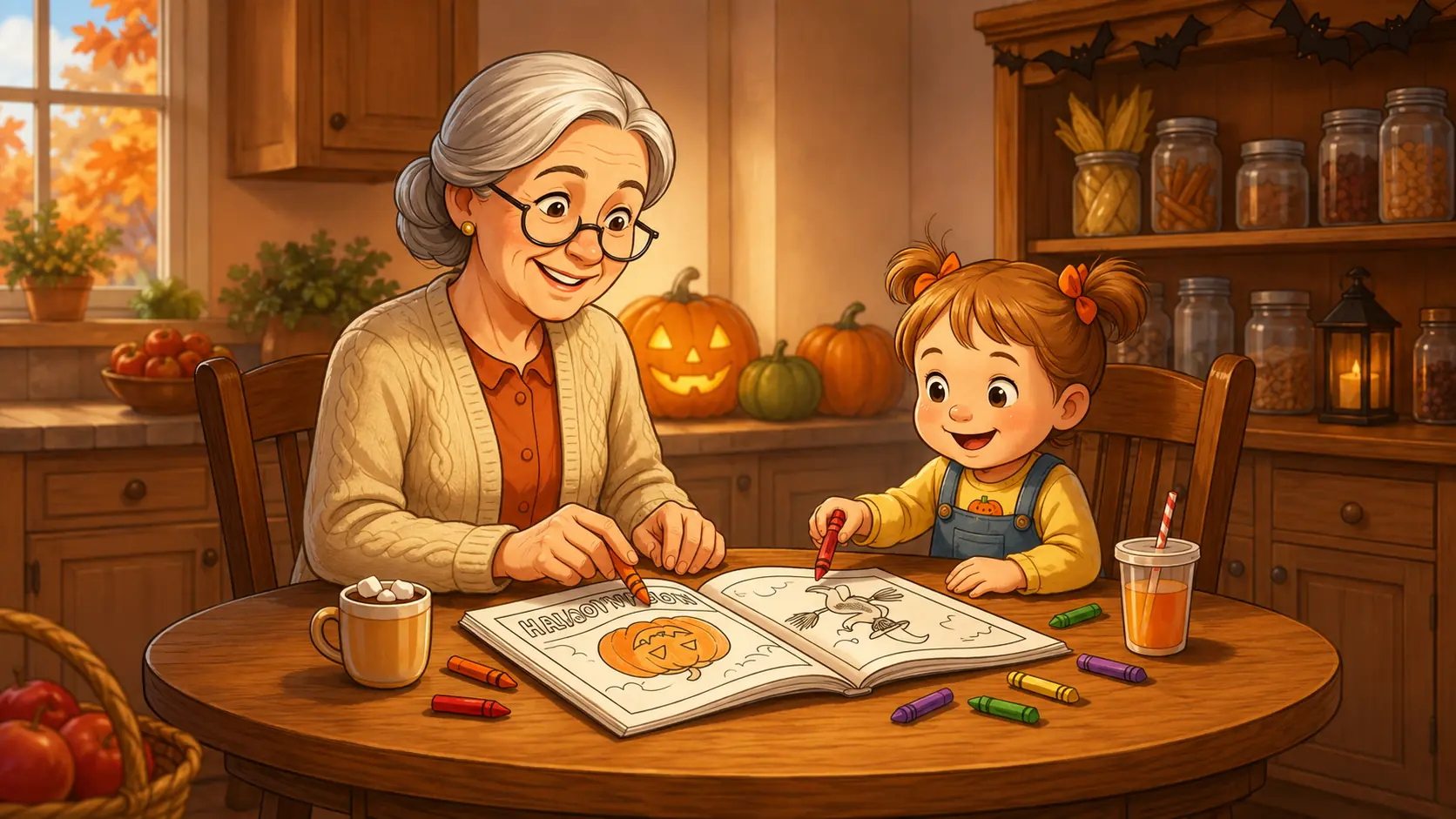
3. When You Wave Back Every Single Time
A child waves because they want connection to cross the distance between two people.
They wave through a window, from the playground, across a crowded room, or from the back seat of a car. Sometimes they wave repeatedly, even when Grandma has already responded.
To an adult, the second or third wave may seem unnecessary. To the child, each wave asks the question again: “Are you still looking?”
When Grandma waves back every single time, she answers, “Yes. I still see you.”
The gesture takes only a moment, but it teaches dependability. The child learns that reaching out is met with a response.
This is particularly meaningful during separations. A young grandchild may feel uncertain when leaving Grandma’s house or when Grandma leaves after a visit. Waving becomes a small ritual that helps them manage the transition.
The wave says, “We are moving apart physically, but the relationship is still here.”
Children need these rituals because departures can feel larger to them than adults realize. They do not always have a mature understanding of time. “I’ll see you next week” may feel abstract. A final wave from the porch gives the goodbye a loving shape.
Grandmothers sometimes continue waving long after the child can see them. We stand at the door or beside the driveway until the car turns the corner. Perhaps this is partly for us. We understand how quickly visits end and how deeply we want to hold on to the final second.
But children remember being watched as they leave.
They remember that Grandma did not close the door immediately.
They remember that she stayed.
Waving back also matters in moments of excitement. A child may be performing in a school play or walking into a classroom. They search the room until they find a familiar face. When Grandma waves, the child’s body may visibly relax.
The gesture tells them, “You are not alone in this big moment.”
We do not need to become disruptive or draw attention away from the child. A small wave, a smile, or a hand over the heart may be enough.
As grandchildren become older, their waves may grow less enthusiastic. A teenager may offer only a small lift of the hand. Grandma should not take this personally. Independence often changes the outward expression of affection.
Wave back anyway.
Do not embarrass them deliberately, but let them know the connection remains available.
One day, the grandchild may be the adult standing in a driveway while Grandma leaves. They may raise a hand and wait until her car is out of sight.
In that moment, the old ritual returns.
A wave seems tiny because it contains no grand speech. Yet it can carry recognition, reassurance, and love across a distance that words cannot always cross.
4. The Songs You Always Sing in the Car
Families create their own soundtracks without realizing it.
A song comes on the radio, Grandma begins singing, and soon the grandchild knows which line she always emphasizes, which word she changes, and which part makes her tap the steering wheel.
The same songs may play for years.
To an adult, they are familiar background music. To a child, they can become connected to safety, movement, laughter, and being together.
Music attaches itself to memory in powerful ways. Decades later, a grown grandchild may hear an old song in a store and suddenly remember Grandma’s car, the afternoon light through the windshield, and the sound of her voice singing imperfectly but happily.
The song becomes a doorway.
Grandmothers do not need beautiful voices. In fact, children often love the exaggerated, slightly off-key performance because it feels personal. The purpose is not musical excellence. It is shared joy.
Singing in the car also gives children permission to be expressive without being evaluated. They can invent words, sing too loudly, or repeat the chorus again. The car becomes a small private world moving through the larger one.
There can be educational value too. Songs help children develop language, rhythm, and memory. But the deepest value is emotional. Singing together can soften difficult transitions, long drives, nervous school mornings, or quiet rides home after disappointment.
A grandmother may sense that a child does not want to talk. Turning on a familiar song can offer connection without requiring explanation.
Music says, “We can be together even when words feel hard.”
Grandmothers should remain sensitive to the child’s mood. Sometimes the child wants quiet. Sometimes an older grandchild prefers their own music. Loving them means allowing the family soundtrack to change.
Ask them to choose a song. Let them teach you what they enjoy. Even when the music is not your preference, curiosity can become another form of connection.
“What do you like about this one?”
“Which part should I listen for?”
The child learns that Grandma respects their developing identity.
At the same time, keep some of the old songs. Family traditions do not need to disappear just because tastes change. A teenager may roll their eyes at first and then sing the familiar chorus when they think no one is watching.
These songs become emotional landmarks.
They may be silly songs Grandma invented about putting on shoes. They may be hymns, old country songs, Motown classics, holiday music, or children’s tunes that everyone claims to be tired of but still knows by heart.
Years later, the grandchild may sing one of those songs to a child of their own. They may explain, “My grandma always sang this in the car.”
And suddenly, Grandma’s voice enters another generation.
5. When You Remember Their Favorite Color, Snack, or Stuffed Animal
Being remembered is one of the purest forms of love.
A grandmother says, “I bought the blue one because blue is your favorite,” or “I made sure we had those crackers you like,” and the grandchild realizes that their preferences stayed in Grandma’s mind even when they were apart.
To an adult, remembering a favorite color may seem unimportant. To a child, it means, “Grandma knows me.”
Children live in a world where adults make most decisions. Adults choose schedules, transportation, bedtime, school, and many of the rules. A remembered preference gives the child a sense that their individual identity has a place within the family.
It tells them they are not merely one of the grandchildren. They are this particular child with this favorite color, this special snack, and this stuffed animal that must never be left behind.
Remembering does not mean buying constant gifts or arranging every experience around the child’s desires. Grandchildren should not expect every meal to contain their favorite food or every item to appear in their preferred color.
The emotional gift is attention, not indulgence.
A grandmother can say, “I remember you love strawberries, so I put some on the table. We’re also having other things everyone can share.”
This balances care with family life.
Remembering the stuffed animal can be especially important because children often use familiar objects for comfort. A beloved bear, rabbit, or worn blanket may help a child regulate during sleep, travel, or separation.
Adults may see an old toy. The child may experience a trusted companion.
When Grandma remembers the animal’s name, asks where it is, or gives it a tiny place at the table, she enters the child’s emotional world.
“Did Mr. Bear sleep well?”
“Should Bunny sit beside you while we read?”
These gestures communicate respect for something meaningful to the child.
Grandmothers should also update their knowledge. Children’s favorites change. The grandchild who loved purple at four may choose green at seven. The snack they once requested may no longer appeal to them.
Do not insist on an outdated version of the child.
“You always loved this” can feel affectionate, but it can also make an older grandchild feel that Grandma is not noticing who they are now.
Ask again.
“Is red still your favorite?”
“What snacks do you enjoy these days?”
“Which stuffed animal sleeps on your bed now?”
Knowing a child means remaining curious as they change.
Grandmothers sometimes worry that memory becomes less reliable with age. We may forget details, confuse one grandchild’s preference with another, or need to write things down. That does not make the effort less loving.
Keep a small note if necessary. Ask the child to remind you. Laugh gently at the mix-up and try again.
What matters is not perfect recall. It is the message that the child is worth remembering.
6. When You Peek in on Them Before You Go to Bed
There is a quiet kind of love that happens when a child does not know they are being watched.
Grandma opens the bedroom door slightly and sees a grandchild sleeping beneath a blanket, one arm wrapped around a stuffed animal, hair spread across the pillow. Perhaps she adjusts the blanket, moves a book from the bed, or stands for a moment in the doorway.
The child may never know that it happened.
Yet these unseen acts of care shape the atmosphere of a home. Children often sense when they are being looked after, even when they cannot name each moment.
Checking on a child before bed is partly practical. Grandma makes sure the child is comfortable, safe, not too warm or cold, and settled after an unfamiliar day.
But it is also emotional.
Night can make children feel vulnerable. The house becomes quiet, shadows appear, and the adults seem farther away. Knowing that Grandma will check can provide reassurance.
A grandmother might say before bedtime, “I’ll peek in on you later.”
That promise tells the child, “You will not disappear from my attention when the lights go out.”
For children who are staying away from their parents, this can be particularly comforting. Sleeping at Grandma’s house may be exciting and also unsettling. Familiar bedtime routines, a night-light, a glass of water, and the promise of a check help create safety.
Grandmothers should respect privacy as grandchildren grow. A young child may welcome the door opening. An older grandchild may prefer a knock, a text, or a quiet “Goodnight” from the hallway.
The form of care should mature with the child.
We should not use checking as surveillance or search through private belongings. The purpose is reassurance, not control.
A grandmother can ask, “Would you like me to check on you later, or would you rather I let you sleep?”
Respect strengthens trust.
There is also something deeply moving for the grandmother in these moments. A sleeping grandchild reminds us of how small and unguarded they still are. During the day, they may argue, insist on independence, or move through the house with enormous energy. In sleep, we see the tenderness beneath it all.
We may think of our own children sleeping in similar positions decades earlier. Time seems to fold for a moment, and gratitude fills the doorway.
These quiet checks teach grandmothers too.
They remind us to separate the child from the day’s difficult behavior. The grandchild who was irritable at dinner, resistant at bedtime, or careless with a rule is still the beloved person beneath the blanket.
Tomorrow will offer another chance.
The child may never remember Grandma standing in the hallway. But the feeling of sleeping safely under her roof may remain.
7. When You Laugh at Their Tiny Jokes Like They’re the Funniest Person Alive
Children discover humor as though they invented it.
They tell jokes with missing punch lines, repeat the same funny word, or create a story that makes sense only to them. Sometimes they laugh before they can finish, delighted by their own cleverness.
When Grandma laughs, the child experiences the joy of affecting another person.
They learn, “I can bring happiness into the room.”
This is different from praising an achievement. Humor creates shared connection. The child says something, Grandma responds, and the space between them fills with laughter.
A grandmother does not need to pretend every joke is brilliant. Children eventually learn social awareness, timing, and the difference between funny and hurtful. But during the early years, generous laughter helps build confidence.
The safest laughter is laughter with the child, never at the child.
Do not mock mispronunciations the child finds embarrassing. Do not repeat a private mistake to relatives for entertainment. Do not use the child’s insecurity as material.
A child who is frequently laughed at may stop trying to be funny or become cruel in order to avoid being the target.
But a child who experiences warm, shared laughter learns that humor can connect rather than wound.
Grandma can also teach this distinction gently.
“That joke about the dog was funny. The comment about your brother’s body might hurt him, so let’s find a joke everyone can enjoy.”
This keeps humor alive while protecting dignity.
Tiny jokes often become family traditions. A phrase the child once said accidentally may be repeated for years, but we should pay attention to whether the child still enjoys it. What felt playful at age five may feel embarrassing at twelve.
Family humor should evolve with consent.
Grandmothers can make themselves part of the joke. We can tell funny stories about harmless mistakes, use ridiculous voices, or pretend to misunderstand something obvious.
Self-directed humor shows children that imperfection does not have to create shame.
“I put my glasses on top of my head and spent ten minutes looking for them!”
Children love discovering that grown-ups can be silly too.
Laughter also helps grandchildren associate Grandma’s home with emotional warmth. They remember that the kitchen was a place where stories became funny, ordinary accidents were not disasters, and adults could relax.
Life will eventually give children many reasons to be serious. They will face pressure, disappointment, and responsibilities that cannot be laughed away.
The ability to find gentle humor will not erase hardship, but it can help them breathe inside it.
A grandchild who remembers Grandma laughing freely may carry some of that lightness into adulthood.
And somewhere in their heart, they may always feel like the funniest person alive when they remember the way Grandma laughed at their little jokes.
8. The Way Your Face Lights Up at School Pickup
Children watch our faces before they listen to our words.
At school pickup, a child may emerge from a crowded doorway carrying a backpack, unfinished emotions, and the entire weight of the day. They scan the waiting adults until they find the person who came for them.
Then they see Grandma’s face.
If her face lights up, the child receives an immediate message: “There you are. I am happy to see you.”
This moment matters because children spend much of their day being evaluated. They follow rules, complete tasks, navigate friendships, make mistakes, and wonder how others see them.
At pickup, they need not perform first.
Grandma’s smile can welcome them before asking about grades, behavior, or homework.
This does not mean difficult topics should be ignored. If the teacher needs to discuss a problem, Grandma can listen and respond responsibly. But the child’s first experience should not be the anxious face that asks, “What did you do now?”
Let the face say welcome before the words say anything else.
The emotional impact is especially powerful for children who are unsure of themselves. A child who struggled socially, failed a test, or felt invisible all day may see Grandma’s expression and remember that somewhere they are a source of joy.
Grandmothers do not always perform school pickup, but the same principle applies whenever a grandchild arrives.
At the airport, the front door, the sidelines, or a family gathering, does the child see obligation or delight?
Children should experience the feeling that their arrival improves the room.
A grandmother may be tired, in pain, worried, or distracted. We are human, and we cannot produce constant enthusiasm. But small visible warmth matters.
Put down the phone. Turn toward the child. Use their name.
“There you are!”
“I’m so glad to see you.”
These words can become emotional shelter.
As grandchildren enter adolescence, public greetings may need to become less dramatic. A teenager may not want Grandma waving both arms or shouting across the parking lot. Respecting this does not require becoming cold.
Offer the warm eyes, the smile, and the quiet greeting that says the same thing without embarrassment.
The child still needs to know they are welcomed.
Many adults remember the expressions they saw on their parents’ or grandparents’ faces. Some remember feeling that their presence caused stress. Others remember a face that brightened, even on ordinary days.
That memory influences how a person believes they affect others.
Grandma’s face can help a child internalize a beautiful truth: “I am someone worth being happy to see.”
9. When You Let Them Help, Even If It Takes a Little Longer
Children often ask to help at the least efficient moment.
Grandma is baking, and a small hand wants to crack the egg. She is folding laundry, and the child creates uneven piles. She is watering plants, and more water reaches the floor than the soil.
Adults know it would be faster to complete the task alone.
But when a child asks to help, they are not only asking for a chore. They are asking to belong in the life of the home.
They want to do what Grandma does. They want to feel capable, useful, and trusted.
Letting them help communicates, “You have something to contribute here.”
The task may take longer, but the child is learning more than the practical skill. They are learning patience, responsibility, coordination, and cooperation. Most importantly, they are learning that family life is something they participate in rather than merely receive from.
Grandmothers can choose age-appropriate tasks.
A young child can stir, carry napkins, match socks, or place vegetables in a bowl. An older grandchild can measure ingredients, learn a recipe, help with garden work, or organize photographs.
The goal is not perfection.
If Grandma immediately corrects every movement, takes over the task, or complains about the mess, the child may decide helping is simply another way to fail.
Offer guidance without humiliation.
“Hold the bowl with this hand while you stir.”
“That egg shell fell in. Let’s learn how to take it out.”
“You folded the towel differently from me, but it will still work.”
Some skills require safety boundaries. A child cannot handle sharp knives, heat, or heavy equipment before they are ready. Saying no to one task does not mean excluding them.
“That part is too hot, but you can pour the ingredients after I move the pan.”
This protects while preserving participation.
Grandmothers should also allow children to help in ways that matter, not only pretend tasks. Children quickly notice when their contribution has no real value.
Thank them specifically.
“You helped me finish setting the table.”
“These plants needed water, and you took care of them.”
“You made the salad for our family.”
This gives the child healthy pride.
Helping together also creates opportunities for conversation. Children often talk more easily when their hands are occupied. While rolling dough, sorting buttons, or sweeping a porch, a grandchild may reveal something they would not say during a direct conversation.
The shared task removes pressure.
One day, Grandma may genuinely need the grandchild’s help. Age changes the relationship. The child who once carried napkins may later carry groceries, drive Grandma to an appointment, or help with technology.
If they learned early that helping is part of love, they may offer support without seeing Grandma only as a burden.
Letting them help now plants mutual care for later.
The extra minutes are not wasted time.
They are the time in which a grandchild learns, “I have a place beside you, not only a place where I am told to wait.”
10. The Little Traditions That Feel Ordinary to You but Magical to Them
Families rarely know which traditions children will treasure most.
Adults may plan elaborate holidays, expensive trips, and carefully organized celebrations. Children may remember those events, but they are often equally attached to rituals that seem almost too ordinary to mention.
The special mug used at Grandma’s house.
Pancakes on Saturday morning.
Looking for the first star before bed.
A made-up birthday song.
Walking to the mailbox together.
Hot chocolate after playing outside.
These small traditions become anchors.
Children live in a world they do not control. Schedules change, adults make decisions, and new experiences appear constantly. A familiar ritual provides predictability.
“At Grandma’s house, we always do this.”
The phrase creates belonging.
Traditions do not need to be impressive because their power comes from repetition. The child anticipates them, participates in them, and eventually remembers them as part of the family’s identity.
Grandmothers can build traditions around values as well as fun. Perhaps every visit includes choosing something to donate, writing a thank-you note, calling an older relative, or sharing one thing each person is grateful for.
The ritual becomes a gentle way of teaching generosity, connection, and appreciation.
But traditions should not become rigid obligations. A child should not be shamed for changing interests or missing an event. Family rituals exist to serve relationships, not control them.
As grandchildren grow, invite them to help traditions evolve.
“Do you still want to bake the same cookies, or should we try a new recipe?”
“Would you like to keep our movie night, even though you’re older?”
This allows the ritual to remain shared rather than imposed.
Grandmothers may worry that traditions will disappear after we are gone. Some will. Others will be carried forward in ways we never see.
A grandchild may prepare the same breakfast for their children. They may place a special ornament on a tree, sing Grandma’s silly birthday song, or take a walk to the mailbox with a little hand tucked inside theirs.
They may not remember when the tradition began.
They will remember that it felt magical.
The magic was never in the mug, the cookies, or the walk itself.
It came from repetition wrapped in affection. It came from knowing that some experiences belonged especially to the relationship between Grandma and grandchild.
11. When You Sit Beside Them During Hard Moments Instead of Rushing Them Through
Adults often want children to recover quickly.
We say, “You’re okay,” “Don’t worry about it,” “Let’s move on,” or “It isn’t worth crying over.” Usually, we are trying to help. We know the disappointment will pass, and we want to spare the child unnecessary pain.
But when a child is hurting, quick reassurance can feel like pressure.
They may hear, “Your feeling is taking too long. Please become easier for me.”
Sitting beside a grandchild communicates something different: “I am not afraid of this feeling. You do not have to finish it before I can stay close.”
Hard moments come in many forms. A child may be grieving a pet, feeling excluded by friends, disappointed in a performance, afraid after a nightmare, or ashamed of a mistake.
Grandma does not always need the perfect words.
Sometimes presence is the answer.
Sit on the edge of the bed. Share the couch. Offer a hand without demanding that it be taken. Allow a little silence.
A grandmother might say, “I’m here. You can talk when you’re ready.”
This gives the child emotional room.
Sitting beside them does not mean agreeing with every interpretation. A child may believe a teacher hates them or that one failure proves they are incapable. Grandma can first honor the feeling, then help them examine the situation.
“That must have felt painful. When you’re ready, we can think about what happened and what you might do next.”
Connection comes before correction.
Children are more able to hear guidance after they feel understood.
Grandmothers should resist immediately telling the child how much worse things were in our day. Our stories can offer perspective, but timing matters. If the child is still trying to explain, a long story about Grandma’s childhood may make them feel displaced from their own moment.
Listen first.
Ask whether they want advice.
“Would you like me to help you think of a solution, or do you need me to stay with you for a while?”
This teaches the child that support can take different forms.
There are also moments when the child caused the problem. Perhaps they hurt a friend, broke a rule, or made a careless decision.
Sitting beside them does not remove accountability.
Grandma can say, “What you did was wrong, and you need to repair it. I am still here while you figure out how.”
This may be one of the most powerful lessons a child receives: mistakes require responsibility, but they do not make a person unworthy of companionship.
Grandchildren who experience this kind of presence may become more honest. They learn that telling Grandma the truth will not guarantee an easy response, but it also will not result in emotional abandonment.
As they grow older, the hard moments become more complicated. Rejection, anxiety, family conflict, academic pressure, and grief cannot always be solved with simple advice.
The child needs adults who know how to remain.
Grandmothers have already lived through many seasons. We know emotions rise and fall. We know life can continue after disappointment. Our calm presence can lend the child hope before they can feel it themselves.
Do not rush every tear.
Do not turn every sadness into a lesson immediately.
Sometimes the lesson is simply this: “When life hurts, love sits down beside you.”
12. The Snacks Cut a Certain Way
A child may insist that the sandwich be cut into triangles, the apple sliced thinly, or the crust removed in exactly the familiar way.
To adults, these preferences can seem unnecessarily specific. Food tastes the same regardless of shape.
But for children, familiar presentation can provide comfort, predictability, and a sense of being known.
When Grandma cuts the snack the preferred way, she communicates, “I remember how you like it.”
This does not mean every request must be followed or that children should refuse food because it is not presented perfectly. Flexibility is an important skill, and families cannot always accommodate every preference.
But small acts of personalization can carry emotional warmth.
Grandma’s triangle sandwiches may become connected to afternoons at her kitchen table. Thin apple slices may remind the child of talking while she prepared them. The particular bowl, napkin, or way the crackers were arranged may become part of the memory.
Food rituals are especially powerful because they involve the senses. Taste, smell, texture, and sight attach themselves to emotion.
Years later, an adult may cut a sandwich diagonally and suddenly feel close to Grandma again.
The act returns before the memory is even fully conscious.
Grandmothers can also use snack preparation to involve the child.
“Would you like triangles or squares?”
“Can you place the berries on the plate?”
This gives appropriate choice and participation.
When the child’s request cannot be met, we can respond without mockery.
“I know you prefer the apple cut thinly. Today we need to take it with us whole, but we can cut it your way next time.”
The child learns that preferences matter even when they cannot always control the outcome.
We should also avoid using food affection to pressure children. “Grandma made this especially for you, so you have to finish it” turns a loving gesture into obligation.
Offer the food, respect reasonable signals of fullness, and let the relationship remain more important than the clean plate.
The snack cut a certain way is not really about producing a perfectly shaped sandwich.
It is about the care contained in the hands that prepared it.
The child sits at the table and recognizes something familiar. Their body relaxes. Grandma remembered.
That feeling is larger than the snack.
What These Little Things Are Really Saying
Each of these moments carries a message beneath the visible action.
Saving the last bite says, “I thought of you.”
Celebrating the drawing says, “What you create matters to me.”
Waving back says, “I still see you.”
Singing in the car says, “Joy belongs in our time together.”
Remembering a favorite says, “I know who you are.”
Checking at night says, “You are safe under my care.”
Laughing at the joke says, “You bring happiness into my world.”
Lighting up at pickup says, “I am glad you are here.”
Letting them help says, “You have something valuable to contribute.”
Keeping traditions says, “You belong to a story larger than this moment.”
Sitting beside them says, “Your pain does not make me leave.”
Cutting the snack a certain way says, “Your small preferences have a place in my heart.”
These messages become part of a child’s emotional foundation.
A grandchild who is repeatedly thought of may grow into an adult who believes they deserve care.
A child whose creations are welcomed may retain the courage to express ideas.
A child whose gestures receive a response may learn that reaching out is worthwhile.
A child who is allowed to contribute may become someone who approaches family responsibilities with confidence.
A child who is accompanied through sadness may be more able to seek support rather than hiding pain.
None of this means a grandmother can guarantee a grandchild’s future. Children are shaped by many relationships, experiences, personalities, and circumstances. We should not burden ourselves with the belief that every small interaction determines their entire life.
But small interactions do matter.
They build patterns. Patterns create atmosphere. Atmosphere teaches children what to expect from love.
Grandmothers also need permission to be imperfect. We will forget a favorite snack. We will sometimes be too tired for the enthusiastic dance. We may miss the wave, misunderstand the joke, or cut the sandwich the wrong way.
Love does not require flawless performance.
Repair can be part of the relationship.
“I forgot you prefer the blue cup. Thank you for reminding me.”
“I was distracted when you showed me your picture. May I see it again?”
“I tried to rush you when you were sad. I should have listened.”
These words teach the grandchild that relationships can recover from missed moments.
The goal is not to make children dependent on constant special treatment. The goal is to create enough ordinary experiences of being known that the child carries a stable sense of belonging.
Grandmothers should also support the parents rather than use these gestures to compete with them. It may be tempting to become the adult who always says yes, provides treats, and offers an escape from every rule.
That is not the deepest form of love.
The deepest love respects the family’s boundaries while adding warmth within them.
Grandma can save the last bite without undermining dinner rules. She can delight in the child without criticizing the parents. She can sit beside a sad grandchild while still encouraging them to speak honestly with Mom or Dad.
Grandchildren benefit when love surrounds them rather than pulling them between adults.
Our special role is not to become more important than the parents.
It is to become another trustworthy thread in the fabric of family.
Before the Ordinary Moments Are Gone
Grandmothers know that childhood does not announce its endings.
No one tells us, “This is the last time the child will ask for the sandwich cut into triangles.”
We do not know when they will stop bringing us every drawing, waving through the window, or laughing at the same silly song.
One day, the stuffed animal remains on a shelf.
The child begins cutting their own snack.
They walk out of school without searching the crowd so openly.
They still love us, but they need us differently.
This is the natural work of growing up. We should not make grandchildren feel guilty for becoming independent. The purpose of our care is not to keep them small.
It is to give them enough security to grow.
Still, we are allowed to feel the tenderness of what passes.
We may look at a teenager and remember the little child who wanted the crust removed. We may hear an adult grandchild laugh and remember the tiny joke that once brought the whole kitchen to life.
The ordinary moments remain precious because they do not remain forever.
That is why grandmothers should not wait for large occasions to express love. Birthdays, holidays, graduations, and family vacations matter, but a childhood is mostly made of regular days.
Regular afternoons.
Regular drives.
Regular snacks.
Regular goodbyes.
Love must learn to live there.
The most enduring memory may not be the expensive gift under the tree. It may be Grandma standing at the window, waving until she could no longer see the car.
It may not be the perfect holiday dinner. It may be the final spoonful of dessert she quietly saved.
It may not be the formal family portrait. It may be the way her face looked when the child came through the school doors.
Children are always gathering evidence about who they are.
Am I worth noticing?
Does my joy matter?
Can I help?
Will someone stay when I am sad?
Am I welcome when I arrive?
The little things answer these questions.
Again and again, they say, “Yes.”
Grandma may think she is only cutting an apple.
The child may be learning what it feels like to be remembered.
Grandma may think she is only singing an old song.
The child may be building a memory that will comfort them decades later.
Grandma may think she is simply sitting in silence beside a tearful grandchild.
The child may be learning that love does not disappear when life becomes difficult.
That is why these little things are not little at all.
They are the quiet language of attachment, safety, joy, and belonging. They are how love becomes visible to a child who cannot yet understand all the invisible ways a family cares.
One day, Grandma’s hands may no longer prepare the snack. Her voice may no longer lead the car song. Her chair at the table may stand empty.
But love expressed consistently has a way of continuing.
The grown grandchild may save the last bite for someone else.
They may celebrate a child’s drawing with the same delighted expression.
They may wave until the car disappears.
They may sing Grandma’s song without realizing they remember every word.
They may cut a sandwich into familiar triangles and suddenly understand why such a small act once made them feel so safe.
That is how a grandmother’s love travels forward.
Not only through the important advice she gave or the major sacrifices she made, but through hundreds of ordinary moments in which a child received the same quiet message:
“I see you. I remember you. I enjoy you. I will make room for you here.”
To Grandma, it may have felt like almost nothing.
To the child, it may have meant everything.