There is a way we usually count childhood.
We count birthdays.
We count candles on a cake, inches marked on a wall, school grades completed, teeth lost, shoes outgrown, and photographs added to the family album.
But perhaps grandmothers should count childhood another way.
Perhaps we should count it in summers.
Not because summer is the only season that matters, but because summer has a way of revealing how quickly children change. It removes the familiar structure of school and gives us longer afternoons, later sunsets, warm sidewalks, damp swimsuits, dripping popsicles, bare feet, and more time to notice the child standing in front of us.
One summer, a grandchild is a baby being carried from room to room.
A few summers later, that same child is running through a sprinkler, laughing so loudly that the neighbors can hear.
Then the child is old enough to swim across the pool without holding Grandma’s hand.
Soon, they are a teenager wearing headphones in the passenger seat, answering questions with fewer words, and asking to spend more time with friends.
The changes happen so gradually that we do not always recognize them while they are happening.
A grandmother may think there will be another summer exactly like this one.
Another chance to fill the little plastic pool.
Another afternoon to build a sandcastle.
Another year when the grandchild will beg to sleep at Grandma’s house.
Another trip when they will be excited simply because Grandma packed snacks and promised ice cream.
But childhood does not repeat itself.
Each stage appears only briefly. Then, without ceremony, it becomes something the family used to do.
You get one summer of a baby.
Three summers of a toddler.
Nine summers of a child.
Five summers of a teenager.
The numbers may not describe every family perfectly. Children grow at different rates, and every relationship has its own circumstances. Some grandmothers meet their grandchildren later. Some live far away. Some are raising grandchildren themselves. Some see them every week, while others treasure only a few visits each year.
Still, the truth beneath the numbers remains.
There are fewer summers than we think.
And each one matters more than we realize while we are living it.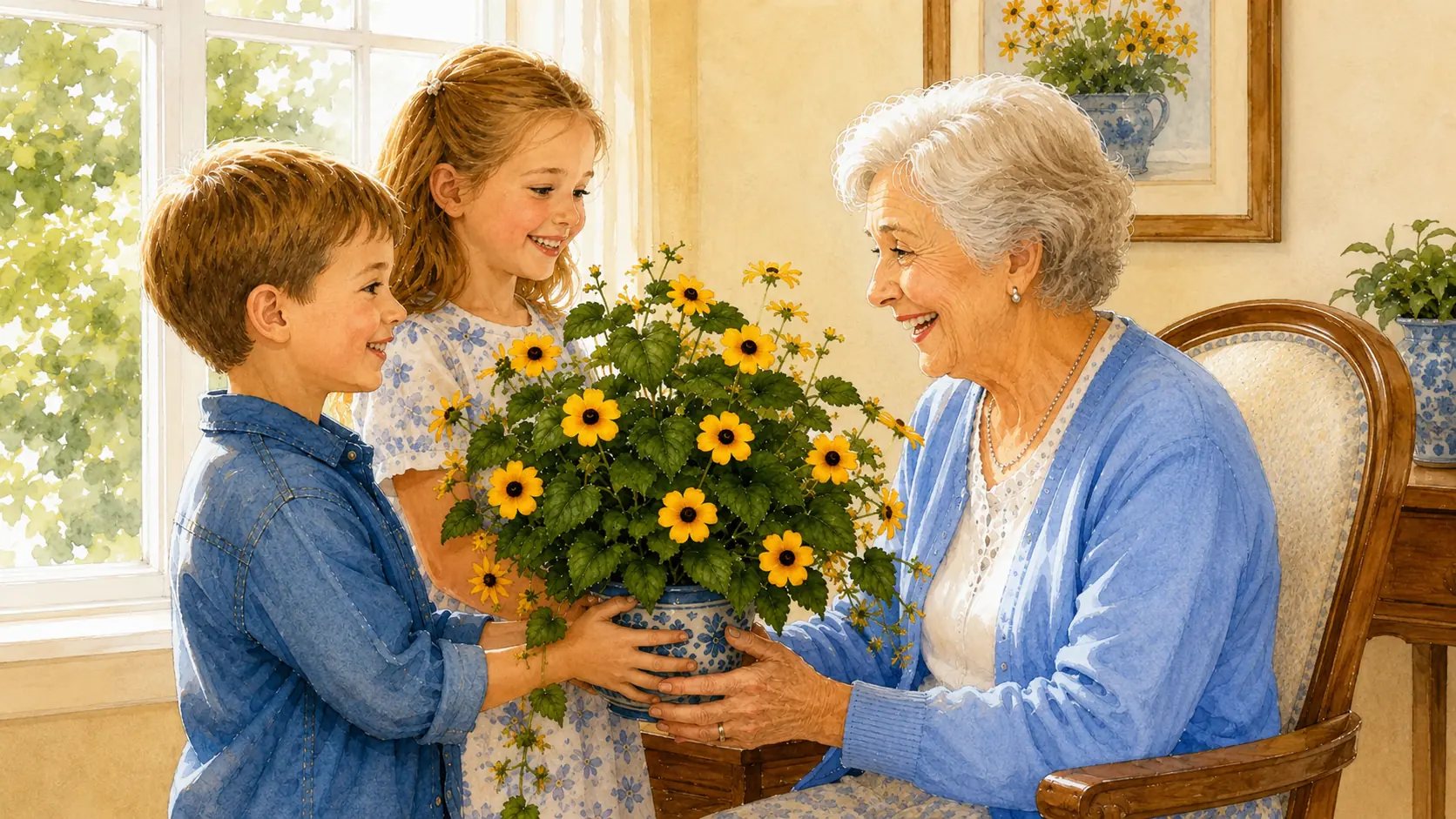
One Summer of a Baby
There is only one first summer.
Only one summer when your grandchild has never felt warm grass beneath tiny feet.
Only one summer when the sound of a sprinkler, the movement of tree leaves, and the brightness of sunlight on water are entirely new discoveries.
During that first summer, the baby may not remember the vacation, the family picnic, or the afternoon Grandma sat beside a small inflatable pool. The baby will not remember the name of the park or the color of the blanket spread under the shade tree.
But memory is not the only reason a moment matters.
A baby may not remember the details, but the baby experiences the feeling.
The warmth of Grandma’s arms.
The safety of being held against a familiar chest.
The comfort of hearing the same soft voice.
The experience of looking up and seeing a face filled with delight.
These moments become part of a child’s earliest understanding of love.
For a grandmother, that first summer is filled with contradictions.
The days can feel long, yet the season disappears quickly. Caring for a baby can be tiring, yet every sleepy expression seems too precious to miss. We may spend much of the summer arranging naps, warming bottles, washing tiny clothes, searching for shade, and worrying whether the baby is too hot.
It may not feel like the carefree summer portrayed in advertisements.
There may be no dramatic vacation.
There may only be slow walks around the neighborhood, mornings on the porch, and afternoons when everyone stays home because the baby did not sleep well.
Yet those ordinary days are not empty.
They are the first pages of a relationship.
A grandmother may hold her grandchild near an open window and point out birds. She may dip the baby’s toes into cool water and laugh at the surprised expression. She may push a stroller under tall trees, stopping whenever the baby becomes fascinated by a shadow or a sound.
Adults are often tempted to believe that meaningful memories require an event.
Babies teach us otherwise.
For them, the world is already an event.
A ceiling fan is fascinating.
A flower is astonishing.
A breeze moving across the skin is something to study.
Grandmothers can learn to slow down and see summer through a baby’s eyes. We can resist the pressure to fill every day with activity. The first summer does not need to be impressive. It needs to be gentle.
The baby does not need Grandma to create a perfect childhood.
The baby needs Grandma to be present in the childhood that is already unfolding.
Take the photograph, but also put the phone away.
Notice the weight of the baby sleeping against you.
Notice the small fingers wrapped around one of yours.
Notice the peaceful face after a warm day.
One day, the child will be too heavy to carry. Their legs will stretch far beyond your lap. They will run ahead of you instead of resting against you.
During that first summer, however, they still fit in your arms.
Do not rush through that gift.
Three Summers of a Toddler
Toddler summers are not quiet.
They arrive with wet footprints, crushed crackers, half-eaten fruit, overturned buckets, sudden tears, and a thousand requests to do the same thing again.
A toddler does not walk calmly toward summer.
A toddler charges into it.
There are roughly three summers when the child lives in that wonderful, exhausting space between babyhood and childhood. Three summers when the world is explored with the whole body. Three summers when everything must be touched, carried, opened, poured, tasted, climbed, and questioned.
These are the summers of sticky hands.
The child eats a popsicle faster than Grandma can wipe the melting juice from their arms. Watermelon drips down the front of a clean shirt. Sand appears in shoes, hair, bags, towels, and places no sand should ever reach.
Toddlers do not care whether an outing remains neat.
They care whether it feels alive.
A grandmother may look at the mess and feel tired before the afternoon has truly begun. She knows the sprinkler will mean wet clothes across the floor. She knows the little pool will need to be emptied. She knows the child will ask to go outside immediately after being washed and dressed.
It is reasonable to feel tired.
Grandmothers are not required to pretend that every moment with a toddler is easy.
Our knees may hurt. Our energy may not match theirs. The heat may affect us more than it once did. We may need to sit while they run, watch from the shade, or create smaller versions of the activities we remember doing with our own children.
Presence does not require physical perfection.
Grandma can turn on the sprinkler and sit in a lawn chair nearby.
She can fill a shallow tub with water and plastic cups instead of going to a crowded water park.
She can blow bubbles from the porch while the child chases them across the yard.
The child will not measure love by how fast Grandma can run.
The child will remember that Grandma made room for joy.
Toddlers also teach us how quickly emotions can change.
One moment, the child is laughing under the sprinkler.
The next, they are crying because the water touched their face.
They may beg to go to the pool and then refuse to enter it. They may ask for the blue cup and collapse because Grandma hands them the blue cup in the wrong way.
To an adult, the reaction can seem unreasonable.
To a toddler, the feeling is real.
Their bodies are still learning how to manage heat, hunger, excitement, disappointment, noise, and fatigue. Summer can be delightful, but it can also be overwhelming.
Grandma’s calm presence becomes part of the experience.
She does not need to make every tear disappear immediately. She can hold the towel, lower her voice, offer water, and wait for the storm to pass.
She can say, “That was too much for you. Grandma is here.”
These words do more than settle one difficult afternoon.
They teach the child that strong feelings do not frighten Grandma away.
Toddler summers are also filled with repetition.
“Again, Grandma.”
Again down the slide.
Again with the bubbles.
Again around the yard.
Again with the same song.
Again with the same story before naptime.
Adults become bored with repetition. Toddlers build their world through it.
Every repeated game strengthens trust. The child knows what comes next, and that predictability feels safe.
Grandma may feel as though nothing important is happening while she pushes the same toy truck across the porch for the twentieth time.
Something important is happening.
The child is learning that Grandma enters their world.
The child is learning that joy can be shared.
The child is learning that they are worth someone’s time.
These are the summers when the grandchild still reaches automatically for Grandma’s hand. They do not feel embarrassed to shout her name across the playground. They do not worry whether hugging her in public looks childish.
They simply love her.
And they expect her love to be available in every ordinary moment.
One day, they will not need help climbing into the car seat. They will pour their own drink. They will no longer ask Grandma to watch every jump, every splash, and every uneven step across the grass.
For three summers, however, they believe every small achievement deserves a witness.
Watch them.
Clap for the jump that is only two inches high.
Admire the rock they found.
Listen to the sentence they struggle to complete.
Let them hand you a dandelion as if it were a priceless gift.
These are not interruptions to the summer.
These are the summer.
Nine Summers of a Child
Childhood seems long when we are standing at its beginning.
Nine summers sound like an abundance.
Nine chances to visit the pool.
Nine years of road trips, backyard dinners, library programs, beach towels, fireflies, and ice cream after sunset.
Yet nine summers can pass with astonishing speed.
The first begins with a child who still needs help tying shoes. The last may end with someone nearly as tall as Grandma, carrying a phone, asking for privacy, and preparing to enter the teenage years.
These are the summers when personality becomes clearer.
A grandchild begins to develop real preferences. They may love swimming but dislike amusement parks. They may choose books over sports, animals over crowds, crafts over competition, or long bike rides over almost everything else.
A grandmother may have imagined certain traditions before the child was old enough to have an opinion. Perhaps she dreamed of baking together, going fishing, attending baseball games, or spending a week at the beach.
Sometimes the grandchild loves the same things.
Sometimes they do not.
The most loving response is not to force the child into Grandma’s idea of a perfect summer. It is to become curious about the child who is actually here.
What makes this grandchild come alive?
What activity causes them to forget the time?
What do they talk about on the drive home?
What makes them ask, “Can we do that again?”
A meaningful summer does not have to match the one Grandma remembers from her own childhood.
The child may not want to catch fireflies. They may want to photograph them.
They may not enjoy long family car rides. They may love a short train trip.
They may not want to spend the entire day at the pool. They may prefer an hour in the water followed by reading in the shade.
The tradition becomes valuable because of the connection, not because every detail remains unchanged.
During these nine summers, grandchildren also become more aware of time with Grandma.
They begin to remember.
The baby experiences love. The toddler repeats it. The child begins storing it in stories.
“Grandma always brings peaches to the picnic.”
“Grandma lets us eat breakfast outside.”
“Grandma knows the best place to watch the fireworks.”
“Grandma always keeps extra towels in the car.”
These repeated details create a sense of family identity.
Children feel secure when they know that certain good things happen again and again.
Traditions do not need to be expensive.
Perhaps Grandma buys the first watermelon of summer and teaches the grandchildren how to choose a ripe one.
Perhaps every June includes a trip to the same small lake.
Perhaps the grandchildren help plant flowers, make homemade lemonade, visit the farmers market, or sleep in the living room after watching an old movie.
The power is not in the activity itself.
The power is in the words “We always.”
“We always look for the first firefly.”
“We always stop for ice cream on the way home.”
“We always make pancakes after a sleepover.”
“We always take one picture on the porch before school begins again.”
These traditions tell children that they belong to something larger than a single day.
They are part of a family story.
But grandmothers should be careful not to let the desire for tradition become pressure.
A tradition is meant to create connection, not obligation. Families change. Schedules shift. Children develop new interests. Parents may have limited time. Health and finances may alter what is possible.
The heart of the tradition can survive even when the form changes.
If Grandma can no longer take the grandchildren to the beach, perhaps they bring shells to her and tell her about the day.
If a grandchild lives far away, perhaps they both eat the same flavor of ice cream during a video call.
If a family cannot afford a vacation, perhaps they become tourists in their own town.
Children remember how an experience felt more than how much it cost.
They remember being included.
They remember laughter.
They remember that Grandma was not constantly rushing them.
They remember the look on her face when they told a story.
These nine summers are also the years when conversation deepens.
A child begins asking questions that do not have simple answers.
Why do people get sick?
Why did my friend stop playing with me?
What were you like when you were my age?
Are you afraid of getting old?
Why does our family do things differently?
Summer creates space for these questions to emerge.
They may come during a car ride, while peeling corn, sitting near a campfire, or lying awake during a sleepover.
A grandmother does not need to have a perfect answer.
She needs to be safe enough for the question.
We sometimes believe that our value as older adults comes from having solutions. But grandchildren often need honesty more than certainty.
“I do not know, sweetheart.”
“That happened to me once too.”
“I made mistakes when I was young.”
“You can always talk to me about that.”
These responses create emotional shelter.
The child learns that Grandma is not only the person who provides treats and entertainment. She is someone who can hold confusion, disappointment, and truth.
Educational moments happen naturally during these summers.
The child learns patience while waiting for tomatoes to ripen.
They learn responsibility while carrying their own pool bag.
They learn generosity while sharing snacks with cousins.
They learn courage by trying the deeper water.
They learn humility when Grandma tells a family story about a mistake she made.
They learn gratitude when an ordinary afternoon becomes enough.
Grandmothers do not have to turn every activity into a formal lesson.
Children learn from how we live.
They notice whether we complain throughout the trip or appreciate the day.
They notice whether we speak respectfully to the server, the lifeguard, the hotel worker, and the stranger who moves too slowly.
They notice whether we panic when plans change.
They notice whether we can laugh when the picnic is interrupted by rain.
A ruined plan can become one of the best memories if Grandma does not allow disappointment to ruin the relationship.
The children may forget the museum exhibit.
They may always remember eating sandwiches in the car while rain covered the windshield and Grandma made everyone laugh.
Nine summers are enough to build a world of memories.
They are not enough to postpone everything until next year.
Five Summers of a Teenager
The teenage summers arrive quietly.
At first, the changes may seem small.
The grandchild sleeps later.
They spend more time on the phone.
They answer some questions with one word.
They want to choose their own clothes, music, plans, and companions.
The child who once begged to go everywhere with Grandma may now hesitate before accepting an invitation.
This transition can hurt.
Grandmothers may feel rejected, especially when they remember the toddler who followed them from room to room or the child who counted the days until a sleepover.
It is easy to interpret teenage distance as a loss of love.
Usually, it is not.
Teenagers are doing the difficult work of becoming themselves. They are learning how to belong to friends, form opinions, manage privacy, and imagine a life beyond the family. Their movement away from adults is part of growing, not proof that the relationship no longer matters.
The grandmother’s role must change.
Teenagers need less management and more respect.
Less pressure to perform affection and more assurance that affection remains available.
Less questioning that feels like an interview and more conversations that develop naturally.
The grandchild may no longer want to run through the sprinkler, but that does not mean the summer is lost.
The form of connection changes.
Perhaps Grandma drives them to meet a friend and stops for a drink on the way.
Perhaps they watch a series together, work on a family recipe, shop for something the teenager cares about, or take an evening walk.
Perhaps the teenager sits silently for most of a road trip and unexpectedly begins talking when the sun goes down.
The grandmother who remains patient may receive glimpses into a world the teenager rarely shares.
Five summers is not a long time.
By the first one, the teenager may still depend on the family for almost everything.
By the fifth, they may be preparing for college, work, military service, travel, or adult independence.
A summer that once revolved around family may soon include jobs, practices, relationships, and personal plans.
Grandma may no longer have entire days.
She may have an hour.
An afternoon.
A ride to the airport.
A few minutes at the kitchen counter after everyone else has gone to bed.
Those smaller moments still matter.
Teenagers often appear independent before they feel secure. They may resist advice while quietly observing everything Grandma does. They may act uninterested in family stories and remember every detail years later.
They may decline three invitations and accept the fourth.
Keep inviting them.
Invite without guilt.
“Grandma would love to have you come, but I understand if you already have plans.”
This communicates desire without emotional pressure.
Avoid saying, “You never want to spend time with me anymore,” even when the sadness behind those words is real.
Teenagers should not have to prove their love by surrendering every step toward independence.
A secure grandmother-grandchild relationship can hold both closeness and distance.
Grandma can say, in words and actions, “You are growing, and I am still here.”
Teenage summers are also an opportunity for deeper education.
Not education in the sense of lectures, but the passing down of perspective.
A teenager may be facing decisions about friendships, work, relationships, identity, school, and the future. They are surrounded by information but may still be hungry for wisdom that does not come with judgment.
Grandma can share stories rather than commands.
“When I was your age, I stayed in a friendship too long because I was afraid of being alone.”
“I once made a decision because I wanted everyone to approve of me.”
“I did not understand then that one mistake does not define a life.”
These stories make wisdom human.
Teenagers rarely need another adult telling them what to think. They may need one who trusts them enough to speak honestly.
They also need a place where they are not constantly evaluated.
School evaluates performance.
Sports evaluate ability.
Social media evaluates appearance and popularity.
Peers evaluate belonging.
Grandma’s presence can become one of the few places where the teenager does not have to compete.
She can take interest without comparing.
She can praise effort without demanding perfection.
She can listen without immediately correcting.
She can say, “You do not have to have your whole future figured out.”
That sentence may feel like relief.
Teenagers may not show gratitude in the moment.
Love them anyway.
The last summer before adulthood may not look sentimental. There may be no dramatic conversation or perfect final family trip. The teenager may be working, distracted, moody, or eager to leave.
Grandma may not realize it is the last summer of its kind until it has already ended.
That is the nature of last times.
They rarely announce themselves.
Turn On the Sprinkler
“Turn on the sprinkler” sounds like a simple instruction.
But it represents something larger.
It means choosing participation over unnecessary perfection.
It means accepting that the towels will be wet, the grass will become muddy, and someone may track water into the house.
It means deciding that a little inconvenience is sometimes worth the sound of children laughing.
Grandmothers often feel responsible for keeping things orderly.
We want the grandchildren to be safe. We do not want our homes damaged. We may have less energy for cleaning than we did when raising our own children.
Boundaries are reasonable.
But there is a difference between protecting what matters and preventing every mess.
Some messes are evidence that life happened.
A row of wet shoes by the door.
A damp towel across a chair.
Plastic cups scattered near the hose.
Grass clinging to small legs.
These things can be cleaned.
The summer cannot be repeated.
Turning on the sprinkler does not mean Grandma must create an activity every day. Children do not need constant entertainment. Boredom can lead to imagination. Rest matters too.
The deeper invitation is to say yes when the cost is small and the memory may be large.
Yes, you may run through the water.
Yes, we can eat outside.
Yes, you may stay up a little later to watch the fireflies.
Yes, we can stop and look at the sunset.
Yes, Grandma will watch one more jump.
Children hear many necessary noes.
No running near the pool.
No crossing the street alone.
No leaving without sunscreen.
No throwing rocks.
A loving grandmother provides boundaries because safety matters.
But within those boundaries, there should be room for yes.
The yes is where summer breathes.
Go to the Pool
The pool is not only a location.
It is a place where children often discover confidence.
At first, the grandchild may cling to Grandma or stand on the steps. The water seems too large, too cold, too unpredictable.
Then they move a little farther.
They blow bubbles.
They float.
They jump.
They swim toward the person they trust.
“Watch me, Grandma.”
Those words appear again and again throughout childhood.
Watch me jump.
Watch me dive.
Watch me hold my breath.
Watch me swim without help.
Underneath the request is a deeper need.
“Witness who I am becoming.”
Grandma does not have to enter the water to provide that witness. She may sit beneath an umbrella, hold the towels, apply sunscreen, and clap from the side.
Her attention says, “I see your courage.”
The pool also teaches responsibility.
Children learn to follow safety rules, wait their turn, care for belongings, and respect the limits of their bodies. They learn that confidence is not the same as recklessness.
Grandma can reinforce these lessons without creating fear.
“We respect the water.”
“We stay where the lifeguard can see us.”
“We do not push someone into the pool.”
“We take breaks before we become too tired.”
Education happens inside the experience.
A day at the pool also includes the less glamorous parts: packing bags, searching for goggles, changing wet clothes, carrying heavy towels, and managing hungry children afterward.
Those details can make the outing feel like work.
It is work.
Love often is.
But years later, the grandchildren may remember the smell of sunscreen, the warmth of the pavement, the cold drink Grandma brought, and the exhaustion of riding home with damp hair.
They will not remember who folded the towels.
Grandma will.
And perhaps she will someday miss even that.
Take the Trip
“Take the trip” can sound like advice meant only for families with money, time, good health, and flexible schedules.
It should not.
A trip does not have to mean flying across the country or staying at an expensive resort.
A trip can be an hour away.
It can be a drive to a lake, a small-town festival, a state park, a zoo, a museum, a berry farm, or the neighborhood where Grandma grew up.
The purpose is not distance.
It is shared discovery.
When families leave the familiar environment, they see one another differently.
The grandchild learns that Grandma knows how to read a paper map, pack food for everyone, tell stories about old buildings, or find beauty in a place others might ignore.
Grandma learns how the grandchild handles change, curiosity, boredom, and surprise.
Trips create stories because plans rarely unfold perfectly.
Someone forgets a swimsuit.
The restaurant is closed.
The weather changes.
The child becomes carsick.
The hotel room looks nothing like the picture.
These difficulties can become family legends if the adults remain flexible.
Grandma teaches resilience when she says, “This is not what we planned, but we can still have a good day.”
That lesson will matter long after the trip is over.
Children need to see adults adapt without collapsing.
Life will not always follow the itinerary.
The trip is a safe place to practice.
Grandmothers should also remember that children experience travel differently than adults. We may want to see every historic site. The child may care most about the hotel pool. We may value a formal meal. The grandchild may remember the sandwiches eaten at a rest stop.
Do not dismiss the child’s version of the trip.
Leave space for both.
Share the story of the place, then let them run.
Visit the museum, then find ice cream.
Take the family photograph, then put the phone away.
And when a large trip is impossible, do not assume the summer has failed.
Children can experience wonder close to home if the adults around them are willing to notice.
A drive on an unfamiliar road can become an adventure.
A picnic in a new park can feel like a vacation.
A day with Grandma can become a trip simply because she calls it one and treats it with delight.
The Summers of Sticky Hands
Sticky hands are inconvenient.
They leave marks on the table, the refrigerator, the car door, Grandma’s blouse, and the clean glass she polished that morning.
We wipe them again and again.
One day, however, there are no sticky hands.
The child washes without being reminded. They no longer reach for Grandma after eating watermelon. They do not need help opening the ice pop or holding the cup.
The cleanliness we once wanted arrives.
And it may feel strangely empty.
The same is true of toys scattered across the porch, swimsuits hanging in the bathroom, crumbs in the car, and small sandals abandoned near the door.
Childhood fills a home with evidence.
The evidence can be exhausting.
It can also be sacred.
This does not mean grandmothers should never ask children to clean up. Responsibility is part of love. Grandchildren can carry towels, put away toys, wipe the table, and help restore order.
But while teaching responsibility, we can hold a quiet awareness.
The mess is temporary.
The relationship is what remains.
Grandmothers understand this better than many people because we have already watched one generation grow.
We remember wishing our own children would become more independent.
Then they did.
We remember longing for uninterrupted sleep, quiet meals, and an orderly house.
Eventually, those things returned.
So did silence.
Grandmotherhood gives us another chance to recognize the beauty hidden inside inconvenience.
Not to romanticize exhaustion.
Not to deny that caregiving is difficult.
But to understand that some of the things we are eager to finish will one day be the things we wish we could experience once more.
The Sun-Tired Children
There is a particular kind of tiredness that belongs to summer.
Children return from the pool with heavy limbs, warm cheeks, tangled hair, and eyes that can barely remain open.
They are sun-tired.
They may become emotional over something small. They may complain during the drive home and fall asleep minutes later. Their heads tilt against the car seat. Their hands still hold a toy, a snack, or the corner of a damp towel.
Grandma looks at them in the mirror and sees both the child they are and the person they are becoming.
These rides home are easy to overlook.
Nothing dramatic happens.
The adventure is over.
The car is quiet.
Yet this may be one of the tenderest moments of the day.
The child is completely spent from living.
They trusted the adults enough to use all their energy.
They played until there was nothing left.
Grandma brought them home.
That is one of the oldest forms of love.
Go out into the world.
Explore.
Laugh.
Become tired.
And I will help you return safely.
Years later, the grandchild may not remember the exact afternoon. But the pattern of being cared for becomes part of them.
They learn that there is a place to return.
A towel waiting.
A drink of water.
A familiar voice.
Someone checking the mirror to make sure they are all right.
Not Every Grandmother Gets Every Summer
For some grandmothers, essays about fleeting childhood can bring pain rather than inspiration.
They may live far from their grandchildren.
Family relationships may be strained.
Divorce, work, illness, finances, custody arrangements, or complicated adult conflicts may limit time together.
Some grandmothers are grieving a grandchild they rarely see.
Others are raising grandchildren full-time and do not experience summer as a brief, sentimental visit. They experience it as another demanding season of parenting, responsibility, and worry.
Some have bodies that no longer allow trips, pool days, or active play.
It would be unfair to suggest that love is measured by the number of outings completed.
The heart of this message is not, “Do more.”
It is, “Notice what you have.”
One phone call can become a summer tradition.
One afternoon can be remembered for years.
One letter can be saved into adulthood.
One recipe shared over a video call can connect generations across distance.
One calm conversation can become a turning point.
A grandmother who cannot take the trip can tell stories about places she once visited.
A grandmother who cannot run through the sprinkler can sit nearby and provide the delighted audience every child wants.
A grandmother who sees a grandchild only once during the summer can make that child feel deeply known during the time they share.
Children do not require grand gestures.
They require genuine attention.
The question is not whether Grandma created an impressive summer.
The question is whether the child felt that their presence mattered.
What a Grandmother Is Really Giving
When Grandma turns on the sprinkler, goes to the pool, takes the trip, listens in the car, or sits on the porch with a tired child, she is giving more than entertainment.
She is giving time without hurry.
She is giving a child the experience of being enjoyed.
This is important.
Children are often cared for, instructed, transported, protected, corrected, and prepared.
But do they feel enjoyed?
Do they see delight on an adult’s face when they enter the room?
Do they know that their stories are not merely tolerated?
Grandmothers can offer this gift in a special way.
A grandmother may have learned to slow down. She may understand that productivity is not the only measure of a good day. She may be able to watch a child play without turning every moment toward the next task.
Her presence can say, “You do not have to accomplish anything right now. I am happy simply to be with you.”
That message strengthens a child’s sense of worth.
Grandma is also giving continuity.
She connects the child to family stories and earlier summers.
She remembers when the teenager was afraid of the shallow end.
She remembers the toddler who wore rain boots in July.
She remembers the baby who slept through the fireworks.
As the grandchild changes, Grandma carries the earlier versions with tenderness.
She can say, “You have always been curious.”
“You have loved water since you were little.”
“You used to ask me to push you on the swing for hours.”
These memories help a growing child understand that identity is a story, not a single moment.
Grandma is also giving perspective.
She knows that difficult seasons pass.
She knows that one embarrassing summer does not define a life.
She knows that bodies change, friendships change, plans change, and people continue growing.
Without preaching, her presence offers reassurance.
There is life beyond this moment.
The Last Time Rarely Looks Like the Last Time
There will be a final summer when the grandchild asks Grandma to fill the little pool.
A final time they need help applying sunscreen.
A final afternoon when they fall asleep in the car wearing a damp swimsuit.
A final trip when they bring a stuffed animal.
A final evening when they beg to stay outside until the fireflies appear.
The difficult truth is that Grandma will probably not recognize these moments as final when they happen.
She may be tired.
She may be thinking about dinner, traffic, laundry, medication, or tomorrow’s schedule.
She may say, “Not today. We will do it next time.”
Sometimes that is necessary. Grandmothers have limits. No one can say yes to everything.
But “next time” is not guaranteed to look the same.
The child may outgrow the activity.
The family schedule may change.
The relationship may enter a new stage.
This awareness should not create panic or guilt.
We cannot live every ordinary moment as though it were a dramatic farewell. That would be exhausting and impossible.
Instead, it can create attentiveness.
Pause occasionally.
Look at the child.
Let the moment reach you.
When they call, “Grandma, watch,” turn your head when you can.
When they place a sticky hand in yours, hold it before reaching for the wipe.
When they fall asleep in the car, take one quiet second to notice the face that will not always look this young.
Presence is not constant intensity.
It is the willingness to recognize life while it is happening.
Conclusion: Count the Summers
One summer of a baby.
Three summers of a toddler.
Nine summers of a child.
Five summers of a teenager.
Then the rhythm changes.
There may still be family vacations, holidays, visits, and afternoons together. Adult grandchildren can share beautiful relationships with their grandmothers. The love does not end when childhood ends.
But the summers of raising, guiding, watching, and witnessing a child’s first discoveries do end.
The small hand becomes a larger one.
The toddler becomes a teenager.
The teenager drives away alone.
The grandchild who once needed Grandma to carry everything begins carrying responsibilities of their own.
This is not a tragedy.
Growing is what children are meant to do.
A grandmother’s task is not to keep them little.
It is to love each version while that version is here.
Love the baby who sleeps against your chest.
Love the toddler who makes everything wet and sticky.
Love the child who wants you to watch every jump.
Love the teenager who needs freedom but still glances back to make sure you are there.
Do not wait for a perfect summer.
There may never be enough money, energy, time, or cooperation for perfection.
Turn on the sprinkler anyway.
Go to the pool when you can.
Take the trip, even if the trip is only across town.
Eat the ice cream before it melts.
Let the towels dry later.
Listen to the story that takes too long.
Watch the sunset even when the child becomes impatient.
Take the photograph, then return to the moment.
Because the summers of sticky hands and sun-tired children do not last forever.
They become photographs.
They become stories told at family dinners.
They become an old towel discovered in a closet, a seashell in a drawer, or a faded picture of a child standing beside Grandma with wet hair and a missing tooth.
They become part of the invisible inheritance a grandmother leaves behind.
Not only what she bought.
Not only what she taught.
But how she made the child feel during the brief summers when childhood was still unfolding.
Seen.
Safe.
Welcome.
Enjoyed.
Loved.
Count the summers, Grandma.
Not to make yourself afraid of time, but to help yourself honor it.
There are fewer than we think.
And each one matters more than we realize.