There is a familiar moment that happens in families every day.
A grandchild walks through the door after school, climbs into the back seat of the car, answers a video call, or settles at Grandma’s kitchen table with a snack. The grandmother smiles, eager to hear about everything that happened while they were apart.
She asks the question almost automatically.
“How was your day?”
The child shrugs.
“Fine.”
Sometimes the answer is “good.” Sometimes it is “okay.” Occasionally, there is no answer at all.
The grandmother may try again.
“What did you do?”
“Nothing.”
“What happened at school?”
“I don’t know.”
And just like that, the conversation seems to end before it has truly begun.
For many grandmothers, this can be disappointing. We are not asking because we are trying to interrogate our grandchildren. We ask because we miss them. We want to understand the parts of their lives we do not get to see. We want to know whether they laughed, whether they felt left out, whether someone was kind to them, whether they were worried, and whether there is anything sitting heavily on their hearts.
We ask because love wants details.
Yet “How was your day?” is an enormous question for a child.
A day can contain hundreds of moments. There may have been a spelling test, a funny conversation, a difficult math problem, an argument at recess, a compliment from a teacher, an embarrassing mistake, a new game, a lonely lunch, and a quiet fear about tomorrow.
When we ask a child to summarize all of that with one broad question, many children simply do not know where to begin.
“Fine” is not always a refusal to connect.
Sometimes it is the only answer they can find.
This is especially important for grandparents to understand because our access to our grandchildren’s daily lives may be limited. Some grandmothers see their grandchildren every afternoon. Others visit on weekends, holidays, or school vacations. Some live in another state and rely on phone calls and video chats. Some are helping raise grandchildren full-time. Others must carefully navigate the schedules and boundaries of busy adult children.
Whatever our circumstances, the desire is often the same.
We want our grandchildren to know they can talk to us.
We want to be more than the grandmother who asks about grades, behavior, and whether they remembered to say thank you. We want to become a safe place where they can bring their funny stories, small disappointments, proud moments, mistakes, worries, and dreams.
That kind of relationship is not built through one serious conversation.
It grows through hundreds of ordinary questions asked with patience and genuine curiosity.
The questions we choose matter.
A good question gives a child somewhere specific to begin. It does not demand a perfect explanation. It opens a door without forcing the child through it. It says, “I am interested in your world, not only in whether you behaved well or completed everything expected of you.”
This does not mean we must ask ten questions every time we see our grandchildren. A child who has just finished a long school day may need food, movement, or quiet before talking. Some children share immediately. Others need time. Some communicate while drawing, walking, baking, or riding in the car. Older grandchildren may speak more freely when we do not look directly at them or make the conversation feel too serious.
The goal is not to collect information.
The goal is connection.
These ten questions can help us move beyond “How was your day?” and discover what our grandchildren are actually experiencing. Each question invites a different part of the child to speak: joy, friendship, humor, curiosity, struggle, kindness, play, confidence, and hope.
And perhaps most importantly, they help a grandmother communicate one life-changing message:
“Your day matters to me because you matter to me.”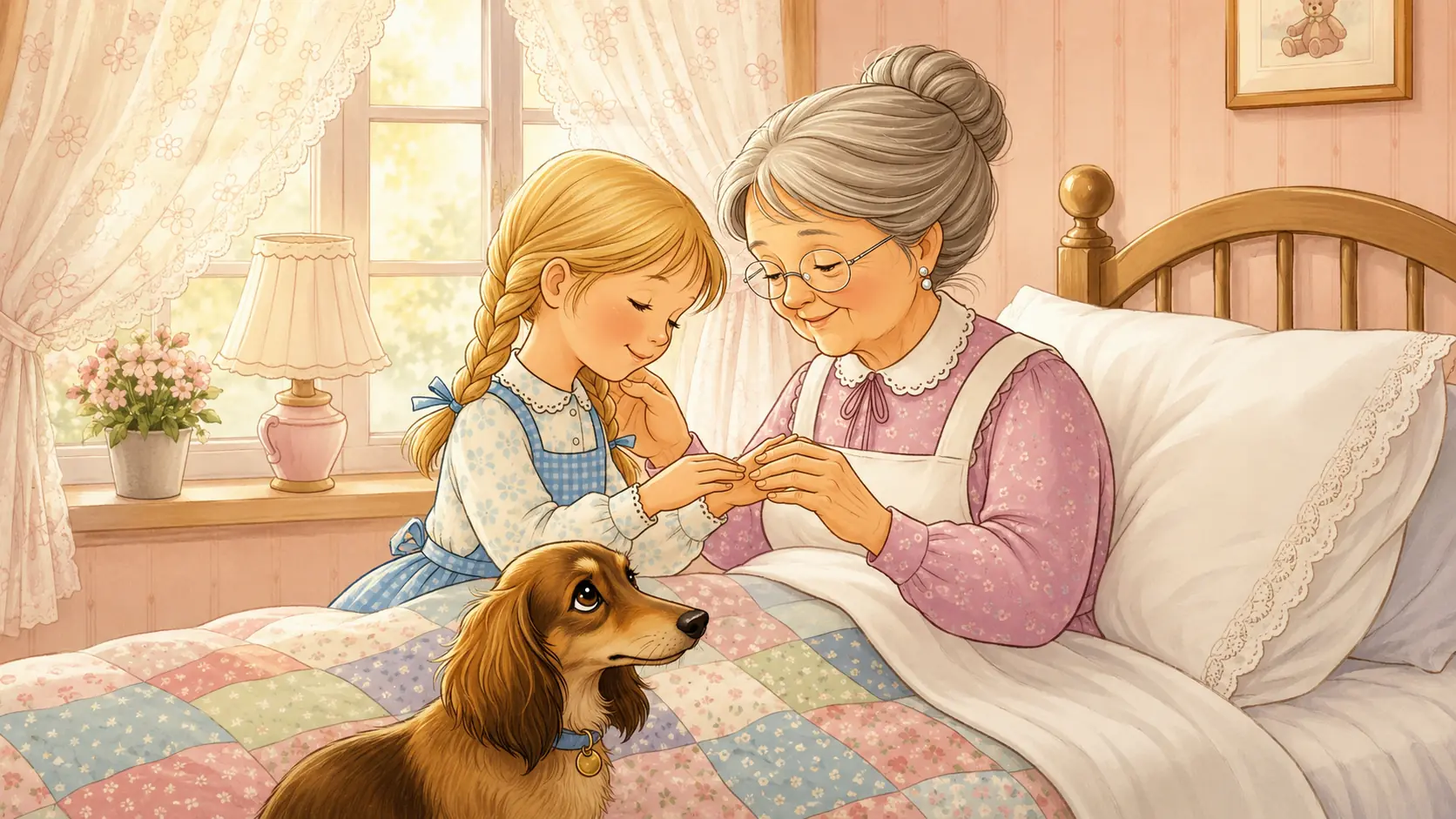
1. “What Made You Smile Today?”
Asking a grandchild what made them smile is a gentle way to begin.
It is specific enough to give the child direction, but open enough to allow many kinds of answers.
Perhaps a friend told a joke. Perhaps the teacher made a funny mistake. Perhaps a dog passed the playground wearing a little red sweater. Maybe the child finally understood a difficult lesson, received a sticker, heard a favorite song, or found an encouraging note in their lunchbox.
The answer may seem small to an adult.
That does not make it unimportant.
A grandmother who asks about smiles is teaching her grandchild to notice joy.
Children live busy lives. They move quickly from one activity to another, often without time to reflect. School, homework, sports, lessons, screens, friendships, and family routines can fill every part of the day. Even happy experiences may pass unnoticed unless someone helps the child return to them.
“What made you smile today?” invites the grandchild to pause and search their memory for something good.
This is not the same as demanding positivity.
We should not use the question to deny a difficult day or suggest that children must always be cheerful. There will be days when a grandchild cannot immediately think of anything that made them smile. There may be days marked by disappointment, loneliness, fear, or exhaustion.
When that happens, Grandma does not need to correct the answer.
She can say, “It sounds like today was a hard one.”
Then she can remain present.
Perhaps later, after a snack or a quiet moment, the child will remember something. Perhaps the only smile came when they saw Grandma waiting for them. That answer matters too.
The question can also become a way for grandmothers to share their own humanity.
If the child struggles to answer, Grandma might say, “Something that made me smile today was seeing a little bird outside my window,” or, “I smiled when I thought about the funny thing you said last weekend.”
This is not about taking over the conversation. It is about showing how the question works.
Children learn reflection by watching adults reflect.
For grandmothers over sixty-five, this question may carry another layer of meaning. We understand how quickly ordinary moments become memories. We know that some of the things that once filled our days—school pickups, packed lunches, lost shoes, bedtime stories—eventually disappear.
Our grandchildren are still living inside those ordinary years.
By asking what made them smile, we help them gather the small joys they might otherwise forget.
We may also discover what brings them alive.
A child who repeatedly smiles while talking about animals may have a deep love for them. A child who lights up when describing a science experiment may be revealing a growing interest. Another may smile whenever they mention a particular classmate, teacher, or activity.
These small answers help us know the child in front of us rather than the child we assume them to be.
They guide us toward better gifts, better conversations, and better ways to encourage them.
Most of all, they tell the grandchild that Grandma is not only searching for problems.
She is also interested in delight.
She wants to know what made the world feel lighter.
2. “Who Did You Play With Today?”
Children’s friendships often shape their entire experience of school.
A day can feel wonderful when a child feels included and terrible when they do not. Yet if we only ask, “How was school?” we may never hear about the quiet social moments that mattered most.
“Who did you play with today?” gives a child an opportunity to talk about belonging.
The answer might be a familiar name.
“I played with Emma.”
“Lucas and I built something.”
“I sat with Noah.”
The grandmother can respond with curiosity.
“What do you like playing together?”
“What makes Emma a good friend?”
“What did you and Lucas build?”
These follow-up questions should feel like interest, not investigation.
Children quickly sense when an adult is collecting information for judgment. If every friend is evaluated, every conflict analyzed, and every name remembered for future questioning, the child may become more cautious.
We want our grandchildren to feel that they can tell us the whole truth about friendship, including the messy parts.
Sometimes the answer to “Who did you play with today?” will be, “Nobody.”
That answer can break a grandmother’s heart.
Our instinct may be to react immediately.
“Why not?”
“Did someone leave you out?”
“Who was mean to you?”
“We need to tell your mother.”
But a strong reaction may cause the child to shut down, especially if they are still trying to understand what happened.
It is often better to slow down.
“You played by yourself today?”
Then wait.
The child may explain that they wanted to be alone. They may say their best friend was absent. They may reveal that others would not let them join. They may shrug because the feeling is too tender to describe.
Grandma can respond without panic.
“That sounds lonely.”
Or, “Sometimes playing alone can be peaceful. How did it feel to you?”
The goal is to understand before trying to solve.
Grandmothers have lived long enough to know that friendship is complicated. We remember the pain of being excluded, misunderstood, replaced, or forgotten. We know that childhood wounds can feel enormous, even when adults believe they are small.
We can offer empathy without turning every disappointment into a crisis.
If a pattern of isolation or bullying emerges, the parents may need to be involved. But the first gift is often simply being the adult who listens calmly enough for the truth to come out.
This question can also teach grandchildren what healthy friendship looks like.
When they describe a friend, Grandma might ask, “How do you feel when you are with that person?”
A child may not yet know how to recognize a safe friendship. They may think a friend is someone who is entertaining, popular, or willing to play. Over time, gentle conversations can help them notice whether a friendship also includes kindness, honesty, respect, and room to be themselves.
We do not need to give a lecture.
We can plant small seeds.
“It sounds like you felt comfortable around her.”
“That was kind of him to save you a seat.”
“You deserve friends who do not make you feel afraid to be yourself.”
These words may stay with a child for years.
By asking who they played with, we are not merely asking for names.
We are asking, “Did you feel connected today? Did you have a place? Was someone glad you were there?”
Those are questions every human heart carries, no matter our age.
3. “What Was the Funniest Thing That Happened Today?”
Laughter is one of the easiest bridges between generations.
A grandmother and grandchild may have grown up in completely different worlds. The child may use expressions Grandma does not understand, watch shows she has never seen, and find humor in things that make little sense to her.
Still, laughter can bring them together.
“What was the funniest thing that happened today?” invites storytelling.
Unlike “How was your day?” this question usually requires a scene. The child may need to explain who was there, what was said, and why everyone laughed. In the process, the grandmother learns about the classroom, the child’s friends, the teacher, and the atmosphere of the day.
Sometimes the story will truly be funny.
Sometimes Grandma may not understand it at all.
The temptation is to say, “I don’t get it,” or remind the child not to laugh at inappropriate things. There may be moments when guidance is necessary, especially if the humor involved cruelty or embarrassment. But often the better response is to enjoy the child’s enjoyment.
Their face may tell the story more beautifully than the words do.
A child who feels safe laughing with Grandma learns that she is interested in more than performance and responsibility. She is also interested in the parts of life that are silly, strange, and light.
Many older adults were raised in homes where children were expected to be seen and not heard. Humor at the dinner table may have been discouraged. Adults may have considered children’s stories unimportant or interrupted them before they finished.
Grandmotherhood gives us a chance to create a different experience.
We can allow a child to tell the story badly.
They may begin in the middle, forget important details, repeat themselves, or laugh so hard that the explanation becomes impossible to follow.
We can let them finish.
That patience communicates respect.
It says, “Your voice is worth waiting for.”
This question also helps children revisit a positive moment after a stressful day. Humor can release tension. A child who arrived home irritated may soften while remembering something that made the whole class laugh.
Grandma can contribute her own funny stories too.
Perhaps she tells about dropping a spoon, confusing two names, wearing her sweater inside out, or misunderstanding a modern phrase. Gentle self-deprecating humor shows grandchildren that mistakes do not have to become shame.
It also makes Grandma feel more approachable.
A child may be more willing to admit an embarrassing moment when they know Grandma can laugh kindly at herself.
Of course, humor must never be used to dismiss pain. If a grandchild shares that others laughed at them, the focus should not be on finding the funny side.
We can say, “That does not sound funny when you were the one being hurt.”
The distinction between laughing with someone and laughing at someone is an important lesson.
A grandmother can help a child recognize the difference without turning the conversation into a lecture.
“What made everyone laugh?”
“Was the person laughing too?”
“How do you think it felt for them?”
These questions build empathy.
Over time, the funny stories become family memories.
Grandchildren may forget many school lessons, but they often remember the people who loved hearing their stories.
Years from now, they may not remember the exact joke.
They may remember Grandma laughing beside them at the kitchen table.
4. “Did You Learn Something New Today?”
When adults ask children about learning, we often focus on results.
What grade did you get?
Did you finish your homework?
How did you do on the test?
Did the teacher say you were paying attention?
Those questions have a place, but they can unintentionally teach children that learning matters only when it can be measured.
“Did you learn something new today?” opens a wider door.
The answer might involve mathematics or reading, but it may also be something unexpected.
A child may have learned that caterpillars breathe differently than humans. They may have learned how to tie a knot, spell a difficult word, pronounce someone’s name correctly, include a new classmate, or recover after making a mistake.
They may have learned something about themselves.
“I learned that I can speak in front of the class.”
“I learned that I do not like playing goalie.”
“I learned that asking for help is not as scary as I thought.”
When Grandma shows interest in learning rather than only achievement, she helps the child develop curiosity.
She can ask, “What surprised you about that?”
“Can you teach it to me?”
That second question is especially powerful.
Children spend much of their day being taught by adults. When Grandma invites them to become the teacher, their confidence grows. They organize what they know, practice explaining it, and experience the pleasure of being taken seriously.
Grandma does not need to pretend ignorance about everything. She simply needs to make room for the child’s knowledge.
“You know more about that than I do. Show me.”
For an older grandmother, this may require humility.
We have lived longer and learned many things, but the world continues to change. Our grandchildren may understand technology, science, culture, or language that did not exist when we were young.
Rather than feeling threatened by that difference, we can let it become a bridge.
A grandchild who teaches Grandma how to use an app or explains a school project is not only sharing information. They are experiencing competence.
At the same time, Grandma carries knowledge that cannot be found in a textbook.
She knows family stories, practical skills, recipes, songs, traditions, and lessons earned through decades of living. When learning becomes a two-way exchange, both generations gain dignity.
The child teaches Grandma something from today.
Grandma shares something from yesterday.
Together, they create understanding.
There will be days when a child says, “I didn’t learn anything.”
Instead of correcting them, Grandma can gently widen the question.
“Did you discover anything?”
“Did anything make more sense than it did yesterday?”
“Did you learn something about a friend?”
We should also be careful not to turn every answer into another lesson.
If the child says, “I learned that volcanoes can form underwater,” we do not need to begin a twenty-minute explanation unless they are interested. Sometimes the most encouraging response is simple amazement.
“I did not know that. Tell me more.”
Those four words can transform a child’s confidence.
They say, “Your mind is interesting to me.”
That message matters far beyond school.
5. “What Was Your Favorite Part of the Day?”
Asking a child to choose a favorite part encourages reflection and helps Grandma see what the child values.
The answer may surprise us.
We might expect them to say recess, art class, or a special event. Instead, they may say the best part was when the teacher smiled at them, when a friend shared a pencil, when lunch included their favorite fruit, or when they were allowed to read quietly.
What children choose reveals what nourishes them.
Some grandchildren love activity and excitement. Others treasure calm moments. Some feel happiest when they succeed. Others light up when they feel connected to someone.
A grandmother who listens over time begins to recognize patterns.
Perhaps a child’s favorite moments always involve creating. Perhaps another consistently mentions helping. Perhaps a grandchild who seems outgoing repeatedly chooses quiet activities as the best part of the day.
These insights allow Grandma to know the real child, not merely the role the child plays in the family.
Families sometimes assign identities without realizing it.
One child becomes “the athletic one.”
Another is “the shy one.”
One is considered “the difficult one,” while another is “the smart one.”
Children can become trapped inside these descriptions.
By asking open questions and listening without assumptions, Grandma gives the child room to be more complex.
The athletic child may also love poetry.
The shy child may be a strong leader among close friends.
The child labeled difficult may have a deep sense of justice and a sensitive heart.
“What was your favorite part?” allows the child to show us what mattered, without our deciding in advance.
It can also help during difficult seasons.
A child may be experiencing a family change, academic struggle, or friendship problem. The entire day may feel heavy. Searching for one favorite moment does not erase the hardship, but it can remind the child that difficult days are rarely made of only one thing.
There may have been a kind word inside the loneliness.
A warm sunbeam during a hard morning.
A teacher who noticed.
A few peaceful minutes in the library.
Grandma can honor both realities.
“I’m glad that part felt good, even though the rest of the day was hard.”
This is an important emotional skill.
Children need to learn that joy and sadness can exist together. A day does not have to be perfect to contain something meaningful.
Grandmothers understand this deeply.
By the time we reach our later years, many of us have known grief, illness, disappointment, and change. We have also discovered that beauty does not always disappear during hard seasons. Sometimes it becomes more precious.
We can pass that wisdom to grandchildren without making speeches.
We can simply help them notice.
“What was your favorite part?”
Then listen as if the answer matters.
6. “Was There Anything That Felt Hard Today?”
This may be one of the most important questions a grandmother can ask.
It gives the child permission to speak about difficulty before the difficulty becomes a crisis.
Many children do not volunteer their struggles. They may believe the problem is too small. They may fear getting someone in trouble. They may be embarrassed. They may worry that adults will overreact, ask too many questions, contact the school immediately, or tell them what they should have done differently.
A calm, open question makes room for honesty.
“Was there anything that felt hard today?”
The wording matters.
It does not assume something terrible happened. It does not demand disclosure. It simply offers an opening.
A child may mention a difficult assignment, an argument, a moment of embarrassment, a loud classroom, or a feeling they cannot explain.
Grandma’s first response should rarely be advice.
It should be understanding.
“That sounds frustrating.”
“I can see why that felt hard.”
“You were trying, and it still did not work the way you hoped.”
These responses help the child feel less alone.
Grandmothers are often natural problem-solvers. We have spent decades caring for people. When someone we love is hurting, we want to repair the situation quickly.
But children sometimes need us to witness the pain before trying to remove it.
If we respond immediately with, “Here is what you should have done,” the child may hear criticism rather than help.
If we say, “That is nothing to worry about,” they may learn that their feelings are too much or too foolish to share.
If we become angry on their behalf, they may begin protecting us from information.
Instead, we can ask, “Do you want help thinking about it, or do you just want Grandma to listen?”
That question teaches the child that different kinds of support exist.
Sometimes they want advice.
Sometimes they want comfort.
Sometimes they simply want to tell the story without carrying it alone.
This question also allows Grandma to notice patterns. A single hard day may be ordinary. Repeated mentions of stomachaches, exclusion, fear of a teacher, humiliation, or dread about school may require the parents’ attention.
Grandmothers should respect the trust of the child while also remembering that safety comes first. We should never promise to keep secrets involving harm, abuse, or serious danger.
We can say, “I will always respect what you tell me, but if you are not safe, Grandma may need to get help.”
For ordinary struggles, however, the greatest gift may be calm presence.
Our grandchildren need adults who are not frightened by their feelings.
They need to know that anger does not make them bad, sadness does not make them weak, and difficulty does not mean they have failed.
A grandmother can become the person who helps name what happened.
“That sounds like disappointment.”
“You wanted to belong, and you felt left out.”
“You were worried people would laugh.”
Naming feelings gives children language, and language gives them more choices than acting out, shutting down, or carrying the pain silently.
The question “Was there anything that felt hard?” communicates something profound:
“You do not have to bring Grandma only the happy parts.”
That is how trust deepens.
7. “Did You Help Someone Today, or Did Someone Help You?”
This question invites a child to notice kindness in both directions.
“Did you help someone today?”
Perhaps the child held a door, shared a supply, explained instructions, comforted a friend, picked something up, or invited someone to join a game.
Grandma can show genuine interest.
“How did you know they needed help?”
“How did it feel afterward?”
The goal is not to praise the child so excessively that kindness becomes a performance. It is to help them recognize that their choices affect other people.
A simple response may be enough.
“That was thoughtful.”
“I’m glad you noticed.”
“You made that moment easier for someone.”
These words connect kindness with awareness rather than reward.
The second half of the question is equally important.
“Did someone help you?”
Children sometimes receive help without noticing it. A classmate saves a seat. A teacher explains something again. A friend picks up dropped papers. A lunch worker remembers their name.
When we ask about these moments, we help grandchildren see that they live within a web of care.
They are not alone.
This can strengthen gratitude without forcing it.
Grandma can say, “It sounds like your teacher was paying attention,” or, “That was kind of your friend.”
Children also need to learn that accepting help is not weakness.
Some children are proud of doing everything alone. Others fear appearing incapable. Asking who helped them normalizes interdependence.
Everyone needs help.
Grandma needs help sometimes too.
She can share, “The neighbor helped me carry something today,” or, “I asked the pharmacist to explain that again because I did not understand.”
Such examples teach grandchildren that wise people ask for help when they need it.
This question can lead naturally into conversations about empathy.
If a child says they helped someone who was crying, Grandma might ask, “What do you think they needed most?”
If someone helped the child, she might ask, “How did you know you could trust them?”
Again, these do not need to become lectures. Gentle curiosity is enough.
For grandmothers, kindness may be one of the values we most hope to pass down.
We know that intelligence, talent, and success matter, but we also know how deeply a small act of compassion can shape a life.
We remember the person who sat with us in grief, brought food when we were ill, called when we felt forgotten, or helped without making us feel ashamed.
By asking about helping, we teach our grandchildren to notice these sacred, ordinary exchanges.
We help them understand that a good day is not only a day when something wonderful happened to them.
It may also be a day when they made life a little gentler for someone else.
8. “What Game Did You Play at Recess?”
Recess may look like a simple break in the school day, but for children, it is often an entire social world.
It is where friendships are tested, rules are negotiated, leaders emerge, feelings are hurt, imaginations expand, and children discover whether there is room for them in the group.
“What game did you play at recess?” gives Grandma a window into that world.
The answer may involve tag, soccer, basketball, pretend play, jump rope, playground equipment, or a game Grandma has never heard of.
Rather than pretending to understand, she can ask the child to explain.
“What are the rules?”
“How do you win?”
“What part do you like best?”
Children often enjoy teaching adults the details of their play. It gives them a sense of competence and allows Grandma to see how they think.
The game may reveal social dynamics too.
Who chooses the teams?
Who changes the rules?
What happens when someone loses?
Is everyone allowed to join?
A child may mention these details casually, without realizing they are describing important relationships.
Grandma can listen for what is beneath the story.
Perhaps the child is always the one waiting to be picked.
Perhaps they become upset when they lose.
Perhaps they are excluding another child without recognizing it.
Perhaps they are afraid to join because they do not know the rules.
These moments can become opportunities for gentle guidance.
“What could you say if someone wanted to play?”
“How do you think it feels to be chosen last?”
“What helps you keep playing when you do not win?”
The best guidance is usually brief and connected to the child’s actual experience.
We do not need to turn every recess story into a moral lesson.
Sometimes the child simply wants Grandma to understand why the game was exciting.
Physical play is also important because it tells us how children use their bodies and imaginations. A child who struggles to sit still in the classroom may feel capable and joyful during recess. Another child may dislike rough games and prefer quiet conversation.
Neither is wrong.
Grandma’s curiosity can communicate acceptance.
“You really like running fast.”
“You enjoy making up stories with your friends.”
“You seem happiest when you can climb.”
These observations help children know themselves.
For older grandmothers, recess stories may bring back memories of our own childhoods. We may remember hopscotch, jacks, marbles, jump rope rhymes, baseball in empty lots, or games invented with very little equipment.
Sharing those memories can create a beautiful connection, as long as we do not turn them into comparisons about how childhood was better in the past.
The point is not to say, “We had more fun than children do now.”
It is to say, “Play mattered to me too.”
Grandchild and grandmother may discover that across the decades, children have always needed movement, imagination, friendship, and a place to belong.
9. “What Made You Feel Proud Today?”
Pride is not always loud.
A child may feel proud of receiving a high grade, winning a game, or being chosen for a special role. But they may also feel proud of something no adult noticed.
They raised their hand even though they were nervous.
They tried again after making a mistake.
They read a difficult paragraph.
They sat beside someone who was alone.
They controlled their temper.
They asked a question instead of pretending to understand.
“What made you feel proud today?” invites the child to recognize effort, courage, growth, and character.
This is different from asking, “What did you do well?”
Doing well often sounds connected to performance.
Feeling proud allows the child to define what mattered.
Grandma’s response can help shape a healthy understanding of achievement.
If the child says, “I got the highest score,” she can celebrate while also asking, “What helped you prepare?”
This shifts some attention from being better than others to the effort and habits behind success.
If the child says, “I did not cry when I made a mistake,” Grandma might respond, “You kept going even though you felt embarrassed. That took courage.”
Such responses build an inner sense of competence.
Children who depend only on praise may become afraid of failure. They learn to seek constant approval and avoid tasks they may not master immediately.
A grandmother can support a stronger foundation by noticing process.
“You stayed patient.”
“You practiced.”
“You told the truth.”
“You asked for help.”
“You tried something new.”
This kind of encouragement tells the child that their worth is not limited to results.
It also gives Grandma an opportunity to understand what challenges the child is facing. A grandchild who feels proud of speaking to one person may be struggling with social anxiety. A child proud of completing one worksheet may have found the subject very difficult.
The achievement may look small from the outside, but the effort may have been enormous.
Grandmothers are uniquely positioned to honor gradual growth.
We have lived long enough to know that meaningful change often happens quietly. We understand that courage is not the absence of fear. It is taking one step while fear is still present.
We also know that pride must be balanced with humility.
A child can celebrate their success without looking down on others. Grandma can reinforce that balance by asking, “Who helped you?” or, “Did someone else do something they felt proud of too?”
This does not reduce the child’s moment.
It places achievement within relationship and gratitude.
There may be days when a child cannot think of anything.
Grandma can help without inventing false praise.
“I noticed that you carried your backpack even when you were tired.”
“You told me the truth about what happened.”
“You kept trying to explain that story until I understood.”
Specific observations feel more sincere than general statements such as, “You are amazing at everything.”
Our grandchildren do not need to believe they are perfect.
They need to believe they are capable of growing.
A grandmother who asks what made them proud helps them build a record of their own courage, one ordinary day at a time.
10. “What Are You Excited About for Tomorrow?”
The final question turns the child gently toward the future.
“What are you excited about for tomorrow?”
Perhaps there is a field trip, music class, lunch with a friend, a favorite subject, sports practice, or time with Grandma.
The answer gives the child something positive to anticipate.
Anticipation can be deeply regulating. When children know there is something good ahead, the next day may feel less uncertain.
This question also gives Grandma insight into what matters most to them.
A child who is excited about seeing a friend is revealing the importance of connection. A child who looks forward to a project may be motivated by creativity. Another may be excited simply because tomorrow is pizza day.
No answer is too small.
We should resist the urge to replace the child’s excitement with what we think should matter more.
If they are excited about dessert, a game, or wearing a new shirt, that joy still deserves recognition.
“It sounds like you cannot wait.”
At times, the child may say, “Nothing.”
Or, “I don’t want tomorrow to come.”
That answer deserves attention.
It may mean the child is tired. It may signal a test, conflict, fear, or ordinary reluctance about returning to school.
Grandma can ask gently, “Is there something about tomorrow that worries you?”
Then listen.
We should not force optimism.
Children need to know they can speak honestly about dread as well as excitement.
If there is something difficult ahead, Grandma can help the child identify one small anchor.
“Your test feels scary. What might help you feel more prepared?”
“You are worried about recess. Is there one person you could stay close to?”
“Tomorrow may be hard, but you will not face it without people who love you.”
Hope does not require pretending.
It means helping the child see that the future is not entirely beyond their influence and that they are not alone.
For grandmothers, asking about tomorrow can be especially poignant.
As we grow older, we become more aware that time is precious. We may not know how many ordinary tomorrows we will share with our grandchildren.
That awareness can tempt us to hold too tightly, worry too much, or turn every interaction into a lesson.
But perhaps the better response is to be present.
To listen to what excites them.
To bless the future without trying to control it.
To say, “I hope tomorrow brings something wonderful,” and mean it.
Our grandchildren are growing toward lives we may not fully witness. They will enter classrooms, careers, relationships, parenthood, and seasons we cannot predict.
The questions we ask now can become part of the voice they carry into those futures.
A voice that says, “There is something ahead worth noticing.”
A voice that says, “You can talk about your fears.”
A voice that says, “Grandma believes tomorrow can hold new possibilities.”
How to Ask Without Turning Connection into an Interview
These ten questions are invitations, not a checklist.
A grandmother does not need to ask all of them every afternoon. Doing so may make the child feel as though they are completing a report.
Choose one.
Ask it naturally.
Then allow the conversation to unfold.
Some days, one answer may lead to twenty minutes of storytelling. Other days, the child may respond with one word and move on.
Both are normal.
Timing matters.
A hungry child may need a snack before conversation. An overstimulated child may need quiet. A physically active child may talk more freely while walking or throwing a ball. A teenager may open up in the car because there is less direct eye contact.
Grandma can learn the child’s rhythm.
We should also be careful about asking questions when we are not prepared to listen.
Children notice distracted attention.
If Grandma asks, “What felt hard today?” while looking at her phone, cleaning the kitchen, or interrupting every answer, the child may decide the question was not sincere.
We do not need perfect silence or unlimited time.
We need a few moments of genuine presence.
Put the phone down.
Look at the child when it feels comfortable.
Let pauses happen.
Do not rush to fill every silence.
A child may be searching for words.
Older grandchildren may need extra space. They may fear being judged, corrected, or reported. Trust grows when Grandma can hear something uncomfortable without becoming dramatic.
That does not mean agreeing with every choice.
It means understanding before responding.
“What happened next?”
“How did you feel?”
“What do you think you might do?”
These questions allow the child to think rather than simply receive instructions.
It is also important not to use yesterday’s answer as a weapon tomorrow.
If a child admits they felt left out, we should not announce it to relatives or tease them later. If they share an embarrassing mistake, it should not become a family story without their permission.
Respect protects trust.
Grandmothers sometimes believe that because a child is young, their privacy matters less. In reality, children learn whether adults are safe through the way small disclosures are handled.
When we guard their dignity, they are more likely to bring us larger truths later.
The Grandmother Who Knows How to Listen
Many of us grew up in generations where feelings were not discussed openly.
Children were expected to be grateful, polite, strong, and quiet. Adults may not have asked what felt hard, who made us smile, or whether we felt proud.
We survived.
But survival is not the only gift we can pass down.
Grandmotherhood gives us an opportunity to offer our grandchildren something we may not always have received ourselves: emotional attention without judgment.
We can become the person who asks not only, “Did you behave?” but also, “Did you feel included?”
Not only, “What grade did you get?” but, “What did you learn?”
Not only, “Why are you upset?” but, “What felt hard?”
Not only, “What did you accomplish?” but, “What made you proud?”
These questions do not make children weak.
They help children understand themselves.
A child who can name joy, sadness, pride, fear, connection, and disappointment is better equipped to handle those emotions safely. They are more likely to ask for help, recognize healthy friendships, and understand the effects of their choices.
Listening is education too.
When Grandma listens patiently, she teaches communication.
When she responds calmly, she teaches emotional safety.
When she asks thoughtful questions, she teaches reflection.
When she respects the child’s answers, she teaches dignity.
When she admits she does not understand and asks to learn, she teaches humility.
These lessons do not require a classroom.
They happen at the kitchen table, in the car, during a walk, over the telephone, or beside a child’s bed.
What Our Grandchildren May Remember
Years from now, our grandchildren may not remember every question we asked.
They may forget the specific day they told us about recess, the difficult assignment, the friend who made them laugh, or the moment they felt proud.
But they may remember the feeling of being listened to.
They may remember that Grandma did not always rush to correct them.
They may remember that she cared about the small parts of their lives.
They may remember that she knew the names of their friends, the games they played, the subjects they loved, and the things that frightened them.
They may remember that she could hear about a hard day without making them feel weak.
They may remember that when they had something wonderful to share, Grandma’s face lit up as though their joy were important.
Those memories become part of a child’s inner world.
A grandchild who is listened to learns that their voice matters.
A grandchild whose feelings are respected learns to respect the feelings of others.
A grandchild who is asked about kindness becomes more likely to notice opportunities to be kind.
A grandchild who is invited to recognize pride develops confidence rooted in effort rather than constant comparison.
A grandchild who is encouraged to look toward tomorrow learns hope.
This is how everyday conversations become part of a legacy.
Conclusion: Ask a Smaller Question and Discover a Bigger World
“How was your day?” is not a bad question.
It is simply too large to carry everything a grandmother hopes to know.
Our grandchildren’s days are made of small moments: a smile across a classroom, a difficult worksheet, a joke at lunch, a lonely recess, a kind classmate, a brave decision, a new discovery, and a hope for tomorrow.
When we ask smaller, more specific questions, we help those moments find their way into words.
“What made you smile today?”
“Who did you play with?”
“What was the funniest thing that happened?”
“Did you learn something new?”
“What was your favorite part?”
“Did anything feel hard?”
“Did you help someone, or did someone help you?”
“What game did you play at recess?”
“What made you feel proud?”
“What are you excited about for tomorrow?”
These questions are not techniques for making children talk.
They are ways of showing children that we are willing to listen.
There will still be days when the answers are brief. There will be seasons when grandchildren pull away, especially as they grow older. They may prefer friends, privacy, and independence. That is part of growing up.
Grandma’s task is not to force closeness.
It is to keep the door open.
To remain curious without becoming intrusive.
To offer attention without demanding a performance.
To become a steady person who can hold both the funny stories and the difficult truths.
We may not be able to walk beside our grandchildren through every part of their lives. We cannot attend every class, protect them from every hurt, or solve every problem.
But we can create a place where their experiences are welcomed.
A place where they do not have to reduce an entire day to “fine.”
A place where joy is celebrated, difficulty is taken seriously, kindness is noticed, growth is honored, and hope is gently encouraged.
That place may be Grandma’s kitchen.
It may be the passenger seat of her car.
It may be a weekly phone call from many miles away.
It may be a quiet conversation before bedtime.
Wherever it happens, the message is the same:
“Tell me about your world. I may not understand every part of it, but I want to know because I love you.”
And sometimes, that is exactly what a grandchild needs most.