1. Put toys away in labeled bins or baskets
At five to seven, play is serious work, and the transition out of play can feel like loss. Labeled bins or baskets—with both pictures and words—give children a clear, visual map for where each category belongs. This chore teaches categorization, spatial awareness, and the satisfying rhythm of beginning, middle, and end. It also gently introduces the idea that play has a conclusion and that caring for toys is part of enjoying them.
Teaching begins with modeling and playfulness. Sit on the floor together and sort one type of toy at a time. “The blocks with the picture of the tower go in this blue bin. The cars with the red car picture go here.” Use a simple song or a two-minute timer to keep it light. At first, do most of the work while narrating. Over weeks, shift more responsibility to the child: “Which bin do the dinosaurs live in?” When the last toy is placed, pause and notice together: “Look how much space we have now. You did that.”
The deeper education here is respect—for belongings, for shared space, and for the effort that went into creating the toys in the first place. Children who learn to put things away develop a sense of order that reduces later overwhelm. They also experience the pride of a visible result. A once-chaotic floor becomes a clear, inviting space because of their hands. That feeling of agency is powerful medicine against helplessness.
Watch a six-year-old who has just finished returning every stuffed animal to its labeled basket. She stands back, hands on hips, and declares, “All done!” The smile that follows is not about the clean room. It is about the quiet knowledge: I can make order out of my own world.
2. Make their bed
Making a bed requires a sequence of steps, bilateral coordination, and the ability to work toward a finished product that will not be used again until evening. For a five-to-seven-year-old, the goal is not hospital corners but the simple act of pulling up the comforter or quilt and smoothing it with their hands. This chore teaches that personal space deserves care and that small, repeated actions create a sense of calm and ownership.
Start with a made bed as the model. In the morning, stand beside your child and demonstrate the two or three motions: pull the sheet up, pull the comforter up, pat it smooth. At first, you may do the heavy lifting while they copy the patting motion. Within a few weeks, they can do the entire sequence with you nearby for encouragement rather than rescue. A small step stool helps younger ones reach the far side of the bed.
The emotional lesson runs deeper than tidiness. A child who makes their own bed each morning begins the day with an act of self-care and responsibility. It is a quiet declaration: this is my space, and I can tend it. For parents and grandparents, the sight of a small, slightly lumpy bed made with earnest effort often brings unexpected tenderness. It is proof that the child is growing in independence, one small victory at a time.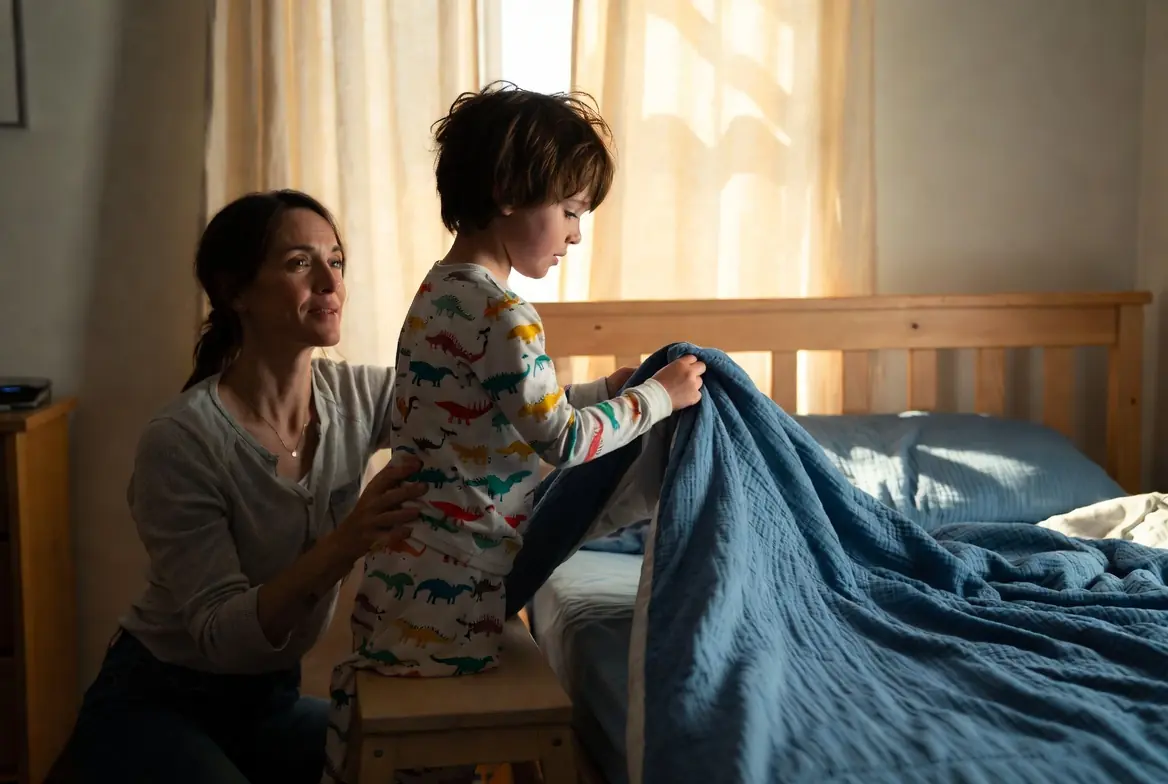
3. Put dirty clothes in the hamper
This simple transfer from floor to basket teaches ownership of personal belongings and the beginning of laundry awareness. It prevents the accumulation of scattered clothes that later overwhelm both child and parent. For five-to-seven-year-olds, the motor skill is easy; the habit is what requires consistent, kind reinforcement.
Place the hamper in a visible, accessible spot—perhaps right inside the closet or beside the dresser. Make it a non-negotiable part of the bedtime or bath-time routine: “Pajamas come off, they go in the hamper, then we brush teeth.” At first, you may need to guide the hand. Soon the child will do it automatically because the routine carries the memory.
The deeper gift is the understanding that clothes do not magically disappear. Someone—eventually the child themselves—will need to handle them. This small awareness plants seeds for later respect toward the work of maintaining a household.
4. Match socks after laundry is folded
Sorting and matching socks turns a mundane task into a delightful puzzle. It strengthens visual discrimination, fine motor skills, and the satisfaction of completing a set. For children this age, pairing socks is both achievable and genuinely helpful to the adult doing laundry.
After you fold the rest of the load, spread the socks on a low table or the bed. Sit together and model: “Find the one that looks exactly like this one.” Celebrate matches with a small cheer or by placing the pair in a special “matched socks” basket. Over time, your child may begin sorting while you fold other items, turning laundry into companionable time rather than solitary work.
Beyond the practical help, this chore teaches patience with detail and the joy of bringing order to something disordered. The moment a child holds up two perfectly matched socks and beams is small but significant. It is practice in noticing, in persisting, and in contributing something useful to the family’s shared life.
5. Set the table with basic items
Setting the table is one of the most visible and immediately appreciated contributions a young child can make. It teaches sequencing, one-to-one correspondence (one plate per person), and the pleasure of preparing a space for others to enjoy. At five to seven, children can reliably place plates, napkins, and utensils when given a simple model or placemat guide.
Begin with a demonstration: walk around the table placing one item at a time while counting or naming family members. Use a placemat with outlines if needed at first. Let your child do one place setting while you do the others, then gradually hand over more. The goal is not speed but the growing competence of “I know how to get the table ready for dinner.”
The emotional education is profound. When a child sets the table, they are saying, without words, “I am preparing something good for the people I love.” They experience the quiet pride of being needed at mealtime. Parents and grandparents often report that children who set the table regularly become more interested in the meal itself and more willing to stay at the table longer. The chore becomes a bridge into family connection.
6. Clear their dishes from the table after meals
Clearing one’s own dishes is the natural partner to setting the table. It teaches that the meal is not finished until the space is restored. For five-to-seven-year-olds, start with their own plate, cup, and napkin. The motor skill of carrying without spilling improves quickly with practice and a low expectations at first.
Stand nearby the first many times. Guide the child to push the chair in, pick up the plate with two hands, and walk carefully to the counter or sink. Celebrate the completed trip rather than perfect balance. Over time, add the napkin and utensils. Eventually the child may clear siblings’ dishes as well, extending the sense of family responsibility.
This chore quietly counters entitlement. It says: everyone who eats also helps restore the space. The child learns that comfort is something we create and maintain together. The small act of clearing a plate becomes an act of respect for the person who prepared the meal and for the shared home.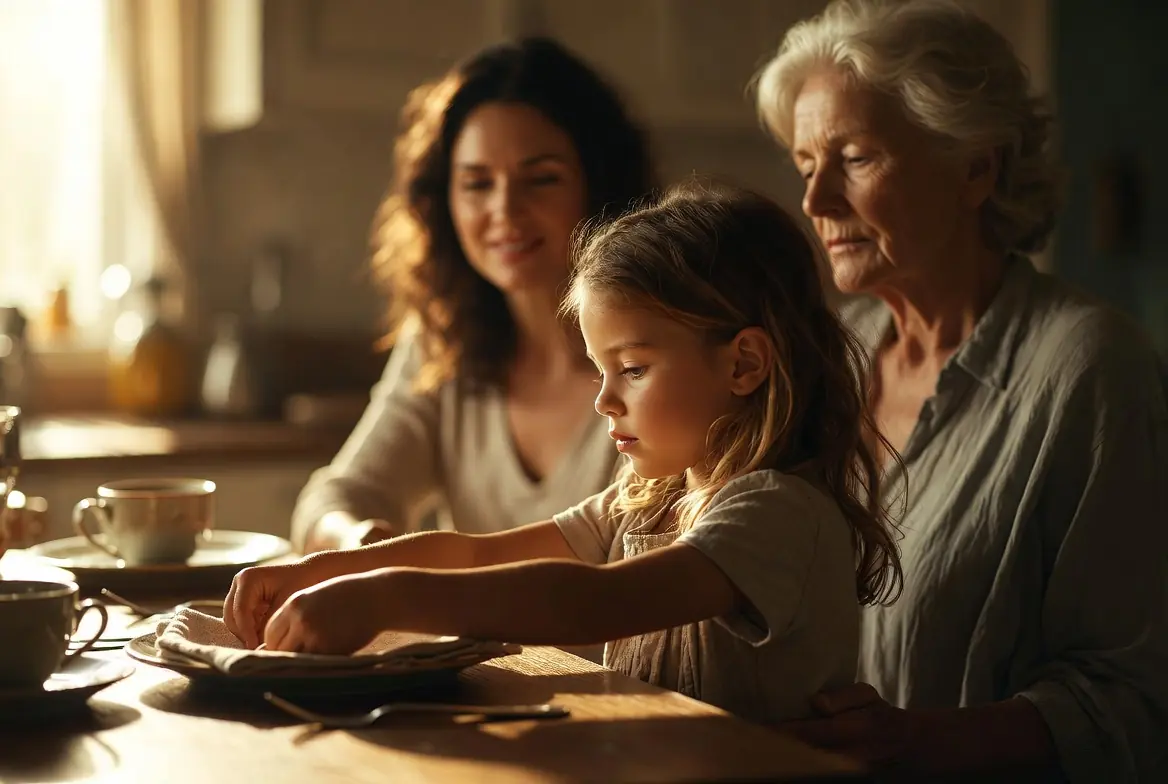
7. Wipe down their spot at the table or counter
Wiping a surface requires a sequence—get the cloth, dampen it if needed, wipe in a pattern, rinse or put away the cloth. It also teaches that messes are part of life and that we are capable of addressing them. For this age, a small spray bottle with water or a damp cloth kept in a low drawer makes the task accessible.
Model first: show how to spray lightly or wet the cloth, then wipe in one direction. Do it together at the child’s own spot after a meal. Praise specific effort: “You got every crumb!” rather than general “Good job.” Soon the child will notice spills on their own and reach for the cloth without prompting.
The deeper lesson is stewardship. Children learn that surfaces stay pleasant because someone tends them. They also experience the sensory satisfaction of a clean, smooth table under their hands. It is a small but tangible way they can make their environment better.
8. Feed a pet with supervision
Caring for a living creature adds a layer of empathy and routine that is deeply formative. Measuring food, pouring it into a bowl, and checking water levels teach measurement, responsibility, and gentleness. The supervision ensures safety for both child and pet while the child experiences the trust of being given an important job.
Create a simple visual chart or use measuring cups with lines. Stand with the child the first weeks, narrating: “One scoop for the dog, then we check the water.” Celebrate the pet’s enjoyment: “Look how happy she is that you fed her.” Over time, fade to nearby supervision rather than hands-on help.
The emotional education here is powerful. A child who feeds a pet learns that another being depends on their consistency. They practice gentleness and notice the pet’s response. Many parents report that pet-feeding responsibilities become a source of genuine pride and a bridge to conversations about care, needs, and love.
9. Water plants using a watering can
Watering plants is a gentle, rhythmic chore that connects children to living things and the natural cycle of care. A small watering can sized for their hands makes the task manageable and delightful. Children learn to observe—does the soil look dry?—and to give just enough without drowning the plant.
Demonstrate how to check the soil with a finger, how much water the can holds, and how to pour slowly around the base. Do it together at first, then let the child take the lead while you watch from nearby. Talk about what plants need to grow, mirroring the care the child receives.
This chore carries a quiet metaphor. Children often begin to see parallels: “I water the plant so it grows strong, just like you help me grow strong.” The responsibility fosters patience and attunement to another living thing’s needs. The pride when a plant thrives under their care is unmistakable.
10. Sort laundry into whites and colors
Sorting laundry by color is an excellent pre-reading and categorization task. It teaches visual discrimination, decision-making, and the beginning of understanding how clothes are cared for. Spread a load on the floor or a low table and sit together. Model: “This white shirt goes in the white pile. This red shirt goes in the colors pile because the red might run.”
Make it a game at first: “Race to find all the white socks!” or sort by family member. The child’s job is simply to create two piles. You handle the actual washing. The sorting itself is the valuable work.
Beyond the practical help, this chore builds confidence in making correct decisions and contributes visibly to the family’s shared workload. The child sees that laundry does not happen by magic; it happens because someone notices, sorts, and tends.
11. Help pack their backpack for school
Packing a backpack teaches planning, anticipation of needs, and ownership of one’s own responsibilities. For five-to-seven-year-olds, keep it simple: lunchbox, water bottle, folder, and any special item for the day. A visual checklist taped inside the backpack or on the wall near the door provides scaffolding.
The night before or morning routine includes a short, consistent sequence: check the list together, place each item in the bag, zip it. At first you may hand items one by one. Soon the child will retrieve them independently while you offer encouragement or gentle reminders only when needed.
This chore directly supports school readiness. The child who packs their own bag learns to think ahead and to carry responsibility for their day. The small ritual also creates a calm transition from home to school, reducing morning chaos and last-minute searches.
12. Unload the dishwasher
Unloading safe items from the dishwasher—plastic containers, utensils, wooden spoons, cups—builds on earlier skills of sorting and carrying. It requires bending, reaching, and careful placement. For five-to-seven-year-olds, focus on the top rack and lower items first. Always supervise and keep sharp or breakable items out of reach.
Create a simple system: utensils go in the drawer divider, cups on the low shelf, plastic bowls in this cabinet. Model the route from dishwasher to storage. Do it together many times. Celebrate when the child completes a section without help.
The deeper education is contribution to the family’s daily reset. Unloading the dishwasher means the kitchen is ready for the next meal because the child participated. It teaches that maintenance work is shared and that everyone’s effort makes the home function more smoothly.
When these twelve chores are taught with patience, modeled with love, and celebrated with genuine warmth, something remarkable happens in the home. The five-year-old who once needed constant direction becomes the seven-year-old who notices a toy on the floor and puts it away without being asked. The child who once spilled water everywhere now waters the plants carefully and checks the soil. The table is set, the dishes are cleared, the laundry is sorted—small acts that together say: we are a family that works together, and everyone has a part.
These chores do not create perfect children or spotless houses. They create children who know how to begin a task, persist through small frustrations, and finish what they started. They create children who feel the quiet satisfaction of being useful and the deeper belonging that comes from contributing to something larger than themselves. They create parents and grandparents who get to witness, again and again, the miracle of growth happening in ordinary moments.
If you are just beginning, choose two chores this week. Do them together every day. Speak specifically and kindly about what you notice. “I saw how carefully you matched those socks. That helped me so much.” Let the pride in their eyes be your reward. Add more chores only when the first ones feel steady. The pace does not matter. The presence does.
Years from now, when your child is packing a suitcase for college or setting a table in their own apartment, they may not remember every lesson you taught. But they will remember the feeling of being trusted with real work, of being needed, of being capable. That feeling will have traveled with them because you gave it to them, one toy bin, one made bed, one set table at a time.
The work is slow. The work is ordinary. And the work is one of the most powerful forms of parenting education we can offer. These twelve chores are not about raising helpful children. They are about raising humans who know how to care—for their space, for their belongings, for the people they love, and eventually for the wider world. May you find joy in the teaching, and may your children carry that joy forward for generations.