1. They Act Silly Around You
Children rarely become completely silly around people they fear.
They may behave politely. They may follow instructions. They may speak carefully and keep their bodies controlled. Adults sometimes interpret this quiet obedience as proof that a child is especially comfortable.
But a child who is truly relaxed often becomes less polished.
They make random noises. They invent words. They perform strange dances in the kitchen. They place objects on their heads, tell jokes with no clear ending, or suddenly pretend to be an animal while everyone else is having a serious conversation.
From an adult point of view, this behavior can feel disruptive, especially when Grandma is tired, preparing food, speaking on the phone, or trying to keep the house calm. It is natural to need limits. Children should learn when silliness is welcome and when the family needs quiet, safety, or respectful attention.
But harmless silliness is often a sign that the child’s nervous system feels safe enough to relax.
The grandchild is not carefully monitoring every movement. They are not asking themselves whether they look foolish. They trust that Grandma will not humiliate them for being playful.
This matters because children spend much of their lives responding to expectations. At school, they sit, wait, complete tasks, follow routines, and manage social rules. At home, parents may be moving the family through homework, meals, baths, and bedtime. Children need guidance, but they also need places where they can release some of the pressure of behaving correctly.
Grandma’s home can become one of those places without becoming chaotic.
She can smile at the strange dance, join for a few seconds, and then say, “That was very creative. Now Grandma needs calm bodies while I carry the hot pan.”
The delight and the boundary can exist together.
A child learns, “My joy is welcome, and I am also capable of respecting the people around me.”
Grandmothers should be careful not to treat all energetic behavior as disrespect. A grandchild who makes a funny face during a family photograph may not be trying to ruin the moment. They may be overwhelmed by attention or simply expressing the playful spirit adults usually love in less formal settings.
Before correcting sharply, Grandma can ask whether the behavior is unsafe, cruel, or truly disruptive.
If it is harmless, perhaps it does not need to become a battle.
Age gives grandmothers perspective. We know the perfect photograph matters far less than the relationship surrounding it. Years later, the picture with one child making a ridiculous face may become the photograph everyone loves most because it captures who they truly were.
Silliness also supports creativity. A child who invents jokes, sounds, dances, and characters is experimenting with language, movement, and imagination. They are discovering that ideas do not have to be useful to bring joy.
Grandma does not need to praise every joke as brilliant. She can show interest without turning the child into a performer who believes love depends on entertaining the room.
She might say, “You looked as though you were having so much fun,” rather than, “You are always the funniest person.”
The first response celebrates the moment. The second can become a role the child feels pressure to maintain.
Some grandchildren use silliness to seek connection when they do not know how to ask directly. A child may interrupt adults with exaggerated behavior because they have been waiting for attention. Grandma can acknowledge the need without rewarding disruption.
“I see you have something funny to show me. I want to watch after I finish this conversation.”
Then she should return as promised.
If adults repeatedly dismiss playful invitations, children may become louder or eventually stop offering them. Neither result creates connection.
Grandma can also notice when silliness changes. A child who becomes unusually wild, aggressive, or unable to stop may be overtired, overstimulated, anxious, or struggling with a transition. What begins as play can become dysregulation.
Instead of moving immediately toward punishment, Grandma can reduce stimulation.
“Your body looks as though it has a lot of energy. Let’s go outside, get some water, or take a quiet break.”
This is not excusing unsafe behavior. It is responding to the need beneath it.
Grandmothers should also protect children from being made into family entertainment. Relatives may repeatedly ask a funny grandchild to perform a dance, repeat a phrase, or imitate someone. The child may enjoy it at first and then feel embarrassed or pressured.
Grandma can watch for consent.
“You do not have to perform if you do not feel like it.”
That sentence teaches the child that their joy belongs to them. They may share it freely, but adults are not entitled to demand it.
There is another kind of silliness that grandmothers can offer in return. We can sing badly on purpose, give a stuffed animal a serious voice, or pretend the wooden spoon has forgotten how kitchens work. These moments show children that adulthood does not require abandoning delight.
A grandmother who laughs at herself teaches that mistakes and imperfections do not always need shame. A dropped towel can become a playful moment rather than another reason for irritation.
This does not mean Grandma should perform happiness when she is tired or sad. Children benefit from authentic adults. She can say, “I love your silliness, but Grandma does not have enough energy to join right now. You may keep playing quietly.”
Boundaries do not erase affection.
The important message is that the child’s natural joy does not make them inconvenient or foolish.
One day, the random dances may disappear. The grandchild may become more self-conscious, aware of how peers see them, and reluctant to look ridiculous. This is a normal part of growing.
If Grandma protected their silliness when they were small, they may continue to feel relaxed around her even when the expression changes. The teenager may not dance in the kitchen, but they may share a strange joke, a favorite video, or an opinion they hide in other places.
The form changes. The trust remains.
When a grandchild acts silly around Grandma, it may be one of the clearest ways they say, “I believe I can be unguarded here.”
That is not little.
That is emotional safety becoming visible.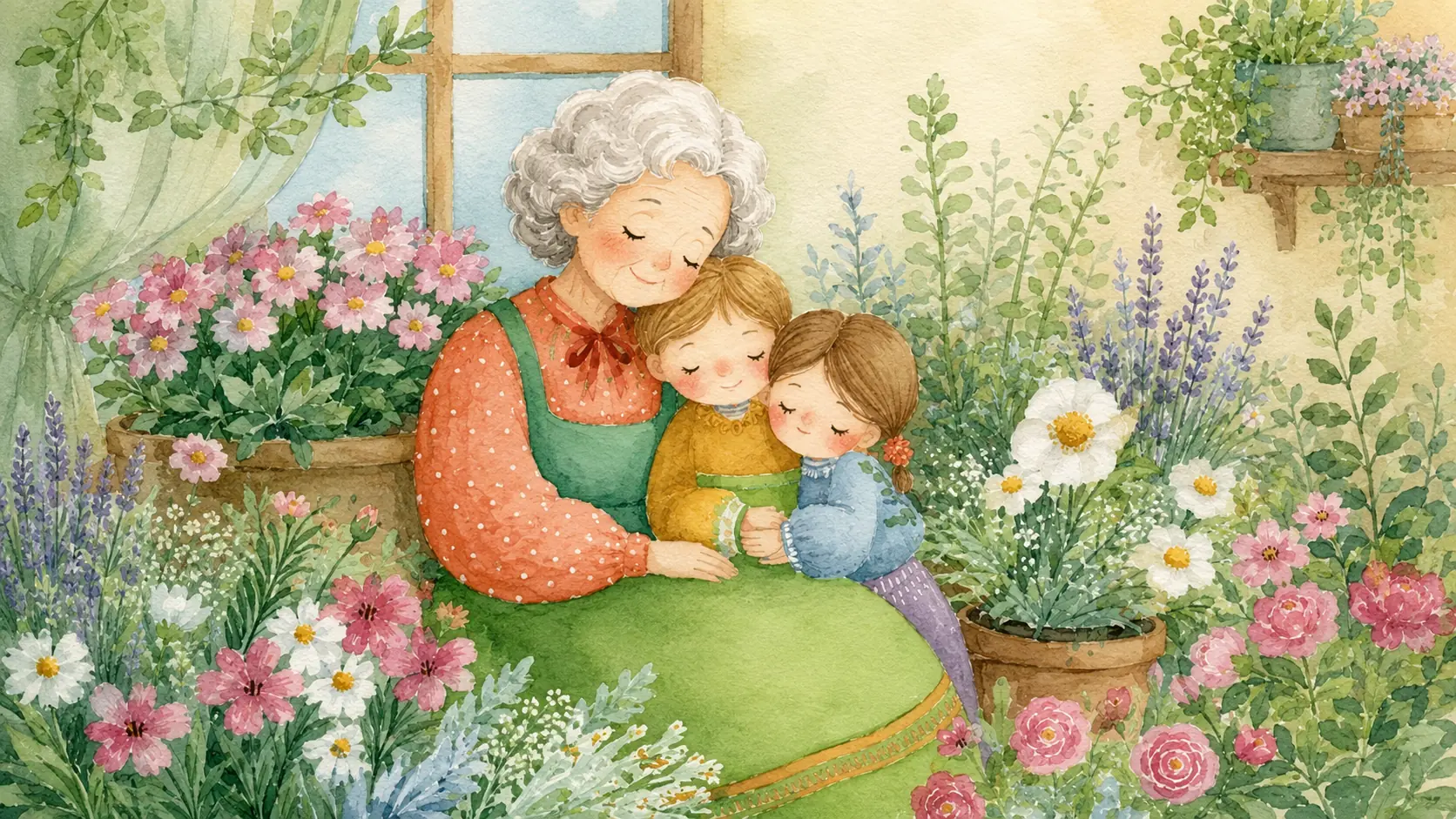
2. They Keep Inviting You Into Their World
“Watch this.”
“Look what I made.”
“Come see.”
Children repeat these invitations so often that adults can begin hearing them as background noise. Grandma may be washing dishes when the grandchild asks her to watch the same jump for the sixth time. She may be reading, cooking, or trying to rest when a child appears with another block tower, drawing, or discovery.
The action may not seem extraordinary. The tower leans. The jump is small. The drawing may be difficult to understand.
But the invitation is significant.
The child is not merely showing an object or skill. They are opening the door to their inner world and asking Grandma to enter.
They are saying, “Something gave me joy, and I want you to be part of it.”
Children naturally turn toward the people whose reactions matter to them. They search adult faces after trying something new. They want to know whether the person they love saw the effort, noticed the risk, or felt some of the excitement.
Grandma does not need to respond with exaggerated praise every time. Constant applause can teach children that every action needs outside approval. What matters is attentive presence.
She can look, smile, and say something specific.
“You balanced on one foot longer that time.”
“You used so many little pieces in your tower.”
“You worked carefully on that part.”
These observations tell the child Grandma truly looked.
When adults respond only with “Good job,” children may not know what was seen. Specific interest often feels more connecting than general praise.
There will be times when Grandma cannot watch immediately. She may be carrying something hot, speaking with another person, or attending to a real need.
She can answer honestly.
“I want to see. Give me one minute to put this down safely.”
Then she should follow through.
Broken promises of attention can accumulate. A child who repeatedly hears “later” without receiving the promised moment may eventually stop inviting the adult.
Grandma does not need to drop every responsibility instantly, but she can show that the child’s invitation will not simply disappear.
The phrase “Come see” often means the child is asking Grandma to move physically into their space. Perhaps they have built a home from blankets, arranged stuffed animals for a meeting, or found a tiny insect outside.
Walking across the room may feel inconvenient, especially when movement is harder with age. Grandma can explain her limits without rejecting the invitation.
“My knees cannot get down on the floor, but bring the most important part to the table and show me.”
Or, “I cannot walk to the far end of the yard, but you can take a picture and tell me what you saw.”
Children can learn that love remains interested even when the body has limits.
Grandmothers should not feel guilty if they cannot participate in every physical activity. Presence is flexible. It can look like listening, observing, asking questions, or allowing the child to describe what happened.
The child’s invitation can also reveal developing interests. A grandchild who repeatedly shows drawings may be expressing a love of art. One who constantly brings insects may be curious about nature. Another may want Grandma to watch elaborate physical challenges.
We do not need to turn every interest into a program, purchase, or prediction about the child’s future. Sometimes adults rush to formalize joy.
The child who likes drawing is enrolled in lessons. The child who runs quickly is immediately pushed toward competition. What began as delight becomes performance.
Grandma can allow interest to remain playful.
“I love seeing what you enjoy.”
This supports the child without attaching pressure.
Older grandchildren invite adults into their world differently. “Watch this” may become “Listen to this song,” “Look at this post,” “Can I show you the game I’m playing?” or “Do you want to see what my friends made?”
Grandma may not understand the music, technology, or humor. Her curiosity still matters.
Instead of saying, “I don’t understand why anyone likes this,” she can ask, “What do you enjoy about it?”
This does not require pretending to share the taste. It communicates respect for the grandchild’s growing identity.
Teenagers often observe whether adults approach their interests with curiosity or ridicule. If Grandma mocks every new trend, the grandchild may stop sharing—not because they no longer care about her, but because protecting their developing self feels safer.
Grandma can remain honest.
“This is not the kind of music I would choose, but I like hearing what it means to you.”
That is a bridge between generations.
Invitations also provide opportunities to model limits and mutuality. Children should learn that Grandma’s world matters too.
After watching the child’s drawing, she might say, “Would you like to see the photograph I was looking at?”
Connection becomes an exchange rather than one person performing while the other always observes.
Grandchildren can discover Grandma’s interests, stories, recipes, music, and memories. This gives them roots while Grandma learns about their emerging world.
The relationship becomes richer when curiosity moves in both directions.
A child who continues saying “Come see” is showing confidence that Grandma will not treat their joy as foolish. They believe she is someone worth inviting.
One day, the invitations may involve serious choices rather than block towers.
“Can I show you the school I’m considering?”
“Will you read what I wrote?”
“Can I tell you about someone I met?”
The trust built through small invitations makes larger ones more possible.
When a grandchild asks Grandma to watch something that seems ordinary, she may be witnessing the beginning of a lifelong pattern: the child believes their world is safer and happier when she is part of it.
3. Their Time With the Pok Pok App Turns Into Little Stories
Children often use play to tell stories before they have the language to explain everything directly.
When a grandchild spends time with the Pok Pok app and begins describing what they are creating, assigning roles, inventing situations, or inviting Grandma into the pretend world, something meaningful may be happening.
The child is not only interacting with a screen.
They are using imagination to organize ideas, explore possibilities, and connect with someone they trust.
A child may point and say, “This one is going home,” or, “They’re making dinner,” or, “That person is sad because no one came.”
The story may seem random. Characters change roles. Events appear and disappear without logical order. To an adult, the whole explanation may feel impossible to follow.
Grandma does not need to correct the plot.
The purpose of imaginative play is not always to produce a coherent story. Children are experimenting with relationships, routines, emotions, and cause and effect.
Grandma can enter gently.
“What is happening here?”
“Who is this?”
“How do they feel?”
“What do you think happens next?”
These questions invite elaboration without taking control.
Adults sometimes unintentionally turn a child’s play into another lesson. We correct how something should work, suggest a more realistic story, or ask so many questions that the child feels examined.
Imagination needs room.
Grandma can listen and follow the child’s lead. If the child does not want questions, she can sit nearby and respond when invited.
Some children narrate constantly. Others play silently and offer only a brief explanation. Neither style is better.
The important sign of connection is that the child feels comfortable sharing some part of the experience.
Pok Pok time can also become a bridge when Grandma’s physical energy is limited. She may not be able to run outside, sit on the floor, or participate in active play for long. Sitting beside the child while they create a little world allows closeness without demanding too much from her body.
Still, the adult should remain mindful of screen boundaries established by the child’s parents. Grandma’s interest should not turn into secretly extending screen time or ignoring family rules.
She can say, “You have five minutes left. Show me the part you most want me to see before we finish.”
This respects both connection and structure.
Transitions away from enjoyable activities can be difficult. A child may become upset when the app closes, even after a positive experience.
Grandma can prepare them.
“Choose one last thing to finish, then tell me the ending of your story.”
This gives the play a sense of completion.
She can also help carry the imagination beyond the screen.
“Would you like to draw one of the characters?”
“Can we act out the story with your toys?”
“What food were they making? Maybe we could pretend to make it in the kitchen.”
The purpose is not to prove offline play is superior. It is to show the child that imagination belongs to them, not only to a device.
The ideas can travel.
When a child explains what is happening in their Pok Pok world, Grandma may hear themes from their life. A character is always left out. Someone keeps getting lost. A family is moving. One person is angry while another fixes everything.
Adults should be careful not to overinterpret every story. Children invent dramatic situations simply because they are interesting. Play is not a confession that must be analyzed.
But repeated themes can become invitations for gentle curiosity.
“That character seems worried. What do you think would help them?”
The child may continue the pretend story, or they may connect it to something real. Grandma can follow without pressuring.
Imaginative stories also reveal how children understand relationships. They may repeat phrases adults use, assign caregiving roles, or create rules inside the play.
Grandma can listen to what family life sounds like from the child’s perspective.
If every adult character shouts, perhaps the child is processing conflict they have witnessed. If one figure constantly rescues everyone, perhaps they are exploring safety. None of this proves a specific problem, but it can remind Grandma to stay attentive.
The app can become a setting for emotional education without turning into a lecture.
If a character takes something, Grandma might ask, “How could they solve that?”
If someone is sad, “Who could notice?”
If two people want the same thing, “What could they try?”
The child practices empathy and problem-solving inside a world that feels safe.
Grandma should avoid imposing the “correct” moral ending. Children often learn more when they suggest possibilities themselves.
“What do you think would be fair?”
Their answer reveals their developing understanding.
For a grandchild, inviting Grandma into digital play can also be an act of generosity. Children know adults do not automatically understand their apps. When they explain patiently, they become the teacher.
Grandma can let them lead.
“Show me how this works.”
This gives the child healthy confidence. They experience themselves as capable and knowledgeable while Grandma models that adults can learn from younger people.
Intergenerational respect grows when wisdom is not treated as moving in only one direction.
Grandma offers life experience. The child offers familiarity with a different kind of play. Both can be curious.
Older adults sometimes fear that technology is replacing imagination. Technology can certainly become passive or excessive, and limits matter. But when a child uses a digital space to create stories, explain ideas, and invite connection, imagination is still active.
The deeper question is whether the device isolates the child or becomes one of many tools through which they communicate and create.
Grandma’s attentive presence can help make the difference.
She does not need to become an expert in Pok Pok. She needs only to show that what the child is making is worthy of a few minutes of genuine attention.
One day, the child may no longer invite Grandma into pretend worlds. Their stories may become real experiences, creative work, career plans, or private hopes.
The early message remains important:
“When you build something in your imagination, I am willing to enter gently and listen.”
4. They Bring You the Small Things
A rock.
A leaf.
A drawing.
A toy missing one wheel.
A flower too small for a vase.
Children bring adults objects that have little financial value and enormous emotional meaning.
Grandma may find stones in her purse, dried leaves on the table, or tiny pieces of paper covered with marks. She may be tempted to throw them away quickly because the house already contains too many small things.
Sometimes she needs to. No grandmother can keep every object forever. The home does not have to become a museum of every stick and bottle cap a child has touched.
But before deciding what to keep, Grandma can recognize what the gift represents.
The child saw something and thought of her.
They decided, “Grandma should have this.”
That is an act of love.
Children do not yet measure gifts through price. A smooth stone may seem beautiful because it sparkled in sunlight. A yellow leaf may be offered because yellow is Grandma’s favorite color. A tiny toy may be the child’s way of sharing something personally valuable.
When Grandma receives it with care, the child feels that their affection has somewhere to land.
She can say, “You found this and thought of me?”
That question highlights the emotional meaning.
The child may explain where it came from, what it resembles, or why it matters. Listen before deciding its future.
Some objects can be displayed temporarily. A rock can sit on the windowsill for a week. A drawing can go on the refrigerator. A leaf can be pressed between pages or photographed.
Grandma can create a small box for selected treasures. This gives the child a visible place where offerings are respected without requiring every item to remain forever.
She can also involve the child in letting go.
“Our treasure box is full. Which two things should we keep, and which ones can return to nature or be recycled?”
This teaches memory, choice, and care for space.
The emotional connection does not disappear when the object does.
Grandchildren also bring “small things” in the form of information. They tell Grandma what someone said at lunch, which bird they saw, what color shoes the teacher wore, or that the dog sneezed twice.
Adults may consider these details unimportant.
To the child, sharing them is part of relationship.
They are practicing the habit of bringing their life to someone.
If Grandma dismisses every small report with distraction, the child may eventually assume she wants only information adults consider important. But children do not always know which details will matter before they begin speaking.
The story about the teacher’s shoes may lead to something that happened in class. The report about lunch may eventually reveal that someone sat alone. Listening to the small things creates the path for the larger truth.
Grandma does not need to offer unlimited attention every minute. She can set realistic boundaries.
“I want to hear about the rock. Let me finish setting the table, and then you can tell me where you found it.”
Again, returning matters.
Children learn whether adult promises of attention are reliable.
A grandchild may also bring small objects as a way of maintaining connection between visits. They leave a toy at Grandma’s house or give her something to remember them by.
Grandma can mention it later.
“I saw your blue stone on the shelf this morning and thought about our walk.”
This tells the child their presence remains in her mind even when they are apart.
For grandchildren who live far away, small things may be mailed, photographed, or shown through video. The physical distance does not remove the need to share.
Grandma can ask, “What small thing did you notice this week?”
The question invites the child to bring part of their world across the distance.
Receiving small things also teaches gratitude. Grandma can model appreciation without exaggeration.
“Thank you for thinking of me.”
The focus stays on the relationship rather than pretending the object has great material value.
She can also teach that gifts should be given freely. A child should not demand that Grandma keep everything forever or become upset if a natural item cannot enter the house.
“I love that you wanted to give me this muddy leaf. Let’s take a picture of it outside so we can remember.”
The child’s love is accepted, and the practical limit remains.
Grandmothers should be careful not to compare what different grandchildren bring. One child may create elaborate gifts. Another may rarely offer objects but shows affection through conversation or help.
Love has many forms.
The quiet grandchild who hands Grandma one acorn may be giving just as deeply as the child who produces a stack of drawings.
The value lies in the invitation.
“Hold this.”
“Keep this.”
“Remember this with me.”
Years later, Grandma may find a small rock in a drawer and be unable to recall the exact day it arrived. Yet the object may bring back the feeling of a little hand opening and a child’s face waiting to see whether she understood that this was not merely a rock.
It was a place in their world, offered to her.
5. They Save Their Biggest Conversations for Quiet Moments
Children do not always talk when adults are ready.
Grandma may ask, “How was school?” and receive, “Fine.” She may ask whether anything is wrong and hear, “No.”
Then, at bedtime, during a quiet car ride, while cuddling on the couch, or after the lights are low, the child begins.
“Grandma, do you ever feel lonely?”
“Someone said something to me today.”
“Why do people die?”
“Do you think Mom is mad at me?”
The timing can surprise adults. Grandma may be exhausted. The child may have had all day to talk. Why begin now?
Quiet moments reduce pressure.
During the day, children are busy playing, responding, and managing stimulation. When the environment becomes still, thoughts that have been waiting beneath the activity finally become noticeable.
Bedtime creates closeness and fewer distractions. Car rides allow conversation without constant eye contact, which can make vulnerable subjects easier. Cuddling helps the body feel safe enough for words to emerge.
A grandchild who saves the biggest conversations for these moments may be showing trust. They believe Grandma can hold something delicate without rushing, mocking, or immediately becoming alarmed.
Grandma should protect that trust while also caring for her own limits.
If the topic is important and time allows, she can pause.
“Tell me more.”
“Thank you for telling me.”
“What happened next?”
These responses keep the child talking without immediately directing the conversation.
Adults often rush toward advice because silence feels uncomfortable. But children may need to hear their own thoughts aloud before they know what kind of help they want.
Grandma can ask, “Do you want me to listen, or would you like help thinking about what to do?”
This teaches the child that support can take different forms.
Some conversations require immediate action. If the child mentions danger, abuse, self-harm, threats, unsafe touching, or another serious concern, Grandma should not promise secrecy. She should listen calmly, reassure the child that telling was right, and involve responsible adults or appropriate help.
She can say, “I’m glad you told me. This is not something you have to handle alone. I need to get help so you can be safe.”
That is different from betraying trust. It is using trust responsibly.
For ordinary worries, Grandma should avoid reporting every private detail to the entire family. Children need confidence that their vulnerable conversations will not become dinner-table stories or jokes among relatives.
If the parents need to know, Grandma can tell the child gently.
“This is something your mom should know so she can support you. Would you like to tell her with me, or should I begin?”
This gives the child some participation without placing adult responsibility on them.
Grandmothers should also resist correcting every belief immediately. A child may say, “Nobody likes me.” Grandma knows this is probably not literally true. Responding with “That’s nonsense” may close the conversation.
She can say, “You felt very alone today. What happened?”
After hearing the full story, she can help the child examine the conclusion.
“Two children excluded you, and that hurt. That does not mean nobody likes you, but your pain is real.”
This validates without confirming an inaccurate belief.
Quiet conversations are also where children may ask questions about Grandma’s life, aging, grief, family history, and death. These topics can feel uncomfortable, but honest, age-appropriate answers create security.
Grandma does not need to share every adult detail.
She can say, “There are parts of that story I will explain more when you are older, but I can answer the part you are wondering about now.”
Children feel safer when adults do not become frightened by questions.
A grandchild may ask whether Grandma will die. She should not make promises she cannot keep.
Instead of, “I will never leave you,” she can say, “Every person’s life ends someday, but I hope to be with you for a long time. Right now, I am here, and I love you very much.”
Honest reassurance is stronger than false certainty.
Sometimes the child begins a major conversation when Grandma truly cannot give it the attention it deserves. Perhaps it is very late, she is unwell, or another urgent responsibility requires her.
She can protect the conversation by naming its importance.
“What you are telling me matters. My mind is too tired to listen as carefully as I want tonight. Let’s sit together after breakfast, and I promise we will return to it.”
The promise must be kept.
A child who gathers courage and is repeatedly postponed may not try again.
Grandma can write herself a note or set a reminder. Returning says, “Your words remained important even after the moment passed.”
Older grandchildren may prefer car rides because they can talk while looking ahead rather than directly at Grandma. She should not force eye contact or demand every detail.
The space beside the conversation can help honesty emerge.
A quiet response such as “I’m listening” may be enough.
Grandmothers must also understand that happiness and serious conversation are not opposites. A happy, secure child can still have fears, sadness, and difficult questions. In fact, feeling safe enough to discuss pain may be one of the strongest signs of emotional well-being.
The child does not have to protect Grandma from their inner life.
They believe the relationship can hold both joy and worry.
That is a profound form of happiness—not constant cheerfulness, but confidence that difficult feelings will not remove love.
One day, the bedtime conversations will end. The grandchild may live far away, manage their own schedule, and choose carefully what to share.
But the emotional memory can remain.
When life becomes hard, they may remember that there was once a quiet room where Grandma did not rush them. She listened until the words made sense.
That memory may influence whom they trust, how they listen to others, and whether they believe asking for help is safe.
What These Five Signs Are Really Saying
Silliness says, “I can relax here.”
Repeated invitations say, “My joy feels better when you see it.”
Little stories say, “My imagination is safe in your presence.”
Small gifts say, “I think of you when I discover something meaningful.”
Quiet conversations say, “I trust you with what lives beneath the surface.”
These messages cannot be purchased. They are created through repeated experiences of being received warmly.
A grandchild does not need Grandma to respond perfectly every time. She will occasionally be distracted, tired, or impatient. She may fail to watch, misunderstand a story, or throw away a stone the child expected her to keep.
Relationships can survive missed moments when repair is available.
“I was busy when you showed me earlier. Will you show me again?”
“I did not realize that leaf was special to you. I’m sorry.”
“I tried to rush the conversation last night. I want to listen now.”
These words teach children that connection can be restored.
The goal is not to create a grandmother who is constantly performing delight. Children can sense false enthusiasm. Genuine attention, even in small amounts, is enough.
A grandmother may say, “I love hearing your stories, and I need ten minutes of quiet before the next one.”
This protects both people.
Healthy connection includes boundaries. A child does not become emotionally secure because Grandma never says no. Security grows when no can be spoken without rejection, and when Grandma’s need for rest does not become an accusation that the child is too much.
Grandmothers should also avoid using these signs as a competition with parents.
A child may act differently with Grandma because the relationship has different responsibilities and rhythms. Parents manage school mornings, healthcare, homework, discipline, meals, and countless daily demands. Grandma may receive the child during a more relaxed portion of life.
We should not say, “They are always happy with me, so the parents must be doing something wrong.”
Children often release their hardest emotions with the people who feel safest. A child behaving well for Grandma and melting down at home does not automatically mean Grandma is the better caregiver. It may mean the child has been holding everything together and finally feels safe enough to let go with a parent.
The grandmother’s role is to support, not compete.
She can share observations gently.
“I noticed she had a lot to say during our car ride. Is there anything you want me to reinforce or help her talk through?”
This respects the family structure.
Grandma can also tell the parent about joyful signs.
“He was so proud of the story he created today.”
“She kept bringing me little leaves from the yard.”
These details help parents see moments they may have missed while managing responsibilities.
Family connection becomes stronger when adults share the child’s world rather than competing for ownership of it.
Happiness Is Not Perfect Behavior
One of the greatest misunderstandings about happy children is the belief that happiness produces constant cooperation.
A happy grandchild will still say no, become jealous, complain, cry, and test limits. Emotional security gives children permission to express a full range of feelings.
Grandma should not interpret every difficult moment as proof that the child is unhappy or that the relationship has failed.
Children are developing.
Their brains are still learning impulse control, perspective, patience, and communication. A secure child may act silly at breakfast and become overwhelmed at lunch. They may bring Grandma a flower, then shout when a cousin touches their toy.
Both moments belong to the same child.
Grandma’s task is to enjoy the connection and guide the behavior.
“I love your playful spirit, and we still use safe hands.”
“I want to hear your story, and your cousin deserves a turn to speak.”
“I know this leaf matters to you, but we cannot bring wet leaves onto the bed.”
Tenderness and structure are not enemies.
A child becomes more secure when Grandma’s expectations are clear and her affection remains steady.
Happiness also does not require constant entertainment. Grandchildren need boredom, rest, and ordinary time. Grandma does not have to create a new activity every hour.
Sometimes happiness looks like the child playing nearby while Grandma reads. It looks like helping with simple chores, sitting in the same room, or feeling free to move between connection and independence.
A secure grandchild does not always need Grandma’s direct attention because they trust it will become available again.
What Grandmothers Can Do to Protect These Signs
The first thing is simple: look up.
When possible, turn toward the child before answering. Let the face soften. Put the phone down for a moment. Children notice whether their presence changes the adult’s attention.
Second, avoid using vulnerability as entertainment. Do not repeat private stories, silly phrases, fears, or emotional confessions to relatives without considering how the child would feel.
A grandchild who is laughed at may stop sharing.
Third, respect changing boundaries. The child who wanted cuddles at five may want more physical space at twelve. The grandchild who told every detail may begin keeping some thoughts private.
This is not necessarily rejection.
Grandma can say, “You do not have to tell me everything. I am here when you want to talk.”
Fourth, remain interested in who the child is becoming, not only who they used to be. Favorites change. Personalities expand. The stuffed animal may disappear, and a new interest may take its place.
Do not trap the grandchild in an old version.
“I remember when you loved that. What are you interested in now?”
Fifth, allow mutual relationship. Grandma has stories, needs, and boundaries too. Grandchildren benefit from knowing her as a person, not only as a source of treats and attention.
She can invite them into her world.
“Would you like to help me choose a photograph for this frame?”
“Can I teach you the song my grandmother sang?”
“Will you sit with me while I make this recipe?”
The child learns that connection involves giving and receiving.
Before the Invitations Become Memories
Childhood rarely announces its final moments.
Grandma does not know which silly dance will be the last one performed without embarrassment. She does not know which drawing will be the final picture offered with complete confidence. No one announces that this is the last rock the child will place in her palm or the last bedtime question asked from beneath a blanket.
The changes happen slowly until, suddenly, they are visible.
The child grows taller.
The stories become more private.
The objects in their pockets change.
The invitations become less frequent.
This is not a tragedy. Grandchildren are supposed to grow, build lives, form identities, and become less dependent on adults. Grandma’s job is not to keep them little.
Her job is to help make their growing feel safe.
When she responds warmly to silliness, the child learns they do not have to become rigid to be accepted.
When she watches what they make, they learn that their joy has value.
When she enters their stories, they learn that imagination is worthy of attention.
When she receives their small treasures, they learn that love notices what others overlook.
When she listens in quiet moments, they learn that difficult thoughts do not have to be hidden.
These lessons remain useful long after the behaviors disappear.
The grown grandchild may still feel playful around people they trust.
They may invite loved ones into their creative life.
They may notice small things and think of someone else.
They may become the person who listens when a child begins talking at bedtime.
This is how Grandma’s attention travels forward.
Not through one dramatic speech, but through hundreds of ordinary responses that taught the child, “You are safe to be known.”
One day, Grandma may look at an adult grandchild and remember the child who danced strangely in the kitchen, narrated a tiny digital world, and offered her a stone as though it were treasure.
The adult may not remember every moment.
But they may remember the atmosphere.
They may remember that Grandma looked up.
She watched.
She listened.
She did not make them earn her delight through achievement.
She enjoyed who they were before they became impressive.
That is one of the most beautiful gifts a grandparent can give.
A happy grandchild does not need a perfect grandmother. They need someone whose presence repeatedly communicates:
“Your joy is welcome here. Your imagination is welcome here. Your small discoveries matter here. Your difficult questions are safe here. You never have to become less yourself to make me love you.”
Those may look like little things from the outside.
Inside a child’s heart, they can become the foundation of belonging.