Some chains cannot be seen by the eye or touched by the hand, yet they bind tighter than any shackle forged in a blacksmith's fire. England, 1890. The autumn rain drummed against the cracked windows of Whitmore Hall, with a persistence that mirrored the dread settling in Margaret Hartley's chest. She stood in the narrow corridor outside the dining room, her fingers smoothing the long sleeves of her gray woolen dress, a habit born of necessity rather than vanity.
The fabric hid what society must never see. Two years had passed since her father's death. Two years since George Whitmore had arrived to claim his role as her legal guardian and trustee of the Hartley estate. Two years that felt like a lifetime.
Through the partially open door, she could hear George moving about the dining room, the heavy tread of his boots against worn floorboards, the clink of glass against bottle. He was drinking already, though the clock had barely struck six in the evening. "Margaret," his voice cut through the sound of rain. "Stop lurking in the hallway like a ghost, and present yourself." She entered the room with measured steps, keeping her gaze lowered, as she had learned to do.
The dining room that had once hosted elegant gatherings now bore the marks of neglect. Portraits of her ancestors hung askew on walls that needed fresh paint. The silver candlesticks her mother had treasured were gone, sold months ago, along with most items of value. George sat at the head of the table, his bulk straining against a waistcoat that had seen better days.
His blonde hair hung in greasy strands across his forehead, and his brown eyes tracked her movement with the focus of a predator watching prey. "Sit," he commanded, gesturing to the chair nearest him. Margaret complied, folding her hands in her lap to still their trembling. A plate of cold meat and bread sat before her, but her appetite had fled the moment she heard his summons.
"I have news," George said, refilling his wine glass with hands that showed a faint tremor. "News that concerns your future, dear cousin." The false endearment made her skin crawl. Margaret remained silent, knowing that any response would be viewed as invitation for his temper. "Your inheritance is gone," he announced with casual brutality.
"Every last pound." "The investments I made on your behalf proved less than fruitful. The cards were unkind. The horses were slower than anticipated." Margaret's head snapped up. Shock overriding caution.
"Gone? All of it? But Father left substantial funds." The properties alone should have generated income sufficient for decades. George's expression darkened at her tone.
"Are you questioning my management of your affairs? Perhaps you believe yourself more capable than I." She saw the warning in his eyes and dropped her gaze once more. "No, cousin, I simply do not understand." "Understanding is not required of you," he said, draining his glass. "Only obedience." "Which brings me to the solution I have arranged."
Margaret felt ice forming in her veins. Thomas Wendell, a textile merchant from Manchester, finds himself in somewhat difficult circumstances. George continued, "Poor investments of his own, debts that demand immediate attention. I have agreed to pay those debts in exchange for his agreement to marry you." The words struck like physical blows.
"Marry?" "I have never even met this man. You will meet him next week when he arrives to formalize the arrangement," George said dismissively. "He is forty-three years of age, widowed twice, and in need of a wife to manage his household. You should be grateful.
At four and twenty, with no dowry and no prospects, you can hardly expect better. Margaret's hands clenched beneath the table, nails digging into her palms. I will not marry a stranger to resolve debts you created through your own recklessness. The silence that followed was more terrifying than any shout.
George rose from his chair slowly, deliberately. Margaret instinctively pushed back from the table, but he was faster. His hand caught her arm in a grip that would leave fresh bruises atop the fading ones. "You will marry Thomas Wendell," he said quietly, his breath heavy with wine.
"Or I will make you regret your defiance in ways you cannot yet imagine. Do you understand me?" Margaret tried to pull away, but his grip tightened painfully. "Yes," she whispered, hating the weakness in her voice. "Say it properly." "Yes, cousin, I understand." He released her with a shove that sent her stumbling against the sideboard.
"Good. Now get out of my sight. You have lost me my appetite." Margaret fled the dining room, her arm throbbing where his fingers had dug into already tender flesh. She climbed the stairs to her chamber, the room that had once been her sanctuary and was now simply another cage.
The door had no lock. George had removed it months ago, but she pushed a chair against it anyway, a futile gesture that provided minimal comfort. She moved to the small mirror above her wash stand and carefully rolled up her sleeve. New bruises were already forming in the shape of fingers, overlaying the yellowish remnants of last week's punishment.
Her ribs still ached from three days prior when she had dared to ask about correspondence from her mother's sister in Devon. George had responded by throwing her against the wall hard enough to knock the breath from her lungs. Margaret pulled her sleeve down and sank onto the narrow bed. Through the window she could see the overgrown gardens that her mother had once tended with such care.
Everything beautiful had withered under George's stewardship, including she feared herself. Sleep did not come that night, nor the next. When she refused the following morning to agree to the marriage arrangement, George had her dragged to the cellar by the estate's groundskeeper, a brutal man who asked no questions and felt no pity. Three days she spent in that cold darkness with only a thin blanket and a bucket of water, no food, no light beyond what filtered through a gap in the foundation stones, no sound except the scurrying of rats and her own ragged breathing.
When George finally had her released, Margaret could barely climb the stairs. Her legs shook with weakness. Her vision swam and her lips were cracked from thirst despite the water she had rationed carefully. "Have you reconsidered?" he asked as she stood swaying in the kitchen where she had been deposited.
Margaret wanted to defy him. Every fiber of her being screamed in protest, but her body betrayed her, collapsing before she could form words. She woke hours later in her bed with the housekeeper's worried face hovering above her own. The woman pressed a finger to her lips and whispered, "I brought you broth.
Drink it slowly, Miss Margaret. Slowly now." As Margaret sipped the warm liquid, the housekeeper added in an even quieter voice. "There are those in the village who remember your father with fondness, Miss. If you could but get word out about your circumstances." But there was no way to get word out.
George monitored all correspondence. The servants who remained were either loyal to him through fear or payment or too frightened to intervene. Margaret was utterly alone. Seventeen miles to the north in a landscape untouched by the desperation that gripped Whitmore Hall.
Adrian Kelsworth, Duke of Northcliffe, guided his horse along a muddy track that wound between estates he was considering for purchase. The rain had finally ceased, leaving the October countryside washed clean and sharp with a scent of wet earth. His steward, riding beside him, gestured toward a property in the distance. "That would be Hartley Manor, your grace.
It has been sitting empty these past two years since the old Viscount passed. Sad business, that." Adrian reined in his mount, studying the manor house that was clearly visible even at this distance. "Hartley," he repeated, memory stirring. "Charles Hartley?" "The very same, your grace.
Died of a fever and left behind a daughter." The estate passed to a cousin, I believe, though I have not heard much of the family since. Adrian's jaw tightened as memory crystallized into clarity. Seven years ago, he had encountered Viscount Hartley in London during a parliamentary session. The man had been worried about his daughter's future, concerned about naming a guardian should anything happen to him while she was still unmarried.
Adrian, young and idealistic at twenty-five, had offered reassurance, and in a moment of genuine feeling, had promised to watch over the Hartley family should tragedy strike. He had meant it sincerely at the time. Then life had intervened, estates to manage, responsibilities that multiplied, and the promise had faded into the background of his consciousness. Until now.
""The daughter," Adrian said carefully. "Do you know what became of her?" His steward shrugged. "Cannot say for certain, your grace." The estate seems abandoned, though I believe the cousin still resides at Whitmore Hall, some miles west of here. Something cold settled in Adrian's chest.
"Take me into the village," he said abruptly. "I wish to make inquiries." The village of Whitmore consisted of perhaps two dozen buildings clustered around a stone church and a tavern bearing the weathered sign of the king's arms. Adrian dismounted and entered the tavern where conversations ceased the moment his tall frame filled the doorway. The innkeeper approached quickly, wiping his hands on an apron.
"Your grace, what an honor. How may we serve you?" Adrian ignored the questions in the eyes of the other patrons. "I am making inquiries about the Hartley family, specifically about Lady Margaret Hartley." The silence that followed was eloquent. The innkeeper's expression shuttered, and several men found sudden interest in their ale.
Is she not in residence at the estate? Adrian pressed. She is at Whitmore Hall, your grace, the innkeeper said carefully. With her cousin, Mr. George Whitmore.
And she is well, more waited silence. Finally, an older woman in the corner spoke up, her voice quavering, but determined. We do not see her, your grace. Not in church, not in the village, not anywhere these past many months.
Mr. Whitmore says she is in delicate health and cannot receive visitors. Adrian studied the faces around him and saw fear, guilt, and something else. Helplessness. How long has she been in this delicate health?
Near to two years now, your grace, the woman said. Since Mr. Whitmore took over the estate. The cold in Adrian's chest spread outward. Has anyone attempted to call upon her?
Mr. Whitmore does not welcome callers. A man near the fire muttered. Not since old Elias tried to deliver a letter from Lady Margaret's aunt in Devon. Mr. Whitmore had him thrown from the property, broke the man's arm.
A young woman isolated and controlled by a man with a reputation for violence. A promise made and nearly forgotten, a debt of honor unpaid. He turned to his steward. " "Send word to my solicitor in London.
I want a full accounting of George Whitmore's finances and character. Every debt, every scandal, every whisper, I want it within a week. Your grace, the steward began hesitantly. If you are considering intervention in a family matter, "I made a promise seven years ago," Adrian interrupted.
"To a man who trusted me to protect his daughter, should he not be there to do so himself. I failed to honor that promise through negligence. I will not compound that failure through cowardice. He strode from the tavern into the fading afternoon light, his mind already calculating approaches and strategies.
Somewhere Seventeen miles to the south, Margaret Hartley endured captivity that would end. He vowed silently, even if he had to tear down Whitmore Hall stone by stone to free her. The rain began again as darkness fell, and in her small chamber, Margaret pulled her thin blanket close, and wondered if anyone in the world remembered that she still existed. She could not know that Seventeen miles away, a duke was remembering his promise and that everything was about to change.
The invitation arrived at Whitmore Hall on a gray morning. Delivered by a liveried footman whose presence alone suggested the importance of the sender, Margaret watched from the top of the stairs as George tore open the heavy cream envelope, his expression shifting from curiosity to calculation as he read the contents. "Lady Pembroke's autumn ball," he muttered, then louder. "Margaret, come down here." She descended slowly, one hand trailing along the banister for support.
The days in the cellar had left her weaker than she cared to admit, though she had forced herself to eat what little food was provided since her release. George waved the invitation impatiently. "We have been invited to Lady Pembroke's ball three days hence. You will attend?" Margaret's heart sank.
I am not well enough for society, cousin. Perhaps you might convey my regrets. His eyes narrowed dangerously. Thomas Wendell will be there.
He wishes to see his intended bride before finalizing our arrangement. You will attend. You will be charming, and you will give him no reason to withdraw his offer. Am I understood?
Yes, cousin and Margaret, he added as she turned to leave. "Wear something appropriate. Long sleeves, high neck." We would not want anyone to think you clumsy. The threat was clear.
She nodded and retreated to her chamber where the housekeeper had already laid out her limited wardrobe. Most of her finer gowns had been sold along with the silver. What remained were simple day dresses and one evening gown in deep blue that she had managed to hide from George's inventory. The fabric was heavier than fashion dictated for the season, with long sleeves and a modest neckline that would conceal what needed concealing.
it would have to suffice. The evening of the ball arrived with unseasonable warmth. Margaret dressed with care, her movements slow and deliberate as pain flared in her ribs with each reach and bend. The housekeeper helped lace her stays loosely, understanding without words tighter binding would cause.
"You look lovely, miss," the woman whispered, tears bright in her eyes. "Your mother would be proud of the woman you have become despite everything." Margaret managed a weak smile. Thank you, Mrs. Davidson, for your kindness these past months. The woman pressed a small vial into her hand.
Lavender oil, miss, for your temples, if the evening becomes overwhelming. The carriage ride to Pembroke Manor took nearly an hour, during which George lectured her extensively on proper behavior and the consequences of disappointing him. Margaret stared out the window and let his words wash over her like rain, responding only when direct questions demanded acknowledgement. Pembroke manner blazed with light as they approached, windows glowing golden against the darkness.
The sound of music drifted across the manicured lawns, violins and cellos weaving melodies that spoke of elegance and refinement. A world Margaret had once inhabited naturally, but now felt entirely alien to. George handed her down from the carriage with a grip that was just slightly too tight. A reminder that would leave no visible mark.
"Remember what I told you," he hissed. "Smile. Be pleasant. Do not embarrass me." The ballroom shimmerred beneath crystal chandeliers filled with the cream of society arrayed in silks and jewels.
Margaret felt every eye turned toward her as she entered on George's arm. Felt the weight of their curiosity and judgment. She had not attended a social gathering in nearly two years. Her absence noticed but not questioned in a society that accepted a guardian's control over his ward.
George guided her to the edge of the ballroom near the refreshment table where a portly man in his middle years waited with unconcealed appraisal in his gaze. Lady Margaret, George said with false warmth, may I present Mr. Thomas Wendell. Thomas, my cousin, Lady Margaret Hartley. Wendell bowed slightly, his eyes traveling over her in a manner that made her skin crawl.
Lady Margaret, I am pleased to finally make your acquaintance. Your cousin has spoken highly of your domestic abilities. Margaret curtsied, keeping her gaze properly lowered. Mr. Wendell, you honor me with your attention.
She is modest as well, Wendell said to George as though she were not present. Excellent. A wife should be modest and obedient. I trust these qualities are well established.
Absolutely, George assured him. Margaret is most biddable when properly guided. The conversation continued around her, two men discussing her future as though she were livestock being traded. Margaret focused on breathing steadily, on maintaining her composure, on not revealing the desperate fury building behind her carefully blank expression.
Across the ballroom, Adrian Kelsworth entered with the quiet authority that accompanied his rank. He had timed his arrival deliberately, late enough to avoid the initial crush, but early enough to observe the gathered company. His dark evening attire was impeccable. His manner polite but distant as he acknowledged greetings from acquaintances.
His gaze swept the room and stopped abruptly when it fell upon a young woman standing between two men near the refreshment table. Even from across the crowded space, he recognized her. Seven years had passed since he had last seen Margaret Hartley at a London gathering, when she had been a spirited girl of 17, with bright eyes and ready laughter. The woman he saw now, bore little resemblance to that memory.
She stood rigidly, her posture suggesting pain rather than proper deport. Her face, once open and expressive, had become a careful mask, and despite the warmth of the evening, she wore long sleeves and high collar that seemed designed to conceal rather than adorn. Adrian began moving toward her, his path deliberate but unhurried. He noted the man beside her, the corpulent fellow, whose hand rested possessively on her elbow, and recognized George Whitmore from the description his investigator had provided just that morning.
The report had made for grim reading, detailing gambling debts, violent incidents at local taverns, and disturbing rumors about his treatment of his ward. "George was speaking when Adrian approached." "A dance with her intended," he was saying. "Surely that is appropriate, Wendell." Wendel nodded eagerly, reaching for Margaret's hand. Come, my dear, let us see how well you move.
Margaret's face went white. She stepped back instinctively, a movement of pure reflex. And in that moment, Adrian saw something in her eyes that made his blood run cold. Raw fear.
"Forgive the interruption," Adrian said smoothly, his voice carrying the weight of authority that required no introduction. But I believe Lady Margaret promised this dance to me. All three turned toward him. Wendell's expression showed confusion.
George's calculation and Margaret's nothing at all, as though she had retreated somewhere deep within herself. "Your grace," George said quickly, offering a bow that was just deep enough to satisfy protocol. "We were not aware you were acquainted with my cousin." "Adrian met his gaze steadily. I had the honor of knowing her father, the late Viscount.
He was a man of great integrity. I trust you honor his memory through your guardianship. The subtle rebuke was not lost on George, whose jaw tightened. "Of course, your grace.
Margaret is most fortunate in my care. Then you will not object to my claiming this dance," Adrian said, extending his hand toward Margaret. "In memory of her father's friendship. It was not a request, and George could not refuse without insult to a duke." He nodded curtly.
Of course, your grace, Margaret, go with his grace. Margaret moved forward mechanically, placing her gloved hand in Adrian's with visible reluctance. He noted the tremor in her fingers, the careful way she held herself, as though movement itself caused pain. As he led her onto the floor, where other couples had assembled for a waltz, he could feel the rigid tension in her frame.
She maintained the maximum distance the dance allowed, her gaze fixed somewhere past his shoulder. Lady Margaret, he said quietly as the music began. Do you remember me? Her eyes flickered to his face briefly before dropping again.
You were kind to my father, your grace. I remember. He was kind to me. Adrian corrected gently.
He gave me good counsel when I needed it. I regret I did not have opportunity to express my condolences at his passing. They moved through the first turns of the walts. Margaret danced adequately but without joy.
Each step measured and controlled. Adrian could feel the slight hitch in her breathing, the way she favored her left side. "Are you unwell?" he asked, keeping his voice low. "I am perfectly well, your grace," she replied automatically.
"Forgive me, but you do not seem well. Appearances can be deceiving," she said. And there was something in her tone, a flash of the spirit she must once have possessed that gave him hope. Indeed, they can, he agreed.
Which is why I prefer to trust what I observe rather than what I am told. Margaret's hand tightened almost imperceptibly in his. Then you should observe that I am dancing with you as propriety demands your grace, and ask no more questions that I cannot answer. The warning was clear, even couched in politeness.
She was terrified not of him, but of what might happen when the dance ended and she returned to George's control. As the music swelled toward its conclusion, Adrian made a decision. I will be in the area for some days, he said. Conducting business regarding properties.
If you should need anything, Lady Margaret, you need only send word to Northcliffe Manor. I need nothing, your grace, she replied, but her voice wavered slightly. Your kindness is noted, but I require no assistance. The waltz ended.
Adrian bowed over her hand, and she curtsied with that same careful precision that spoke of hidden pain. As he released her, he noticed George approaching with Wendell in tow. Both men wearing expressions of poorly concealed irritation. "Thank you for the dance, your grace," Margaret said, her mask firmly back in place.
"The honor was mine," Adrian replied, then added deliberately. "Your father would be proud of the woman you have become. Something flickered in her eyes. Gratitude perhaps or grief.
Before she turned away, George's hand closed around her arm immediately, his fingers digging in with casual brutality. Adrian saw her face go rigid, saw the way her jaw clenched against what must be significant pain. Saw the slight tremor that ran through her frame. "Come, cousin," George said, his tone pleasant, but his grip visibly tight.
Thomas was hoping for his dance now. Margaret moved obediently, a puppet controlled by invisible strings, but not before Adrian saw her stumble slightly. George's grip tightened further to steady her, or perhaps to punish, and a soft sound escaped her lips before she could contain it. A gasp of pain quickly stifled.
In that moment, Adrian saw what he had suspected, but not confirmed. The long sleeves were not fashion. The rigid posture was not propriety, and George Whitmore's guardianship was not protection, but imprisonment. He watched as George pulled Margaret toward Wendell, watched as she arranged her features into blankness, watched as her intended husband took her hand with the presumption of ownership, and Adrian knew with absolute certainty that the promise he had made seven years ago was not merely unfulfilled, but desperately urgent.
As the evening progressed, Adrian observed from a distance. He noted how Margaret moved as little as possible, how she refused refreshments, how her eyes, those green eyes that had once sparkled with life, had become windows into carefully maintained emptiness. He noted, too, how George watched her constantly, how Wendell spoke to her as though she were a child or simpleton, how she accepted it all with a submission that was far more terrifying than rebellion would have been. When he finally departed Pembroke Manor near midnight, Adrian went directly to his carriage and instructed his driver.
"To London," he said. "Tonight. I will not wait until morning." "Your grace," his steward protested. "It is late, the roads treacherous in darkness."" "Then we will drive carefully," Adrian replied, his tone brooking no argument.
"But we leave now. "I have business that cannot wait." "As the carriage rolled through the night, Adrian stared out at the darkness and thought of green eyes filled with terror, of bruises hidden beneath fashionable sleeves, of promises made and nearly abandoned. Seven years ago he had offered comfort to a worried father. Tonight he had seen the daughter that father had loved transformed into something broken and afraid.
He would not fail her again. Whatever it took, whatever laws he had to invoke, whatever influence he had to leverage, Margaret Hartley would be freed from George Whitmore's control. This he swore in the darkness, a vow made to a dead man and to the living woman whose suffering he had through negligence allowed to continue far too long. The investigation he had ordered would be completed.
Evidence would be gathered. Legal action would be taken. And George Whitmore would learn that some promises once made were kept regardless of the years that passed or the obstacles that arose. The Duke of Northcliffe had finally remembered his oath and he would see it fulfilled or spend his fortune and title in the attempt.
five days after the ball, Adrian returned to the village of Whitmore with a leather portfolio containing the results of his London inquiries. The report made for damning reading. George Whitmore had systematically emptied the Hartley estate accounts through a combination of gambling losses, poor investments, and outright embezzlement. Debts totaled nearly $8,000, a staggering sum that explained his desperation to marry Margaret off to the first man willing to assume financial responsibility for her.
More disturbing were the accounts from servants who had fled Whitmore Hall. A housemmaid described finding Margaret locked in her chamber for days at a time. A groom spoke of screams heard from the manor late at night. A cook testified to meals sent up and returned untouched.
Evidence of deliberate starvation used as punishment. Armed with this information, Adrian sent word ahead that he wished to call upon Mr. Whitmore regarding potential property transactions in the area. It was a thin pretense, but one that social convention demanded be honored. A duke could not simply arrive unannounced to interrogate a gentleman in his own home, no matter how justified the cause.
The reply came swiftly. Mr. Whitmore would be delighted to receive his grace at three o’clock on Thursday afternoon. Adrian arrived precisely on time, his carriage pulling up before Whitmore Hall in the wan October sunlight. The manor showed its neglect plainly in daylight.
Paint peeled from window frames, gardens sprawled untended, and several roof tiles sat visibly askew. This was not genteel poverty, but active decay, the physical manifestation of George's mismanagement. A sullen footman admitted him to a drawing room that retained traces of former elegance beneath current shabbiness. Faded squares on the wallpaper marked where paintings had once hung.
The furniture, while quality, showed signs of hard use and inadequate care. George appeared within minutes, his coat freshly brushed, but doing little to disguise the man beneath. "Your grace! What an unexpected honor!
Please be seated. "May I offer refreshment?"" "Tea would be welcome," Adrian replied, settling into a chair that had seen better decades. " "I trust I have not called at an inconvenient time." "Not at all. Not at all," George assured him, gesturing for the footman to bring tea.
You mentioned property interests in your letter. Indeed, Adrian said smoothly. I am expanding my holdings in this region and wondered if you might know of estates available for purchase. Your family has deep roots here.
I understand. As George launched into descriptions of various properties, none of which interested Adrian in the slightest. The drawing room door opened. Margaret entered carrying a tea tray, her movements careful and measured.
She wore a simple day dress of dark green with long sleeves despite the warmth of the room. Her hair arranged in a severe style that aged her beyond her years. Ah, my cousin, George said with false joviality. "Lady Margaret, you remember the Duke of Northcliffe from Lady Pembroke's ball?
Margaret set the tray down with hands that trembled slightly. Your grace," she murmured, offering a curtsy that was technically perfect, but somehow conveyed defeat rather than respect. "Lady Margaret," Adrian acknowledged, studying her face. She was paler than she had been at the ball, with shadows beneath her eyes that spoke of sleepless nights.
"I hope I find you well."" "Quite well, your grace," she replied automatically, beginning to pour tea with concentration that seemed excessive for such a simple task. She poured for George first as protocol demanded, then reached for the pot to pour for Adrian. Her hand shook, whether from weakness or nerves, Adrian could not determine, and tea splashed across the silver tray. The effect was instantaneous.
George surged to his feet, his chair scraping harshly against floorboards. " "Clumsy fool," he snarled, all pretense of civility vanishing. "Can you do nothing properly?" Margaret recoiled, her arms coming up instinctively to shield her face. A gesture so automatic it spoke of terrible conditioning.
" "I am sorry," she gasped. "I am sorry. I did not mean to." "George raised his hand, and Margaret flinched violently, shrinking back against the sideboard with her eyes squeezed shut in anticipation of the blow. Adrian was on his feet before conscious thought formed, his voice cutting through the moment with ducal authority.
" "Mr. Whitmore, I find I am quite interested in the shipping routes you mentioned. Perhaps you could elaborate while Lady Margaret sees to the tea. The interruption broke George's focus. He lowered his hands slowly, visibly wrestling his temper back under control.
Of course, your grace. Forgive the disturbance. My cousin has been unwell, and her nerves are not what they should be. Margaret remained frozen against the sideboard, breathing in shallow gasps.
Adrian could see the pulse hammering in her throat, could see the white knuckled grip of her hands against the furniture's edge. " "Perhaps some air would help," Adrian suggested mildly. " "Lady Margaret appears overwarm."" "Mr. Whitmore, would you object to my taking a brief turn about the gardens with your cousin?" The fresh air might restore her composure. George's eyes narrowed with suspicion, but he could hardly refuse such a reasonable request from a duke.
Of course, your grace. How considerate. Margaret accompany his grace to the gardens. Do try not to embarrass us further.
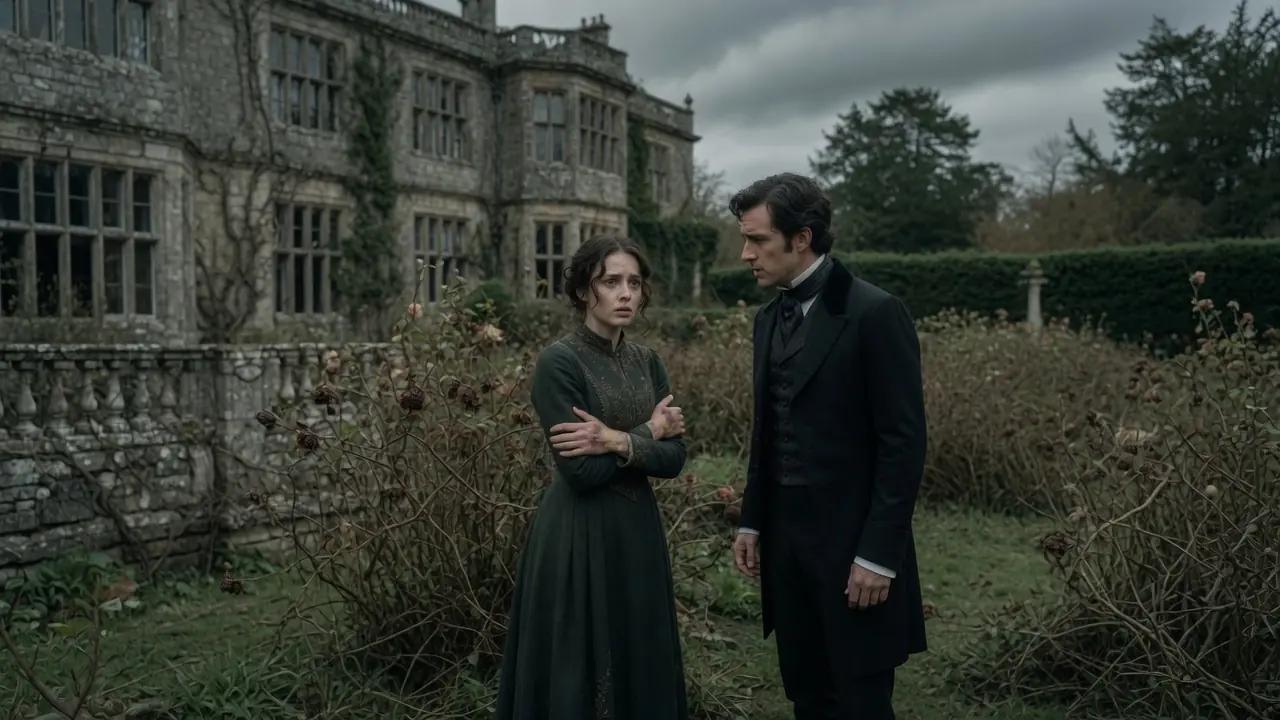
Margaret nodded jerkily and moved toward the door with the careful gait of someone in pain. Adrian followed, noting how she kept maximum distance between herself and George as she passed. The gardens of Whitmore Hall had once been beautiful. Now they presented melancholy evidence of abandonment.
Overgrown hedges blocked pathways, flower beds choked with weeds, and a fountain stood dry and cracked at the center of what had been a formal parterre. Margaret walked ahead of Adrian on a gravel path, her posture rigid. When they had moved beyond sight of the drawing room windows, Adrian spoke quietly. "Lady Margaret, are you injured?"
She did not turn. "I am well, your grace. I apologize for my clumsiness with the tea. It was inexcusable.
"That is not what I asked," Adrian said, matching her slow pace. "I asked if you are injured." Margaret stopped walking, but still did not face him. " "Why do you ask questions to which you already know the answers, your grace?" "The exhaustion in her voice was profound. Adrian moved carefully to stand where she could see him without feeling cornered.
"Because I need to hear the truth from you," he said gently. Not speculation or observation, but truth. The truth, she repeated bitterly. The truth is that I am four and twenty years old with no family, no fortune, and no recourse.
The truth is that my cousin controls every aspect of my existence, and there is nothing I can do to change that. The truth is that even standing here speaking with you will have consequences I would prefer not to face." She finally looked at him and the despair in her green eyes was devastating. "So forgive me, your grace. If I find your concern touching, but ultimately pointless." "It is not pointless if I can help you," Adrian said.
"Help me?" Margaret's laugh was harsh. "How?" "By purchasing Whitmore Hall and inadvertently purchasing me along with it. By reporting your suspicions to a magistrate who will accept George's word over mine because he is my legal guardian. By challenging him to a duel that would only ensure my complete isolation when he recovers.
Adrian heard the intelligence beneath her hopelessness. She had considered every angle and found them all blocked. "Then tell me what I can do," he said quietly. "There must be some action that would improve your circumstances." Margaret opened her mouth to respond when a gust of wind swept across the garden, stronger than the breeze that had been blowing.
It caught the loose fabric of her sleeve and lifted it above her wrist before she could stop it. Adrian saw the bruises clearly in the afternoon light. Purple and yellow marks encircled her wrist in a pattern unmistakably made by fingers, but worse were the older scars visible above them. White lines that could only have come from repeated injury over time.
Margaret yanked her sleeve down immediately, her face flooding with shame. Please, she whispered, do not look at me. But Adrian had already seen enough. The evidence he had gathered in London was no longer abstract documentation, but living reality.
This woman, daughter of a man who had trusted him, had endured systematic brutality, while Adrian had lived in comfortable ignorance. He took a careful step forward, hands raised where she could see them. Lady Margaret, I need you to listen to me very carefully. What is being done to you is not merely wrong.
It is criminal. Your cousin has no legal right to harm you regardless of his role as guardian. You do not understand, she said, tears beginning to track down her pale cheeks. George is all I have.
If I accuse him, if I try to leave, he will find me. He has made that very clear. And next time, she stopped, unable to finish the sentence. Next time, he might kill you.
Adrian finished quietly. Yes, I understand that danger, which is why you need protection that he cannot overcome. Legal protection backed by resources he cannot match. Margaret shook her head hopelessly.
"No one will believe me." Everyone thinks me fortunate to have such a devoted guardian. They see what he wishes them to see. "I believe you," Adrian said simply. And I have the means to help you if you will trust me enough to accept that help.
She stared at him as though he spoke a foreign language. "Why? Why would you risk his anger, risk scandal, risk anything for someone you barely know?" "Because I made a promise to your father seven years ago," Adrian replied. I promised him that should anything happened to him, I would ensure you were protected and cared for.
I failed to honor that promise through negligence, and you have suffered because of my failure. I cannot undo the harm already done. But I can prevent future harm if you will allow it. Margaret wrapped her arms around herself, a gesture of self-protection that made Adrian's chest tighten with fury at what had been done to her.
And how would you accomplish this miracle, your grace? George holds all the legal advantages. Not all, Adrian said. As a peer of the realm, I can petition the Lord Chancellor's court directly.
with proper evidence of mismanagement and abuse. Your guardianship can be transferred. The process takes time, but it can be done. And where would I go while this process unfolds?
Margaret asked. I have no one, nowhere that George cannot reach me. You would go to Northcliffe Manor under the protection of my household, Adrian said. My grandmother maintains residence there.
She would serve as chaperon and guardian until legal matters are resolved. George would not dare violate the sanctuary of a juke's home. Hope and fear worred visibly in Margaret's expression. He would fight you, she whispered.
He would spread terrible rumors. Say that I am mad or wanton or anything else that would discredit me. Let him try, Adrian said grimly. My reputation and resources far exceed his.
And I have already gathered evidence of his financial crimes that would see him imprisoned if brought before a magistrate. He can fight, but he cannot win. Margaret was silent for a long moment, studying his face as though trying to read truth in his features. Finally, she spoke in a voice barely above a whisper.
I am afraid your grace, afraid to hope, afraid to trust, afraid that this is some cruel gest that will make everything worse. I know, Adrian said gently. Trust is earned, not given, and I have done little to earn yours. But I am asking you to take one small step of faith.
If the situation worsens, if you need immediate assistance, send word to me. I will come. How could I send word? George monitors everything.
Every letter, every conversation. Then we need a signal, Adrian said, thinking rapidly. Something innocuous that would not alert suspicion. If you need help urgently, find a way to light a candle in the eastmost window of the manor.
I will post a man to watch from the road. If he sees that signal, I will come immediately with legal authority to remove you from this place. Margaret's eyes widened. You would do this?
Truly? I give you my word, Adrian said, as I gave my word to your father. "This time I will not fail." Before she could respond, George's voice called from the direction of the house. Margaret, his grace has consumed enough of your time.
return to the house at once. Margaret's face went blank immediately, the brief spark of hope extinguished behind familiar walls. " "I must go," she said to Adrian. "Thank you for your kindness, your grace, but please do not take risks on my behalf.
I am not worth the cost." She hurried back toward the house before Adrian could argue, her steps quick despite obvious pain. He watched her go and felt the weight of his promise settle onto his shoulders. She believed herself worthless, a victim so ground down by systematic cruelty that she could not imagine salvation. He would prove her wrong.
Whatever it took, however long the legal battle, whatever resources he had to expend, Margaret Hartley would be freed from her cousin's brutality. This he swore, standing in that neglected garden, watching her disappear into the house that served as her prison. Adrian returned to the drawing room and concluded his business with George quickly, inventing interest in a property that did not exist and promising to send word regarding further discussions. George was expansive now, pleased that the Duke had seen nothing of consequence beyond a clumsy cousin with weak nerves.
As Adrian's carriage pulled away from Whitmore Hall, he looked back at the manor and saw a pale face at an upper window. Margaret, watching his departure with an expression he could not read at this distance. He raised his hand in brief acknowledgement, then instructed his driver to return to Northcliffe Manor with all possible speed. There was much to arrange, a man to post as watchman for the signal, legal documents to prepare, his grandmother to inform of the situation, and evidence to compile that would be irrefutable when the time came to present it before authorities.
George Whitmore had made one critical mistake. He had harmed someone under Adrian's protection, someone Adrian had vowed to defend. That protection might have come late, but it would be absolute, and George would learn, as others had before him, that the Duke of Northcliffe, once committed to a course, was implacable in its pursuit. Adrian arrived in London as dawn broke over the city.
His carriage pulling up before the offices of his solicitor in Lincoln's infields. William Bradford had served the Kelsworth family for thirty years and knew better than to question urgent summons from his primary client. "Your grace," Bradford said, ushering Adrian into his private office despite the early hour. "Your message suggested considerable urgency." Adrian laid the portfolio of evidence on the desk between them.
"I need a petition prepared for the Lord Chancellor's court, a case of guardianship abuse and financial malfeasance. I need it to be ironclad, leaving no avenue for challenge. Bradford opened the portfolio and began reading. His expression grew increasingly grim as he worked through the documents.
Good God, he muttered. This is systematic. How long has this been occurring? Two years at minimum, Adrian replied.
Possibly longer. The young woman in question is Lady Margaret Hartley, daughter of the late Vic Count Hartley. Her cousin, George Whitmore, holds guardianship and has used his position to terrorize her while stealing her inheritance. Bradford made notes rapidly.
We will need testimony from the lady herself, medical examination to document injuries, financial records proving misappropriation of funds, character witnesses willing to speak against Whitmore. I have begun gathering evidence, Adrian said. But the situation is urgent. The guardian has arranged a marriage that would effectively transfer his victim to another man's control.
We must act before that occurs. Bradford nodded slowly. I can have preliminary documents ready within three days. However, your grace, I must caution you.
Challenging guardianship is complex. Courts are reluctant to interfere in family matters, particularly when the guardian is of respectable birth. Then we make the case irrefutable, Adrian said flatly. Spare no expense.
Hire investigators to document every debt, every gambling loss, every instance of violence. I want testimony from dismissed servants, from villagers, from anyone who has witnessed Whitmore's character. And I want medical experts prepared to examine Lady Margaret and provide professional assessment of her injuries. The solicitor hesitated.
Your grace, may I speak frankly, always? Your involvement in this matter will attract scrutiny and speculation. Society will question why a duke of your standing concerns himself so deeply with the troubles of a Viscount's daughter. There will be rumors.
Let them rumor, Adrian said coldly. I made a promise to her father. More importantly, the woman is being brutalized while supposedly under protection of law. If preventing that attracts gossip, I will weather it gladly.
Bradford inclined his head in acknowledgement. Then we proceed. I will draft the petition and engage investigators immediately. In the meantime, what of Lady Margaret herself?
She remains in Whitmore's custody. I have arranged for warning signals should she need emergency extraction, Adrian said. But I need you to research the law regarding immediate intervention. If her life is in imminent danger, what authority do I have to remove her from that household before formal court proceedings?
The solicitor pulled several heavy volumes from his shelves and began leafing through them. "There is precedent," he said after some minutes. "In cases where death or severe injury appears imminent, a peer of sufficient rank can invoke protective custody pending judicial review. However, it requires sworn testimony before a magistrate that the danger is genuine and immediate.
The bar is quite high." "Then prepare the documents," Adrian instructed. I want them ready should they be needed. He left Bradford's office as the city was waking to commerce and returned to his London townhouse. There he found his grandmother, the Dowager Duchess Catherine, waiting in his study with the expression that had intimidated three generations of Kelsworths.
"You sent urgent summons dragging me from Northcliffe Manor," she said without preamble. "This had better be worthy of disrupting my autumn routine." Adrian poured them both tea and explained the situation in full detail, holding nothing back. His grandmother listened without interruption, her sharp blue eyes never leaving his face. When he finished, she was silent for a long moment.
Then she said, "You should have honored your promise seven years ago." The rebuke stung precisely because it was deserved. "I know," Adrian said quietly. "I failed her through negligence. I'm trying to rectify that failure now.
"Good," his grandmother said crisply. The girl will come to Northcliffe Manor under my protection. I will serve as chaperon and ensure no whisper of scandal attaches to her name. But Adrian, understand what you are undertaking.
Challenging guardianship will make you enemies. George Whitmore may be a brute, but he has connections. Men who profit from disorder and will not welcome your interference. I do not care about enemies, Adrian replied.
only about keeping my word. His grandmother's expression softened fractionally. Your grandfather would be proud. He always valued honor over convenience.
She rose. Now make your arrangements. When the girl arrives, I will be ready. Over the next three days, Adrian worked with furious focus.
Investigators fanned out across the countryside around Whitmore Hall, gathering testimony. Medical experts were retained. A watchman was posted with instructions to monitor the east window of the manor and send immediate word if a candle appeared. On the fourth day, Bradford delivered the completed petition.
Adrian reviewed it carefully, noting the meticulous documentation of George's crimes and the careful legal arguments for transferring guardianship. It was thorough, compelling, and would take weeks to work through the court system. Time Margaret might not have. On the fifth day, Adrian received word from his watchmen.
No signal had been seen, but village gossip reported that George had been heard shouting late into the previous night. A doctor had been summoned to Whitmore Hall the following morning, but turned away at the door. Adrian felt cold fury settle in his chest. He summoned his carriage and made the journey back to the area around Whitmore Hall, stopping first at the village to speak with the doctor who had been refused entry.
Dr. Thornbury was a man in his 60s with kind eyes and a reputation for discretion. He received Adrian in his surgery with evident relief at having someone to confide in. I was summoned by a housemaid, he explained. She claimed Lady Margaret had fallen and required medical attention.
When I arrived, Mr. Whitmore met me at the door and informed me that his cousin's condition had improved and my services were no longer needed. He was quite firm about it. Did you see Lady Margaret? No, your grace, but I heard her.
A sound from upstairs, like someone in considerable pain. Mr. Whitmore claimed it was simply feminine hysteria and nothing to concern myself with. Adrian's hands clenched. How long ago was this?
2 days passed. I have been troubled by it since, but what recourse do I have? He is her guardian. You have done what you could, Adrian assured him.
Now I need you to prepare a sworn statement describing exactly what occurred. Time may be of essence. That same afternoon, a boy arrived at Adrian's lodgings in the village with a crumpled note. The handwriting was barely legible, clearly written in haste or distress.
Your grace, the message read. Tonight, please. It was unsigned, but the desperation was unmistakable. Adrian sent immediate word to Bradford in London to bring the protective custody documents and to engage a magistrate.
Then he assembled what he would need. Two footmen from his household, both large and capable, Dr. Thornbury, willing now to help, and his own carriage to transport Margaret to safety once she was freed. As night fell, Adrian and his small party approached Whitmore Hall from the eastern side. True to the signal they had arranged, a single candle burned in the eastmost upper window.
A tiny flame that represented Margaret's last desperate hope. Adrian sent one footman to the front door with instructions to request urgent audience with George on pretext of immediate property business. The distraction would draw George away from Margaret's location. While George was occupied, Adrian would enter through the servants' entrance and locate Margaret.
The plan executed smoothly at first. The footman pounded on the front door, rousing the household. Adrian heard George's irritated voice, demanding to know who dared call at such an hour, while the commotion drew attention to the front of the house. Adrian slipped through the kitchen entrance with Dr. Thornbury.
A young maid, the same one who had sent the note, met them in the darkened hallway. She is locked in her chamber. The girl whispered, tears streaming down her face. He has not given her food or water since yesterday morning.
I heard her fall this evening and could get no response when I called through the door. "Take me to her," Adrian commanded quietly. They climbed the servant stairs to the second floor. The maid led them to a door at the end of a narrow corridor.
It was locked from the outside. A heavy bolt that served no legitimate purpose in securing a bed chamber. Adrian tried the door and found it solid. Margaret, he called quietly.
Lady Margaret, can you hear me? It is the Duke of Northcliffe. I have come to help you as promised. Silence answered him.
He called again louder this time. Margaret. A faint sound came from within. Something between a moan and a whisper.
He could not make out words. Break it down. Adrian instructed his footmen. The lock gave way on the third strike.
wood splintering around the bolt. Adrian pushed into the room and stopped, momentarily frozen by what he saw. Margaret lay crumpled on the floor near the window, still in her day dress, but with the fabric torn at the shoulder. Her face was turned away, but he could see fresh bruising along her jaw and neck.
The candle she had lit as signal had burned down to a stub on the windowsill, guttering in its own wax. Dr. Thornbury pushed past him and knelt beside her. His professional demeanor firmly in place as he began his examination. She is breathing, he reported, but her pulse is weak and rapid.
She requires immediate care. George's voice bellowed from somewhere downstairs. What is the meaning of this disturbance? Who authorized entry to my home?
Adrian ignored the shouting and moved to Margaret's side. Her eyes were half open, unfocused. Lady Margaret," he said gently. "We are taking you to safety.
You are safe now." Her lips moved. "No," she whispered. "He will find me." "No," Adrian said firmly. "He will not.
You have my word." Footsteps pounded up the stairs. George burst into the room, his face flushed with rage and wine. "What are you doing in my house?" he demanded. You have no right, no authority to violate my privacy.
Adrian rose slowly, placing himself between George and the doctor, tending to Margaret. I have every right when a woman under supposed protection is found locked in her room without food or medical care. Suffering from injuries that require immediate intervention. She fell, George blusted.
A simple accident. She is clumsy and has been unwell. Dr. Thornbury looked up. These injuries are not consistent with a simple fall, your grace.
This woman has been systematically beaten over an extended period. Lies, George snarled. The doctor is mistaken or has been bribed to fabricate testimony. Adrian withdrew a folded document from his coat.
This is a warrant from the magistrate authorizing Lady Margaret's removal from this household pending investigation of abuse and financial crimes. You will not interfere. George's face went from red to purple. Financial crimes I have committed no crimes.
The girl is mine to do with as I see fit. She has no one, no recourse, and you are overstepping your authority. Not any longer, Adrian said coldly. Lady Margaret is now under protection of my household.
Any attempt to contact her or approach her will be treated as criminal harassment. And Mr. Whitmore, be advised that my solicitors are even now preparing a full accounting of your management of the Hartley estate. Every forged document, every fraudulent transaction, every theft from your ward's inheritance will be laid before the courts. You may wish to engage legal representation.
George stared at him, rage warring with sudden fear, as the implications penetrated his wine- soaked consciousness. You cannot prove anything," he said. But uncertainty had crept into his voice. "We shall see," Adrian replied.
"Now step aside, Dr. Thornbury. Can she be moved?" The doctor nodded carefully your grace. She needs warmth and immediate medical attention, but transport is possible if we are gentle." Adrian bent and lifted Margaret himself, ignoring George's sputtering protests. She weighed almost nothing, her frame alarmingly light in his arms.
Her head lulled against his shoulder, and he could feel the flutter of her pulse against his chest. As they descended the stairs, the housemaid pressed a small bundle into the doctor's hands. "Her things," the woman whispered, "what little she has left." Adrian carried Margaret to his carriage, while Dr. Thornbury followed with the bundle. Behind them.
George's threats and curses echoed into the night. But Adrian did not look back. His focus was entirely on the woman in his arms, on getting her to safety and beginning the long process of healing what had been so brutally broken. The journey to Northcliffe Manor took two hours.
Margaret drifted in and out of consciousness, occasionally murmuring words that made no sense. Adrian held her carefully, wrapped in his own coat for warmth, while Dr. Thornbury monitored her condition with evident concern. When they finally arrived at Northcliffe Manor near midnight, the Dowager Duchess met them at the entrance with staff already prepared. A bedroom had been readied, hot water and clean linens arranged, and Mrs. Hutchkins, the housekeeper, stood ready to assist.
Bring her to the blue chamber, the Dowager Duchess instructed. Doctor, I trust you will conduct a thorough examination and document everything. My grandson will need evidence for the legal proceedings. As Adrian carried Margaret up the stairs to the prepared room, she stirred and opened her eyes fully for the first time since they had found her.
Her gaze focused on his face with effort. "Why?" she whispered. "Why would you do this?" "Because I gave my word," Adrian replied simply. "And because no one deserves what was done to you." Her eyes filled with tears that spilled over, tracking down bruised cheeks.
I thought no one would come, she said brokenly. I thought I would die there. Not while I draw breath, Adrian said fiercely. You are safe now, Margaret.
I swear it on my honor. You are safe. He laid her gently on the bed and stepped back to allow the doctor and housekeeper to attend her. His grandmother drew him from the room, closing the door softly behind them.
" "It is worse than I imagined," she said quietly. "That man should be horsewhipped. That man will be prosecuted to the fullest extent of the law, Adrian replied. And Margaret will have whatever time and resources she needs to recover, whatever it takes.
For however long, his grandmother studied him with those sharp eyes. You have taken responsibility for her future. Adrian, you understand what that means? I understand, Adrian said.
And I will not fail her again. He returned to his own chambers, but did not sleep. Instead, he sat at his desk and wrote detailed instructions to his solicitor. The case against George Whitmore would proceed with maximum aggression.
Every crime would be documented, every victim found, every legal avenue pursued. George had made the mistake of harming someone under ducal protection. That protection, once invoked, was absolute, and Adrian would ensure that George Whitmore spent the rest of his miserable life regretting the day he had chosen to abuse Margaret Hartley. The first week at Northcliffe Manor passed in a blur of medical care and cautious recovery.
Dr. Thornbury visited daily, monitoring Margaret's progress as her body began to heal from starvation and systematic abuse. The physical injuries were cataloged meticulously. Broken ribs that had healed poorly, scars on her back from what appeared to be strikes with a riding crop, malnutrition that had left her dangerously underweight. But the emotional wounds ran deeper than any physician could measure.
Margaret spent the first three days barely speaking, flinching at sudden movements, and refusing to be left alone with any man, including the doctor. Only Mrs. Hutchkins and the Dowager Duchess could approach without triggering visible panic. She ate what was offered, but seemed to expect punishment for every bite, her eyes constantly darting toward the door as though George might burst through at any moment. Adrian respected her need for distance, visiting only when specifically invited by his grandmother.
He would sit in a chair across the room while the Dowager Duchess maintained conversation, asking nothing of Margaret except her presence. Sometimes she acknowledged them with a nod. Often she simply stared out the window at gardens she could not yet bring herself to explore. On the eighth day, Margaret spoke directly to Adrian for the first time since her rescue.
He had been reading correspondence in the library when she appeared in the doorway, dressed in a borrowed morning gown that hung loosely on her thin frame. "Your grace," she said quietly. "Might I speak with you?" Adrian set aside his papers immediately. Of course, Lady Margaret, please come in.
She entered hesitantly, perching on the edge of a chair near the door rather than approaching closer, her hands twisted in her lap, betraying nervousness despite her composed expression. I wish to thank you," she began formally. "For your intervention, and for the care I have received in your household. Your grandmother has been exceedingly kind." She hesitated, then continued in a voice so careful it was nearly brittle.
There is one other matter if you will indulge me. I will, Adrian said. My mother's sister lives in Devon, Margaret said. I asked once, only once, whether any letter had come from her, and George answered with violence instead of words.
I have not dared to inquire again. I do not know what my aunt has been told, or whether she believes me ill or dead, or simply ungrateful and silent. Adrian felt something cold and steady settle into place behind his ribs. Then we will set it right.
Margaret's hands tighten together. I would not have her think I abandoned her. She was kind to me when my father lived. She will not think that, Adrian said.
Not once she hears your voice in ink. I will send a letter this very day and it will go under my seal. If she wishes to reply, it will come to you unopened. The smallest breath left Margaret as though she had been holding it since the word Devon first formed on her tongue.
Thank you, your grace. Thank me when you have her answer. Adrian replied softly. There is no need for thanks, Adrian replied gently.
I am only sorry I did not act sooner. Margaret shook her head slightly. "You had no obligation to me, your grace." The promise you made to my father, it was a courtesy, nothing more. You have exceeded any reasonable expectation in fulfilling it.
Perhaps, Adrian said. But having seen what you endured, I find I cannot regret exceeding those expectations. She was quiet for a moment, studying her hands. The doctor says I will recover physically, she said finally.
The injuries will heal. The weight will return with proper nutrition. He is quite optimistic about my prospects. That is excellent news, but he cannot speak to the other damage, Margaret continued, her voice dropping.
The fear that lives in my chest, the certainty that this reprieve is temporary. The knowledge that George will find some way to reclaim control, because that is what men like him do. George will not touch you again, Adrian said firmly. My solicitors are preparing a case against him that will result in his imprisonment.
The evidence is overwhelming. Evidence must be presented before a court that may not wish to hear it, Margaret countered. Guardians are granted wide latitude in managing their wards. Society accepts a certain degree of discipline as necessary.
Who is to say the magistrate will view my situation as requiring intervention rather than simply unfortunate? Adrian leaned forward, his blue eyes intent on her face. Margaret, I need you to understand something. George forged documents to access funds held in trust.
He sold properties that were not his to sell. He kept no proper accounting of expenditures. These are not matters of familial discipline but criminal fraud. Even if the court somehow dismissed the physical abuse, which I do not believe they will, the financial crimes alone will see him imprisoned.
For the first time, something like hope flickered in Margaret's expression. Truly, you have proof of forgery. Multiple documents, Adrian confirmed. My investigators found a clerk George bribed to forge signatures on release papers.
The clerk has agreed to testify in exchange for immunity. We have ledgers showing discrepancies. We have witnesses to sales of Hartley property at prices well below market value, with the difference presumably going into George's pockets. Margaret drew a shaky breath.
Then there is real possibility of justice. Not possibility, Adrian said. Certainty. The question is not whether George will face consequences, but rather the extent of those consequences.
Over the following days, Adrian made a point of sharing meals with Margaret when his grandmother was present, creating opportunities for conversation that demanded nothing of her. He spoke of estate management, of books he had read, of childhood memories that carried no weight or expectation. Gradually, Margaret began to respond tentatively at first, then with increasing confidence. A week later, a letter arrived sealed in dark red wax, the address penned in a hand that was careful rather than elegant.
Margaret stared at it as though it might vanish if she blinked. It is from Devon, Adrian told her, setting it on the table between them. From your aunt. For a moment, she could not make her fingers move.
When she finally broke the seal, the paper trembled in her grip. Her aunt's words were frantic with relief and heavy with guilt. She had written again and again, only to receive silence in return. She had even attempted to call at Whitmore Hall and been turned away at the gate with the explanation that Margaret was unwell and could not be disturbed.
She begged forgiveness for believing the lie. Margaret read it twice, then pressed the letter to her mouth. A quiet sound escaping her that was half laugh and half sobb. "I did not abandon her," she whispered as if saying it aloud could rewrite the past.
"You did not," Adrian replied. And you will write back when you are ready if she wishes to come. She will be received here as family." One afternoon, two weeks after her arrival, Adrian found her in the library, examining the shelves with cautious interest. "This was the first time she had ventured from her chamber without explicit invitation, and he took it as encouraging sign.
"You are welcome to borrow anything that interests you," he said from the doorway. My grandfather collected extensively and I have continued the habit. Margaret turned startled but not frightened. Thank you your grace.
I have always enjoyed reading though opportunities were limited these past years. George did not approve. A bitter smile crossed her face. George did not approve of anything that might educate or empower me.
He preferred me ignorant and compliant. Adrian crossed to the shelves and pulled down a volume. My mother favored this one, he said, offering her a collection of essays. She said it taught her to think critically about the world rather than simply accepting what she was told.
Margaret accepted the book with careful hands. Your mother sounds remarkable. She was, Adrian said softly. I lost her when I was 12.
A fever that took her in three days. My father never truly recovered from her death. I am sorry, Margaret said, genuine sympathy in her voice. My mother died when I was 17.
She had been ill for some time, but I was not prepared for the absence. Everything changed when she was gone. And your father survived her by two years before the fever took him as well, Margaret replied. He tried to prepare me for managing on my own, but I think he could not imagine circumstances like those that actually transpired.
He trusted George because they had been close as boys. He did not see what his cousin had become. People change, Adrian observed. Not always for the better.
Margaret clutched the book to her chest. Your grace. May I ask you something personal? Of course.
Why have you never married? You are wealthy, titled by all accounts considered eligible. Surely you have had opportunities. Adrian considered his response carefully.
I have had opportunities, he agreed, but I have never found a woman whose company I preferred to solitude. My parents had a marriage of genuine affection, and I suppose I have been waiting for something similar rather than settling for a convenient arrangement. That seems wise, Margaret said. Too many marry for status or fortune and find themselves trapped in misery.
Is that what would have happened with Thomas Wendell? Her expression hardened. That would have been a particular form of misery. Yes, George chose him specifically because he knew Wendell would continue the control George had established.
A wife with no will of her own, trained to obedience through systematic cruelty. Adrian felt anger surge at the calculated nature of George's plans. That future is no longer possible. Wendell has been informed that the engagement was arranged under fraudulent pretenses and is null.
Margaret's eyes widened. He agreed to that. He had little choice when presented with evidence that you were coerced and that George had no legal authority to arrange your marriage, Adrian said. Additionally, I suggested that any man who would knowingly participate in such a scheme might find himself socially isolated in certain circles.
You threatened him. I clarified consequences. Adrian corrected with the faintest smile. There is a difference.
For the first time since arriving at Northcliffe Manor, Margaret laughed. It was a brief sound. Quickly stifled, but genuine. "Thank you," she said.
"For fighting battles, I could not fight myself." As October faded into November, Adrian found himself increasingly drawn to Margaret's company. She was intelligent, observant, and possessed a quiet strength that became more apparent as she healed. Her sense of humor, long suppressed, began to emerge in dry observations about books they discussed, or gentle mockery of social conventions they both found absurd. His grandmother noticed naturally.
Nothing escaped the Dowager Duchess's sharp eyes. "You are growing attached," she observed one evening after Margaret had retired. "Be careful, Adrian. That girl has been through hell.
She may not be capable of the kind of relationship you might hope for. I hope for nothing beyond her recovery and happiness, Adrian replied. Though I confess I find her company unexpectedly pleasant. Pleasant?
His grandmother repeated with a knowing look. Yes, I am sure that is all it is. Before Adrian could formulate a response, his solicitor arrived with urgent news. The case against George was proceeding faster than anticipated.
A hearing had been scheduled before the magistrate to review evidence and determine whether formal charges should be filed, but there was a complication. George has engaged a solicitor of his own. Bradford explained, accepting tea in Adrian's study, and he is spreading rather vicious rumors. Claims that Lady Margaret suffers from mental instability.
That she attempted self harm on multiple occasions. That you have abducted a helpless woman for purposes he hesitates to articulate but certainly implies Adrian's jaw tightened he is attempting to preempt our accusations by discrediting Margaret before she can testify precisely Bradford confirmed several society matrons have been receptive to his version of events there is talk that perhaps you acted rashly that a guardian's discipline is being mischaracterized as abuse that Lady Margaret's isolation was for her own protection What do we do? Adrian demanded. We have evidence, testimony, medical documentation.
Surely that outweighs gossip. It should, Bradford agreed. But courts are influenced by public opinion, particularly when the accused is of gentle birth, and the accuser is a woman whose reputation is being systematically destroyed. Then we need something that cannot be denied or explained away.
Adrian said something that makes George's guilt undeniable. Bradford hesitated. Your grace. There is one approach that would settle the matter definitively and silence all speculation about your motives.
Adrian waited. Marry her, Bradford said simply. Make Lady Margaret your duchess. The marriage would transfer legal authority over her person and property to you, ending George's guardianship immediately.
It would also make clear that your interest in her welfare is honorable and permanent. Adrian stared at his solicitor, the suggestion taking him completely off guard. Marry her. She has been here barely a month.
She is still recovering from trauma. The idea is preposterous. Is it? Bradford challenged.
You have already established her residence in your household. You visit her daily. Your grandmother serves as chaperone, which society accepts for now. But how long before questions arise about your true intentions?
Marriage would resolve all uncertainty and provide Lady Margaret with unassailable protection. She would never agree, Adrian said. She barely tolerates my presence without flinching. The thought of marriage, of intimacy, would terrify her.
Then you propose a marriage of convenience. Bradford suggested. Make clear that you expect nothing beyond her safety and well-being. Give her time to heal under the absolute protection of your name and title.
Adrian rose and paced to the window, staring out at darkening grounds. The suggestion was outrageous. It was also completely logical. Marriage would end all legal ambiguity, would shield Margaret from George's machinations, would demonstrate Adrian's honorable intentions beyond any doubt, but it would also bind him permanently to a woman who might never be capable of returning affection, who might spend her life seeing him as another man who controlled her, who might never heal sufficiently to want more than the protection he offered.
"I will consider it," he told Bradford finally, "but the decision must be Margaret's. I will not coerce her into anything, regardless of how legally advantageous it might be. That evening, Adrian requested a private audience with Margaret in the library. She arrived looking puzzled but not alarmed, taking her usual chair near the door.
"Lady Margaret," he began carefully. "I have received troubling news regarding George's legal strategy. He is spreading rumors designed to undermine our case and your credibility." He told her everything. The allegations of instability, the insinuations about Adrian's motives, the society matrons who were sympathetic to George's version of events.
Margaret listened without expression until he finished. So, I am to be painted as mad and you as my corruptor, she said flatly. How predictable. My solicitor has suggested a solution, Adrian continued.
One that would end all speculation and provide you with absolute legal protection. What solution? Marriage, Adrian said simply. If you were to become my wife, George's guardianship would end immediately and completely.
He would have no legal standing to challenge anything or spread any rumor that would be taken seriously. You would have the protection of my name, my title, and my resources permanently. Margaret stared at him as though he had suggested something incomprehensible. Marriage to you?
A marriage of convenience, Adrian clarified quickly. I would expect nothing beyond your presence in my household. We would maintain separate chambers, separate lives if you preferred, but legally you would be Duchess of Northcliffe, and no one could ever control or harm you again. She rose and moved to the window, her back to him.
You would bind yourself to a woman you barely know, a woman who may never be whole again, simply to protect her from gossip, not simply for gossip, Adrian said. For your safety and peace of mind. And Margaret, I will not pretend I would find the arrangement burdensome. I enjoy your company.
I admire your strength. If circumstances were different, if you were not recovering from trauma, I would count myself fortunate to have your attention. Margaret turned, tears bright in her eyes. You are too kind, your grace.
Far kinder than I deserve. You deserve everything George denied you, Adrian said firmly. Peace, safety, choice. I am offering you a choice now.
If marriage would make you feel trapped, we will find another way. But if it would give you the security to truly heal, then I offer it gladly. Margaret was silent for a long moment. Then she said quietly, "May I have time to consider?
Take all the time you need, Adrian assured her. This decision is yours alone. She left the library without another word, and Adrian spent the night wondering if he had made a terrible mistake in presenting the option at all. Three days later, Margaret requested another private audience.
She looked as though she had not slept, but her voice was steady when she spoke. "I accept your proposal, your grace," she said. Not because I have no other choice, though that is partially true, but because I believe you when you say you would not hurt me, and because she hesitated, I find I do not wish to leave Northcliffe Manor or your company. If that can be secured through marriage, then I will marry you.
Relief and apprehension war in Adrian's chest. Are you certain? We need not rush into anything. I am certain, Margaret said.
Arrange it as quickly as the law allows. Let us give George no time to interfere. The wedding took place one week later in the private chapel at Northcliffe Manor. Only the Dowager Duchess, Dr. Thornbury, Bradford the Solicitor, and Mrs. Hutchkins attended as witnesses.
Margaret wore a simple gown of ivory silk that the Dowager Duchess had commissioned specifically for the occasion. Adrian spoke his vows with absolute sincerity, promising to honor and protect Margaret for all his days. She repeated hers in a voice that trembled only slightly, her hand cold in his, as the vicar pronounced them husband and wife. The kiss that sealed their union was chaste, barely more than a brush of lips.
But Margaret's eyes were wide with something that might have been hope when they drew apart. That night, Adrian showed Margaret to her chambers, which connected to his own suite through a door that he kept firmly closed. "You are safe here," he told her. I will never enter without invitation or permission.
She nodded, exhaustion plain in her face. Thank you. Your grace, Adrian, he corrected gently. We are married now.
You should use my name. Adrian, she repeated, testing the word. Then, good night, Adrian. She closed the door between their rooms, and he heard the soft sound of her moving about as she prepared for sleep.
He returned to his own chamber and stood at the window, looking out over the estate that was now hers, as well as his. He had married to protect her, he told himself. To provide legal immunity from George's threats and society's judgment. Nothing more complicated than that.
But as he finally prepared for bed, Adrian could not quite convince himself that was the entire truth. Somewhere in the weeks since Margaret's arrival, something had shifted. Her courage in surviving what would have broken most people. Her determination to heal despite every reason to despair.
Her emerging humor and intelligence as she felt safe enough to reveal them. All of it had affected him more deeply than he had anticipated. He cared for her not with the passionate intensity of romantic novels, but with something steadier and potentially more enduring. And now they were bound together, for better or worse, in a marriage that might never be more than a legal arrangement, but could potentially become something neither of them had expected.
Only time would reveal which future awaited them. The first three months of marriage established patterns that suited them both. Adrian rose early, as was his habit, and attended to estate business, while Margaret breakfasted in her private sitting room. They met for luncheon when he was in residence, discussing books or estate matters with the ease of friends rather than the constraint of strangers.
Afternoons Margaret spent in the library or gardens, gradually growing stronger as proper nutrition and safety restored what George had stolen. Adrian never pressed for more than she willingly offered. He suggested activities but accepted refusals without argument. A ride through the estate only if she felt comfortable.
an evening of cards with his grandmother. Only when she wished, always the choice was hers, and gradually Margaret began to understand that this was not manipulation, but genuine respect for her autonomy. The legal proceedings against George moved forward with satisfying inevitability. 5 months after the wedding, the case was heard before a magistrate in London.
Adrian and Margaret traveled to the city for the hearing, taking rooms at his townhouse where she could rest between sessions. The courtroom was intimidating, filled with barristers in their robes and wigs, observers from society curious about the scandal, and George himself seated across from them with his solicitor. Margaret's hands trembled as she took her seat, and Adrian quietly moved his chair closer so his presence might provide some comfort. The prosecution presented their case methodically.
Financial documents showing fraud and embezzlement. Testimony from the clerk who had forged signatures. Doctor Thornbury's medical assessment of Margaret's injuries. Statements from dismissed servants describing what they had witnessed at Whitmore Hall.
George's solicitor attempted to counter with claims of misunderstanding and mismanagement rather than criminal intent, but the evidence was overwhelming. When Margaret was called to testify, Adrian watched her rise with visible courage and walked to the witness box. She spoke clearly, describing without emotion the systematic abuse she had endured, the starvation, the beatings, the isolation, the forced engagement to Wendell, the years of terror under George's control. Several women in the gallery wept openly.
The magistrate's expression grew increasingly severe. George's solicitor attempted to discredit her testimony, suggesting she exaggerated or fabricated claims out of spite, but Margaret remained composed. She answered every question with quiet dignity, never raising her voice or losing control. When it was finished, the magistrate retired to consider his verdict.
The weight felt interminable. Margaret sat beside Adrian in the hallway, her face pale, but calm. You were remarkable, Adrian told her quietly. Whatever the outcome, you spoke your truth with courage.
I had no choice, Margaret replied. If I did not speak, he would do this to someone else. Perhaps not me, but some other unfortunate woman under his control. The magistrate returned after two hours.
The courtroom fell silent as he delivered his verdict. Having reviewed the evidence presented and heard testimony from multiple witnesses, I find George Whitmore guilty of fraud, embezzlement, and custodial abuse, he is hereby sentenced to 1two years imprisonment with restitution to be made to Lady Margaret Kelsworth for all funds misappropriated from the Hartley estate. The room erupted in whispers. George surged to his feet, shouting protests that were quickly silenced by the bailiffs.
Adrian felt Margaret sag slightly beside him as though a great weight had been lifted. It is over, she whispered. He cannot hurt me anymore. No, Adrian agreed.
He cannot. The Hartley estate was returned to Margaret's control, and with Adrian's guidance, she began the process of restoration. Properties that had been sold were repurchased when possible. The manor house itself required extensive repairs.
But Margaret found satisfaction in overseeing the work. Transforming what had been her prison into something beautiful again. Adrian watched her confidence grow through these projects. She made decisions without seeking his approval, trusted her own judgment, began to engage with the world rather than merely enduring it.
six months after the trial, she suggested hosting a small dinner party at Northcliffe Manor. "Are you certain?" Adrian asked. There is no pressure to entertain if you are not ready. I am ready, Margaret said firmly.
And I wish to show society that I am not the broken creature George's rumors suggested. I am the Duchess of Northcliffe, and I will fulfill that role properly. The dinner was a success. Margaret proved to be a gracious hostess, conversing easily with guests who had known her father and expressing genuine interest in their lives and concerns.
Adrian observed from across the table and felt something warm expand in his chest. Pride certainly, but also something deeper that he was not quite ready to name. As autumn turned to winter, they developed new routines. Evening walks through the conservatory, where exotic plants bloomed regardless of season, reading aloud to each other in the library, trading chapters of novels, and debating the merits of different authors.
chess matches that Margaret won with increasing frequency as she learned his strategies. It was comfortable, peaceful, and utterly unlike what Adrian had imagined marriage might be. There was no passion, no romance in the traditional sense, but there was partnership and growing affection that felt more substantial than infatuation. One evening in late January, scarcely three months after their wedding, a violent storm struck Northcliffe Manor.
Thunder shook the windows and lightning split the sky with regularity that made sleep impossible. Adrian sat in his chamber reading by candle light when he heard a sound from Margaret's room. A cry quickly muffled followed by silence. He waited, uncertain whether he should check on her or respect her privacy.
Then it came again, louder this time. A sound of distress that overrode his hesitation. Adrian knocked softly on the connecting door. Margaret, are you well?
Silence answered him. Then a trembling voice said, "Please come in." He opened the door to find her sitting upright in bed, her face pale in the candle light, tears tracking down her cheeks. "I am sorry," she said immediately. "I did not mean to disturb you." "You did not disturb me," Adrian assured her, remaining in the doorway.
The storm woke me as well. "Are you frightened of thunder?" Margaret shook her head. The storm reminded me of the night in the cellar. The sound of rain against stone, the cold, the darkness.
I thought I had moved past such reactions, but apparently not. Adrian hesitated. Would you like company until the storm passes? I could sit in that chair, he gestured, to a seat near her fireplace.
Or I could send for Mrs. Hutchkins if you would prefer, Margaret considered, then said softly. Would you stay? I do not wish to be alone with the memories tonight. Of course, Adrian said, moving to the indicated chair.
He kept his distance, ensuring she felt no threat from his presence. They sat in silence for some minutes, listening to the storm rage outside. Then Margaret spoke again, her voice barely audible above the thunder. "I have nightmares still," she admitted.
"Not every night, but often enough. In them, George finds me. He drags me back to Whitmore Hall and you cannot stop him because I have no voice to call for help. I wake terrified that it was all a dream that I am still trapped.
You are not trapped, Adrian said gently. "You are safe, Margaret. And George is in prison where he will remain for years yet. "I know that logically," she replied.
But fear is not logical. It lives deeper than reason can reach. Time will help. Adrian said, "Each day you are safe.
Each night you wake in your own bed. Each choice you make freely. All of it helps to override what George tried to make you believe about yourself and your worth." Margaret pulled her knees to her chest, wrapping her arms around them in a gesture of self-protection. "You have been so patient with me," she said.
"More patient than I had any right to expect. I am sorry that I cannot be a proper wife to you." Adrian leaned forward slightly. Margaret, look at me. She raised her eyes to meet his.
You are exactly the wife I chose, he said firmly. I did not marry you expecting anything beyond what you have already given. Your company, your conversation, your trust as you have been able to offer it. That is more than sufficient.
But you must want more, she insisted. A true marriage, children. All the things I cannot yet give you. Adrian chose his words carefully.
If those things come in time, I will welcome them. If they do not, I will not regret the marriage we have. You are not a disappointment, Margaret. You are a woman recovering from systematic abuse, and the pace of that recovery is yours to set, not mine.
Margaret was quiet for a long moment. Then she said, "Would you hold me just for a moment? I need to remember that touch can be comforting rather than threatening. Adrian's breath caught.
Are you certain? She nodded and shifted toward the edge of the bed. Adrian rose slowly and sat beside her, careful to move predictably so as not to startle her. When she leaned against him, he wrapped his arms around her gently, holding her with no expectation beyond offering comfort.
Margaret trembled against him, then gradually relaxed. "This is different," she whispered. When you hold me, I'm not afraid. Good, Adrian said simply, resting his cheek against her hair.
That is as it should be. They remained that way until the storm passed, and Margaret's breathing steadied into sleep. Adrian eased her back onto the pillows and drew the blankets over her, then retreated to his own chamber, with something unfamiliar stirring in his chest. Hope, perhaps, or the beginning of understanding that what had started as obligation and evolved into affection might yet become something deeper if given time and patience.
The following morning, Margaret appeared at breakfast, looking rested rather than embarrassed. "Thank you for last night," she said simply. "It helped." "Always," Adrian replied. "Whenever you need comfort or company, I am here."
Over the following months, such moments became more frequent. Margaret would seek him out when nightmares troubled her, or when memories surfaced unexpectedly, or simply when she wanted the reassurance of his presence. Adrian learned to read her moods, to know when she needed space and when she needed closeness. Six months later, in early summer, with the estate in full bloom, Margaret took his hand during an evening walk through the gardens.
It was a small gesture but significant. The first time she had initiated physical contact without distress or need for comfort. Adrian, she said as they strolled between rose beds. I wish to tell you something.
He waited, sensing the importance of the moment. When we married, I believed I would never heal sufficiently to want more than the arrangement we agreed upon, she continued. I thought George had destroyed my capacity for trust or affection. But you have been so patient, so kind, so utterly unlike what I feared in a husband that I find myself wanting more.
Adrian's heart began to beat faster. What do you want, Margaret? She stopped walking and turned to face him directly. I want a true marriage, she said clearly.
Not immediately, not before I am ready, but eventually. I want to know what it means to be loved and to love in return. And I think," she hesitated, then continued with determination, "I think I might already be falling in love with you." Adrian felt something break open in his chest, a warmth spreading through him that was unlike anything he had experienced. "Margaret," he said softly, "I have loved you for months.
I was simply waiting for you to heal enough to hear it." Tears filled her eyes, but they were not tears of pain. You love me despite everything, despite how broken I was. You were never broken, Adrian said fiercely. You were wounded, yes, but your strength, your courage, your capacity for trust after everything you endured.
Those things are extraordinary. I love the woman you are, Margaret. Every stubborn, intelligent, resilient part of you. She stepped closer, raising her face to his.
Show me," she whispered. "Teach me what love is supposed to feel like." Adrian cupped her face gently in his hands and kissed her with all the tenderness he possessed. Margaret's arms came around him, holding him close rather than pushing away. When they finally broke apart, both were trembling, but not with fear.
"This will take time," Adrian said. "We will move at whatever pace you need." "I know," Margaret replied. But I trust you to guide me, and I am ready to begin." The following months were a process of discovery for them both. Adrian courted his own wife with patience and care, rebuilding her understanding of intimacy piece by piece.
Small touches that communicated affection without demand. Kisses that deepened gradually as her comfort grew. Nights spent in each other's arms with nothing more than embrace until she felt ready for more. Nearly a year and a half after their wedding, Margaret came to Adrian's chamber and told him she was ready for their marriage to be complete in every sense.
He made love to her with such tenderness and care that she wept afterward, not from pain or fear, but from the realization that this this intimacy and trust and mutual pleasure was what had been denied to her for so long. This is what it is supposed to be, she whispered against his chest. I did not know. I could not have imagined.
Adrian held her close. Now you know, he said simply. And now you are truly free of everything George tried to make you believe about yourself. Six months later, Margaret discovered she was pregnant.
The news filled her with equal parts joy and terror. Adrian held her while she cried, understanding without words that she feared motherhood after having her own agency stolen for so long. You will be a magnificent mother, he assured her. Because you know firsthand what children need most, safety, love, and the freedom to become themselves.
The pregnancy progressed without complication. On a warm September afternoon, nearly two years after Margaret's rescue from Whitmore Hall, she gave birth to a healthy son whom they named Charles after her father. Adrian held his son with awe while Margaret rested, exhausted but content. "We did it," she murmured.
We built something good from terrible circumstances. You built it, Adrian corrected. I simply provided the space for you to heal. No, Margaret said firmly.
We built it together. You gave me time, patience, and love when I had nothing to offer in return. That is the foundation of everything good that has come after. Two years after Charles's birth, on an autumn afternoon, much like the one when Margaret had first arrived, broken and terrified at Northcliffe Manor, she stood in the drawing room, receiving guests for afternoon tea.
Her son played at her feet while Adrian stood beside her, one hand resting comfortably at the small of her back. The scars from her ordeal had faded physically and emotionally. They would never disappear entirely, but they no longer defined her. She was Margaret Kelsworth, Duchess of Northcliffe, beloved wife, devoted mother, and living proof that survival was possible and healing, though slow, could be complete.
As the guests departed, and evening drew in, Adrian found Margaret in the conservatory, where they had spent so many evenings during her recovery. She was touching the petals of an orchid he had given her years before, her expression peaceful. "What are you thinking?" he asked, coming to stand beside her. Margaret smiled up at him.
"I am thinking how strange and wonderful life is. Four years ago, I believed I would die in George's house, unloved and unmourned. Now I have everything I never dared hope for. A husband who loves me, a son who brings joy to every day, and a home that is truly mine." Adrian pulled her close. "You deserved all of it," he said.
"Every moment of happiness, every day of peace, and you will have thousands more. I promise you that." Margaret rested her head against his chest, listening to the steady beat of his heart. "I know," she said simply. "Because you always keep your promises." And so he did.
For all the years that followed, through joys and challenges, through the raising of children and the managing of estates, through everything life brought them, Adrian kept the promise he had made so long ago to a worried father and renewed in a storm darkened chamber to a terrified woman. Margaret would never be alone again. She would never be unprotected. She would never doubt her worth or her right to happiness.
And she would spend the rest of her life knowing what it meant to be loved completely, chosen freely, and valued beyond measure. The bruises faded into memory. The fear became something distant and manageable. And what remained was love built on patience and trust and the absolute certainty that some promises once made were kept forever.