Part 1 — A Soldier Forged by Adversity
Prologue
On the morning of April 21, 1945, smoke drifted across the hills near San Terenzo, Italy, as American infantry fought to break through one of the final German defensive lines in northern Italy.
Among the soldiers climbing the steep, rocky slope was Second Lieutenant Daniel Ken Inouye, a 24-year-old platoon leader in the 442nd Regimental Combat Team.
Within hours, he would be shot multiple times, lose his right arm, and perform an act of courage that would become one of the most extraordinary battlefield stories in American military history.
Yet that story did not begin in Italy.
It began thousands of miles away in Hawaii, where a young man who dreamed of becoming a doctor suddenly found his country at war—and found himself forced to prove his loyalty to the nation of his birth.
Growing Up Between Two Worlds
Daniel Ken Inouye was born on September 7, 1924, in Honolulu, Territory of Hawaii.
He was a Nisei—the American-born son of Japanese immigrants.
His father, Hyotaro Inouye, had immigrated from Japan, while his mother, Kame Imanaga Inouye, was also of Japanese ancestry. Like many immigrant families in Hawaii, the Inouyes worked hard to build a life while preserving elements of their Japanese heritage and embracing American society.
Daniel grew up in a multicultural Honolulu where Native Hawaiians, Japanese, Chinese, Filipinos, Portuguese, and Americans from the mainland lived side by side.
From an early age, he showed an interest in medicine.
As a teenager, he volunteered with the American Red Cross, learning first aid and emergency care.
His ambition was simple.
He wanted to become a surgeon.
That dream seemed entirely within reach—until one Sunday morning changed both his life and the course of world history.
Pearl Harbor Changes Everything
On the morning of December 7, 1941, Daniel Inouye was preparing for church when aircraft suddenly roared overhead.
Moments later, explosions shook Pearl Harbor, only a few miles away.
The Japanese attack plunged the United States into the Second World War.
Like thousands of other young volunteers, Inouye immediately reported to assist the wounded.
Using the medical training he had received through the Red Cross, he spent long hours helping doctors and nurses care for casualties arriving from the devastated naval base.
The attack transformed America overnight.
It also transformed the lives of Japanese Americans.
Fear and suspicion spread rapidly across the country.
On the U.S. mainland, more than 120,000 people of Japanese ancestry—most of them American citizens—were eventually removed from their homes and incarcerated in government camps under Executive Order 9066, signed by President Franklin D. Roosevelt in February 1942.
Hawaii followed a different path.
Because Japanese Americans made up such a large portion of the islands' population, mass incarceration on the same scale proved impractical. Nevertheless, many families faced increased surveillance, restrictions, and deep public suspicion.
Young men like Daniel Inouye suddenly found themselves in a painful position.
Although they had been born in the United States, many people questioned whether they could truly be trusted.
Determined to demonstrate their loyalty, thousands volunteered to serve in the U.S. Army.
At first, however, the Army refused to accept many of them.
Japanese Americans were initially classified as 4-C, "enemy aliens," making them ineligible for military service despite their American citizenship.
For Inouye and many others, the decision was both frustrating and deeply personal.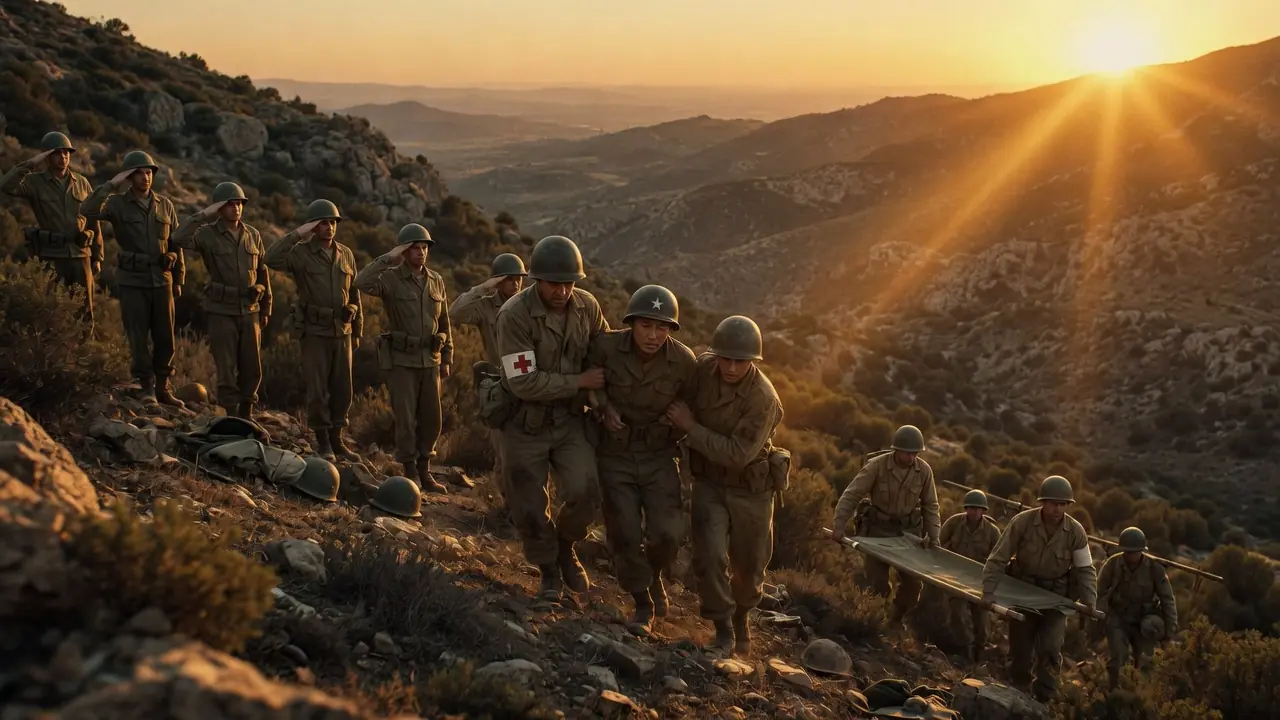
The Birth of the 442nd
Public attitudes gradually began to change.
Military leaders recognized that many Japanese Americans were eager to serve and that their loyalty should be judged by their actions rather than their ancestry.
In 1943, the War Department authorized the creation of a new segregated unit composed primarily of Nisei volunteers.
It became the 442nd Regimental Combat Team.
The regiment drew volunteers from two very different communities.
Some came from Hawaii, where Japanese Americans had generally remained in their homes after Pearl Harbor.
Others volunteered from the incarceration camps on the U.S. mainland, despite the fact that many of their own families remained behind barbed wire.
Together, they trained at Camp Shelby, Mississippi.
Life there was demanding.
The volunteers endured intense physical conditioning, weapons training, field exercises, and tactical instruction.
They also confronted prejudice.
In parts of the segregated American South, some local communities viewed the Japanese American soldiers with suspicion.
Yet the men of the 442nd remained focused on a single goal:
To prove, beyond any doubt, that they were loyal Americans.
Daniel Inouye quickly emerged as one of the regiment's promising young leaders.
His discipline, intelligence, and calm under pressure earned the respect of both his fellow soldiers and his officers.
Before long, the regiment received orders for Europe.
Toward the Front
By 1944, the 442nd Regimental Combat Team had arrived in the European Theater.
The unit soon earned an extraordinary reputation for determination and effectiveness.
It fought in Italy before being transferred to France, where it participated in the famous rescue of the "Lost Battalion" in the Vosges Mountains—one of the regiment's most celebrated actions.
After months of difficult fighting, the 442nd returned to Italy in early 1945 as Allied forces prepared their final offensive against German positions in the northern Apennine Mountains.
Daniel Inouye, now a Second Lieutenant, commanded an infantry platoon.
The campaign entering its final months would test every lesson he had learned.
On April 21, 1945, near the village of San Terenzo, his platoon received orders to assault a heavily defended ridge held by experienced German troops.
Waiting ahead were multiple fortified machine-gun positions overlooking the only practical route of advance.
To reach them, Inouye and his men would have to climb directly into enemy fire.
The attack would become one of the most celebrated acts of individual heroism in American military history.
Part 2 — The Hill at San Terenzo
The Assault Begins
By April 1945, Germany's defeat was drawing near, but the fighting in northern Italy remained fierce.
The 442nd Regimental Combat Team was assigned to help break through the Gothic Line, the last major German defensive system stretching across the northern Apennine Mountains.
On April 21, 1945, Second Lieutenant Daniel K. Inouye and his platoon advanced toward a steep ridge near San Terenzo.
The terrain favored the defenders.
German soldiers had built a series of well-concealed bunkers connected by trenches and protected by interlocking machine-gun positions.
Any assault would require American infantry to climb uphill under direct fire.
As Inouye's platoon moved forward, the first German machine gun opened fire.
Bullets swept across the rocky hillside, forcing many of the soldiers to take cover.
The attack stalled.
Recognizing that the platoon could not advance while the machine gun remained active, Inouye decided to eliminate the position himself.
One Bunker Down
Leading a small group of soldiers, Inouye began crawling and running from one patch of cover to another.
As he closed the distance, German fire intensified.
During the advance, he was struck in the abdomen by enemy gunfire.
Despite the wound, he refused evacuation.
Instead, he continued climbing.
Reaching throwing distance of the first bunker, Inouye pulled the pin on a grenade and hurled it through the firing aperture.
The explosion silenced the machine gun.
Without waiting, he charged the position with his Thompson submachine gun, clearing the bunker and allowing his platoon to continue moving uphill.
But the battle was far from over.
A second German machine-gun position immediately opened fire.
Once again, the American advance came to a halt.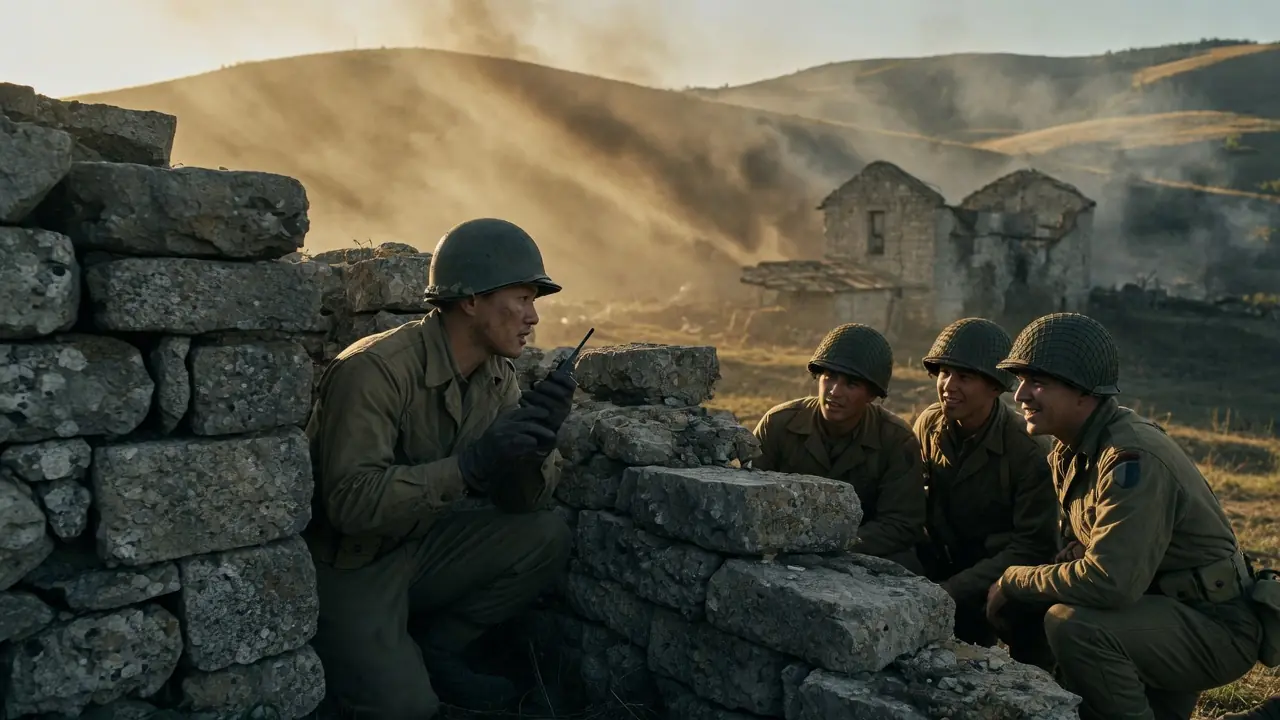
The Moment That Made History
Determined to destroy the second bunker, Inouye pressed forward alone.
He maneuvered around the flank until he reached a position only a few yards from the enemy emplacement.
Holding a grenade in his right hand, he prepared to throw it into the bunker.
At that exact moment, a German Panzerfaust—a shoulder-fired anti-tank weapon—was fired from inside the position.
The projectile struck Inouye's raised right arm.
The explosion nearly severed the limb.
The force of the blast left his right arm hanging by little more than tendons and skin.
Even more dangerous, the grenade remained clutched in the useless hand.
For an instant, Inouye realized that if the grenade detonated where it was, it would kill him and likely end the assault.
Acting almost instinctively, he reached across with his left hand, carefully removed the live grenade from the shattered fingers of his right hand, and threw it into the bunker.
Seconds later, the explosion destroyed the German position.
The immediate threat had been eliminated.
But Inouye's fight was still not over.
Bleeding heavily and now missing the use of his right arm, he refused to withdraw.
Instead, he continued leading his men uphill.
One Final Charge
Moments after destroying the second bunker, Inouye spotted a third German machine-gun position farther along the ridge.
Despite losing his right arm and suffering severe blood loss, he ordered his platoon to continue the attack.
Using his Thompson submachine gun with his remaining hand, he advanced toward the final position.
During the assault, he was struck again—this time by a bullet that shattered his right leg.
Only then did he collapse onto the hillside.
Even while lying wounded, Inouye continued issuing orders to his platoon, directing the attack until the remaining German resistance was overcome.
His soldiers eventually secured the ridge.
Only after the objective had been captured did Inouye allow himself to be evacuated.
He had suffered multiple gunshot wounds, lost his right arm, and endured catastrophic injuries.
Yet his leadership had enabled his platoon to break through one of the strongest German positions on the ridge.
The battle was over.
The story of Daniel Inouye's courage, however, had only begun.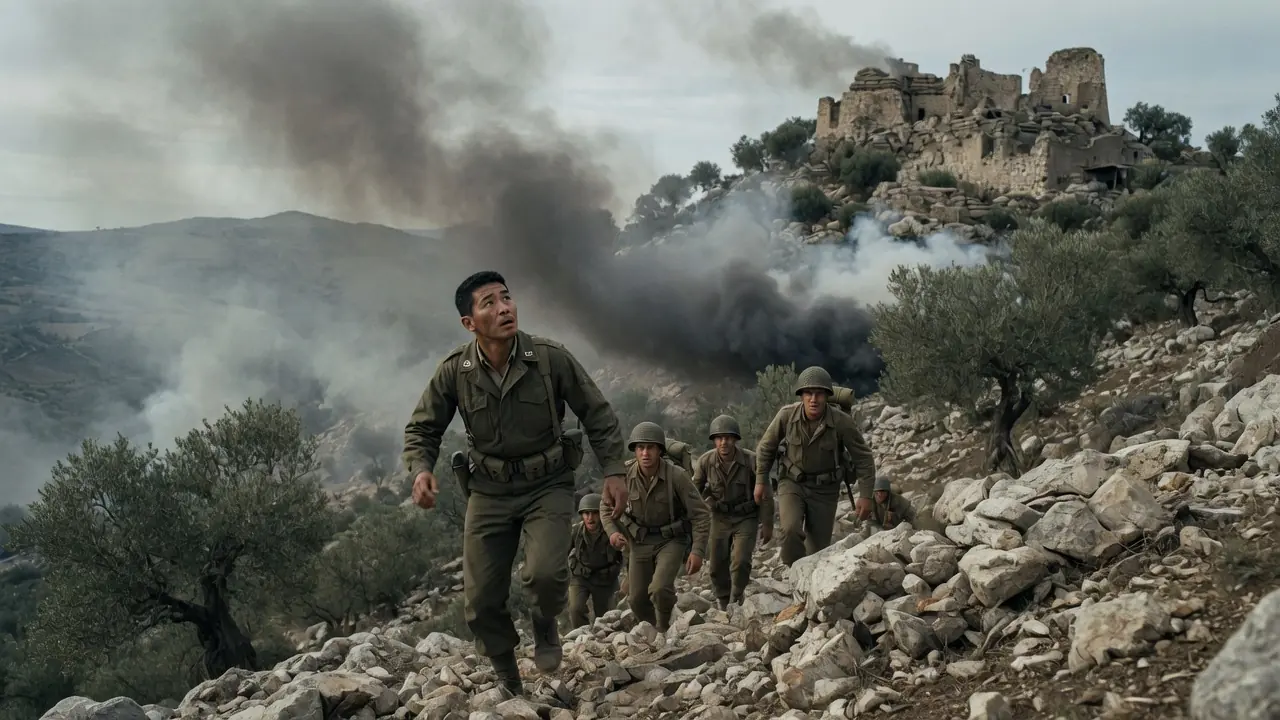
Part 3 — A Hero's Legacy
Recovery and Recognition
Daniel Inouye was rushed from the battlefield to an aid station before being transferred through a series of military hospitals.
The injuries he had sustained were devastating.
His right arm could not be saved and was amputated.
He had also suffered serious wounds to his abdomen and leg, requiring months of surgeries and rehabilitation.
For many soldiers, such injuries would have marked the end of both military service and future ambitions.
For Inouye, they marked the beginning of a different kind of service.
While recovering at military hospitals in the United States, he met other wounded veterans whose lives had also been permanently changed by the war.
Among them were future political leaders such as Bob Dole, who had been severely wounded while serving in Italy.
The friendships formed during rehabilitation would influence Inouye for decades.
Although his dream of becoming a surgeon was no longer possible because of the loss of his right arm, he refused to let the war define the rest of his life.
Instead, he chose a new path.
Public service.
A Life in Politics
After leaving the Army, Inouye enrolled at the University of Hawaiʻi, where he completed his undergraduate studies before earning a law degree from George Washington University Law School.
As Hawaii moved toward statehood during the 1950s, Inouye entered politics.
His leadership, calm demeanor, and wartime record quickly earned widespread respect.
When Hawaii became the 50th state on August 21, 1959, Daniel Inouye was elected as one of its first members of the United States House of Representatives.
Just a few years later, in 1962, he won election to the United States Senate.
He would remain there for nearly half a century, becoming one of the longest-serving senators in American history.
Throughout his career, Inouye worked on issues ranging from veterans' affairs and national defense to Native Hawaiian concerns and infrastructure development.
He eventually became President pro tempore of the United States Senate, placing him among the highest-ranking officials in the federal government.
The young lieutenant who had once led soldiers up a hillside in Italy had become one of the most respected statesmen in Washington.
The Medal of Honor
For decades, Daniel Inouye's actions at San Terenzo were recognized with the Distinguished Service Cross, the Army's second-highest award for valor.
However, during the 1990s, the U.S. military undertook a comprehensive review of awards presented to Asian American soldiers during the Second World War.
The review examined whether racial prejudice may have influenced award recommendations at the time.
As a result of that review, several Distinguished Service Crosses were upgraded to the nation's highest military decoration.
On June 21, 2000, President Bill Clinton presented Daniel Inouye with the Medal of Honor at the White House.
The citation described how, despite multiple wounds, he repeatedly exposed himself to enemy fire, destroyed several German positions, and continued leading his platoon after losing his right arm.
It was a recognition not only of extraordinary courage but also of a sacrifice that had waited more than fifty years to receive the nation's highest acknowledgment.
A Symbol of the 442nd
Daniel Inouye's story cannot be separated from that of the 442nd Regimental Combat Team.
Composed primarily of Nisei—second-generation Japanese Americans—the regiment became one of the most decorated units in United States military history for its size and length of service.
Its soldiers fought while many of their own families remained confined in incarceration camps on the U.S. mainland.
Their service challenged prejudice at home and demonstrated that loyalty could not be measured by ancestry.
For countless Japanese Americans, the achievements of the 442nd became a lasting symbol of resilience, patriotism, and determination in the face of discrimination.
Daniel Inouye stood among its most recognized veterans, but he consistently emphasized that his accomplishments belonged to the men who fought beside him.
He often spoke not only of bravery, but also of duty, teamwork, and the sacrifices made by those who never returned.