Part 1 — The Dam That Built a City
Prologue
Just before midnight on March 12, 1928, a massive concrete dam in the mountains north of Los Angeles collapsed without warning.
Within minutes, billions of gallons of water thundered through San Francisquito Canyon, sweeping away homes, ranches, bridges, railroads, and entire communities. By the time the floodwaters finally reached the Pacific Ocean more than fifty miles away, hundreds of people had lost their lives.
It remains one of the deadliest engineering disasters in American history.
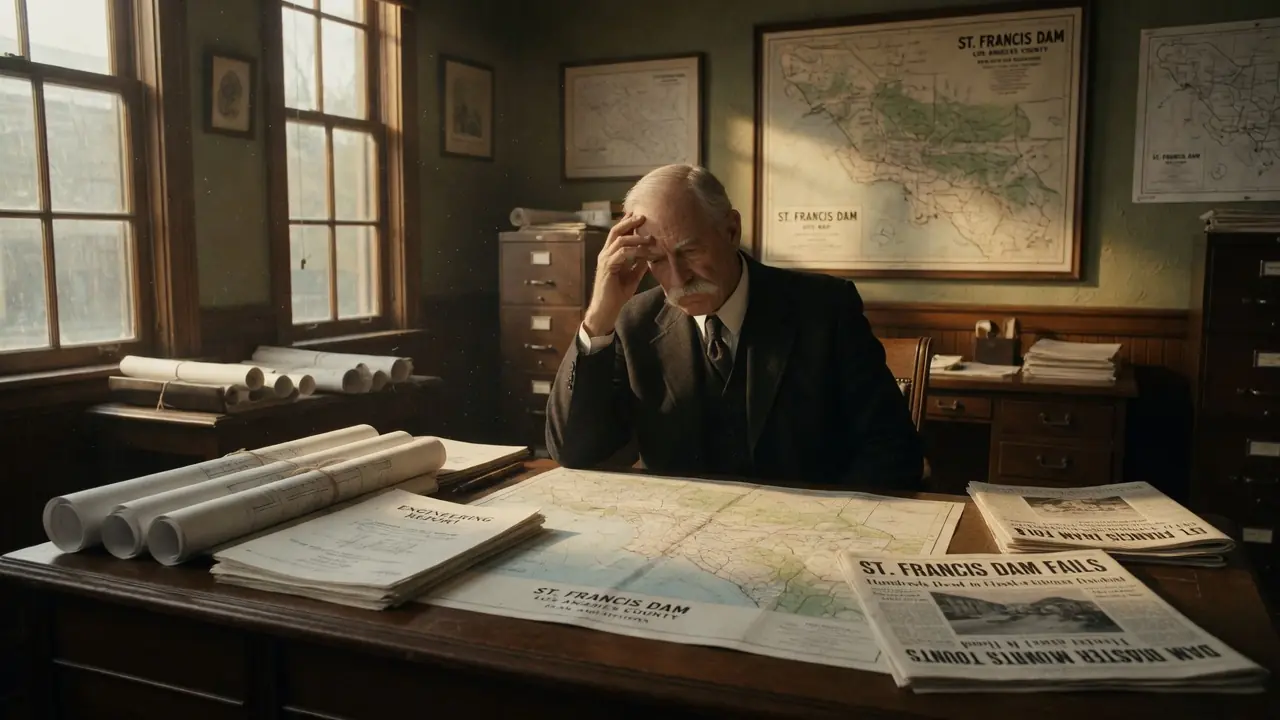
Yet only hours earlier, the dam had been personally inspected by the man who built it—William Mulholland, one of the most respected engineers in California.
He found no evidence that it was about to fail.
To understand how such a catastrophe could happen, the story begins years before the flood, when a rapidly growing city faced a desperate need for water.
A City Running Out of Water
At the beginning of the twentieth century, Los Angeles was transforming from a modest western city into one of America's fastest-growing urban centers.
Its population exploded from just over 100,000 people in 1900 to more than 1.2 million by 1930. New neighborhoods spread across the valleys, industries expanded, and thousands of newcomers arrived every month, attracted by opportunity and Southern California's mild climate.
But there was one problem.
Los Angeles simply did not have enough water.
The nearby Los Angeles River was small and unpredictable, shrinking dramatically during dry seasons. Local groundwater could no longer support the city's growing population.
City leaders realized that without a new, reliable water supply, Los Angeles could not continue to expand.
The solution came from an ambitious engineer named William Mulholland.
After years of planning, Mulholland oversaw the construction of the Los Angeles Aqueduct, an engineering achievement that carried water more than 230 miles (370 kilometers) from the Owens Valley to Los Angeles.
Completed in 1913, the aqueduct transformed the city's future.
For a time, the water shortage appeared solved.
But Mulholland understood another challenge remained.
The city needed a way to store enormous quantities of water in case drought interrupted the aqueduct's flow or demand exceeded supply.
That requirement led to the construction of a new reservoir deep inside San Francisquito Canyon.
Building the St. Francis Dam
Construction of the St. Francis Dam began in 1924.
Located about 40 miles (64 kilometers) northwest of downtown Los Angeles, the site was chosen because the narrow canyon appeared ideal for holding a large reservoir.
William Mulholland personally designed the concrete gravity dam, relying on decades of engineering experience rather than formal university training. By then, he had earned a national reputation as one of America's most accomplished self-taught engineers.
As construction progressed, Los Angeles officials decided they wanted the reservoir to hold even more water than originally planned.
Rather than redesigning the entire structure, the height of the dam was increased by approximately 20 feet (6 meters) during construction.
When completed in 1926, the St. Francis Dam stood about 185 feet (56 meters) high and stretched roughly 700 feet (210 meters) across the canyon.
As water gradually filled the reservoir over the following months, the dam became one of the most important pieces of infrastructure in Southern California.
To the public, it represented security.
To city officials, it represented the future of Los Angeles.
No one imagined that hidden beneath the surrounding hills lay geological conditions that would soon turn one of California's greatest engineering achievements into one of its greatest tragedies. 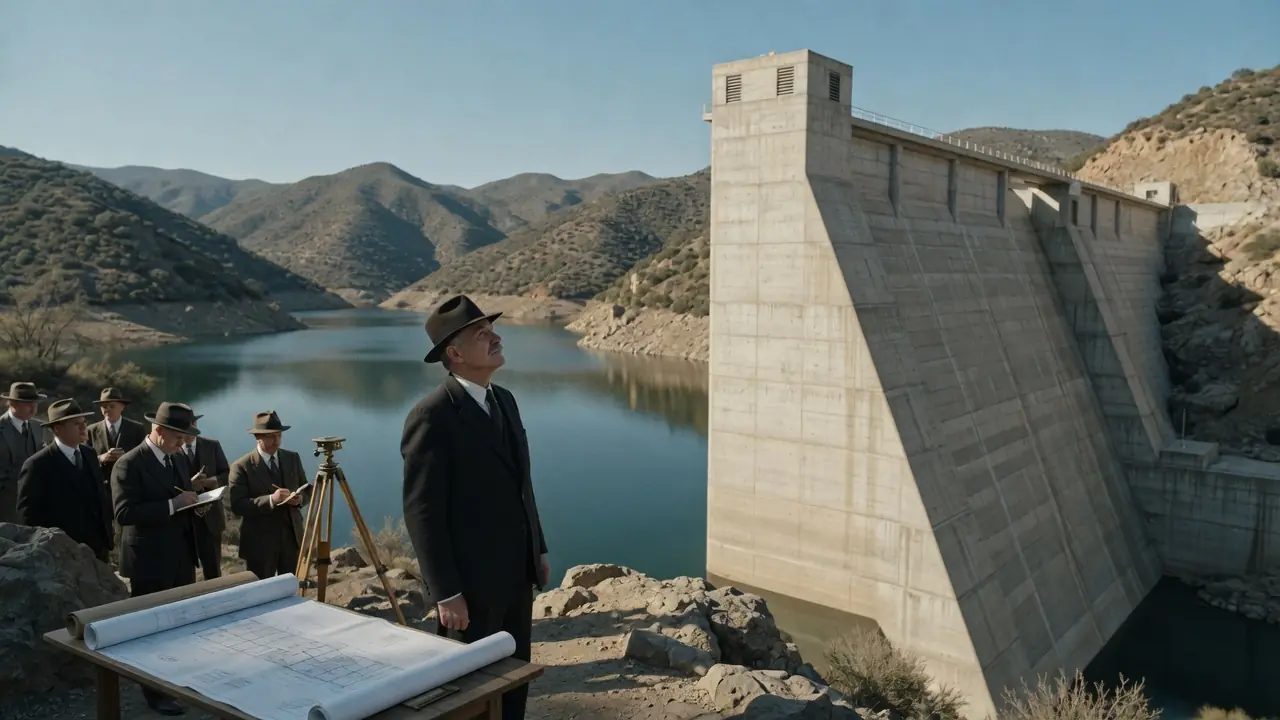
Part 2 — The Night the Dam Failed
Warning Signs
By early March 1928, the St. Francis Dam was nearly full for the first time since its completion.
As the water level reached record heights, workers responsible for monitoring the structure noticed something that was not entirely unusual for large concrete dams—small leaks.
Concrete gravity dams often allow limited seepage as water passes through tiny cracks or joints, and engineers of the era generally did not consider every leak a sign of imminent danger.
However, one new leak attracted attention.
On the morning of March 12, 1928, dam keeper Tony Harnischfeger observed muddy water seeping from the western abutment of the dam. Unlike clear seepage, muddy water suggested that soil or rock material might be moving with the escaping water.
Concerned, he contacted his superiors.
That afternoon, William Mulholland and his chief assistant, Harvey Van Norman, traveled to the dam to conduct a personal inspection.
The two engineers carefully walked along the crest of the structure, examined the new seepage, and discussed what they saw.
After completing the inspection, Mulholland concluded that the leaks did not indicate an immediate threat.
At the time, he believed the dam remained structurally sound.
Satisfied that there was no urgent danger, the two men returned to Los Angeles.
It would be the last time Mulholland ever saw the dam standing.
The Collapse
The evening of March 12, 1928, was quiet.
Families living downstream had no warning that disaster was only hours away.
At approximately 11:57 p.m., the St. Francis Dam failed catastrophically.
The collapse happened so suddenly that no alarm could be sent.
Within moments, the central section of the concrete structure gave way.
An enormous reservoir containing roughly 12.4 billion gallons (about 47 billion liters) of water burst through the canyon.
Near the dam, the flood formed a wall of water estimated to be as high as 120 to 140 feet (37–43 meters).
The force was almost unimaginable.
Massive concrete blocks weighing thousands of tons were ripped from the dam and carried downstream.
One section of the central structure, weighing an estimated 10,000 tons, was later found nearly three-quarters of a mile from its original position.
The flood raced through San Francisquito Canyon at tremendous speed, destroying nearly everything in its path.
Powerhouses supplying electricity to Los Angeles were demolished.
Roads disappeared beneath the torrent.
Bridges collapsed.
Telephone and telegraph lines were torn away, making communication almost impossible.
Many residents were asleep when the water arrived.
Some never had the chance to escape.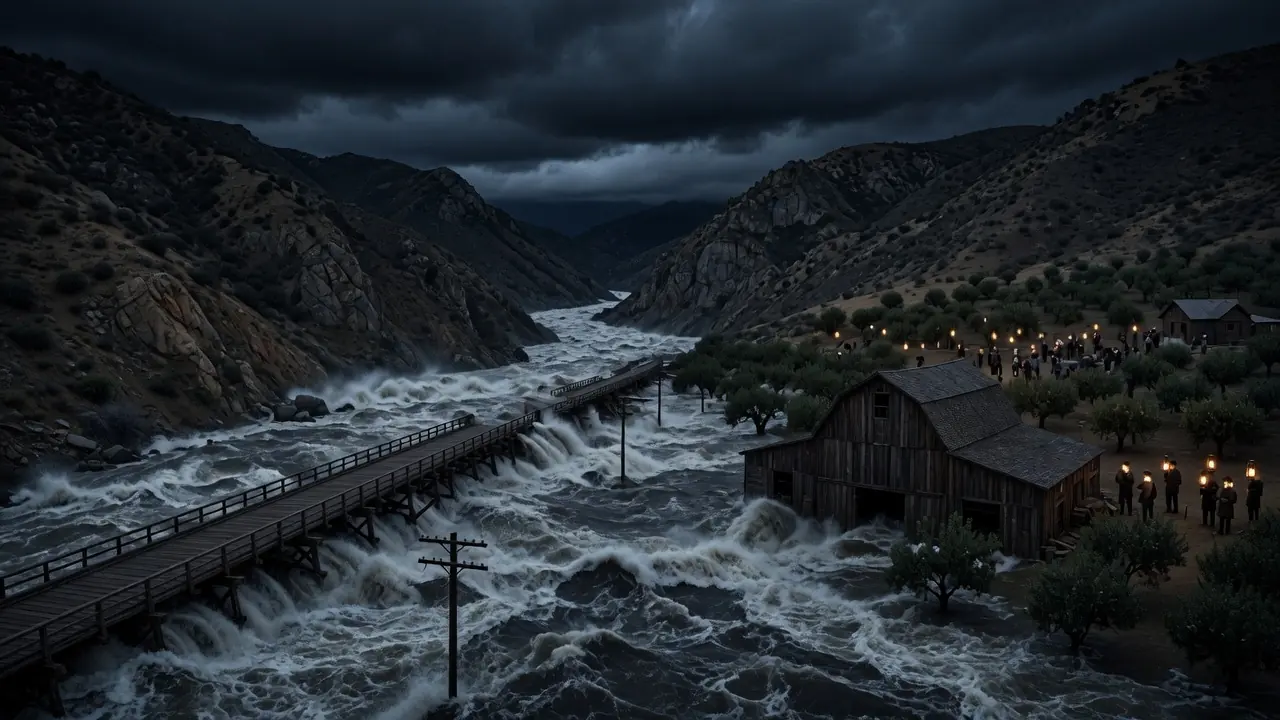
A Flood Across Southern California
As the flood surged out of the canyon, it widened and continued southwest toward the Santa Clara River Valley.
Entire ranches vanished beneath the rushing water.
Homes were swept from their foundations.
Railroad tracks twisted under the force of the flood.
In several communities, people were awakened only by the sound of crashing debris or the desperate warnings of neighbors fleeing through the darkness.
Some survivors later recalled hearing what sounded like a freight train approaching before the water struck.
Others escaped only by climbing trees or reaching higher ground moments before the torrent engulfed their homes.
Rescue efforts began immediately, but conditions made them extraordinarily difficult.
Darkness covered the region.
Roads had been destroyed.
Telephone service had been interrupted.
Many rescuers could not determine where entire neighborhoods had stood only hours earlier.
As dawn broke on March 13, the scale of the disaster slowly became visible.
For more than 50 miles (80 kilometers), the flood had carved a path of destruction from the mountains toward the Pacific Ocean.
When the waters finally reached the sea near Ventura County, hundreds of lives had already been lost.
The official death toll was at least 431 people, though many historians believe the true number may have been higher because some victims were never recovered or formally identified.
It was the deadliest dam failure in American history by loss of life and remains California's second-deadliest civil disaster, surpassed only by the 1906 San Francisco earthquake and fire.
As rescue crews searched through the wreckage, one question overshadowed all others:
How could one of California's most respected engineers have built a dam that failed so completely?
The answer would emerge only after one of the most exhaustive engineering investigations the state had ever conducted.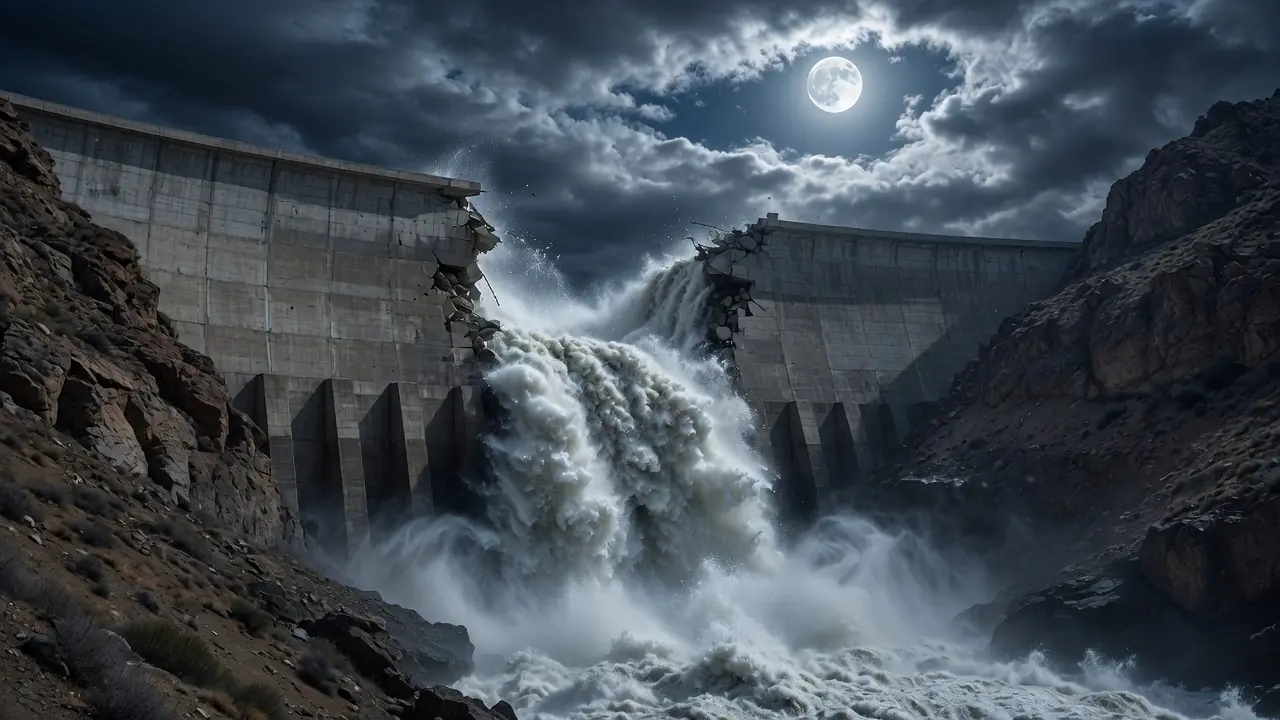
Part 3 — The Man Who Took the Blame
The Investigation
In the days following the disaster, engineers, geologists, and government officials descended upon San Francisquito Canyon to determine what had caused one of the worst engineering failures in American history.
The destruction was almost beyond comprehension.
Entire sections of the dam had disappeared.
One enormous concrete block—the center portion of the structure—weighing an estimated 10,000 tons, had been carried nearly three-quarters of a mile (about 1.2 kilometers) downstream.
Investigators quickly concluded that the concrete itself had not simply "crumbled."
Instead, attention turned to the canyon walls supporting the dam.
As geologists examined the site, they discovered that the rock beneath the eastern and western abutments was far less stable than engineers had believed during construction.
The eastern side rested partly on ancient landslide material, while the western abutment contained rock formations that weakened significantly when saturated with water.
As the reservoir filled, water gradually seeped into these unstable geological layers.
The enormous pressure behind the dam increased month after month.
Eventually, the surrounding hillsides could no longer support the structure.
Although engineers continue to debate the precise sequence of the collapse, modern research generally agrees that unstable geology, combined with design decisions that did not fully account for those conditions, caused the catastrophic failure.
It was a tragedy born not from a single mistake, but from several factors working together.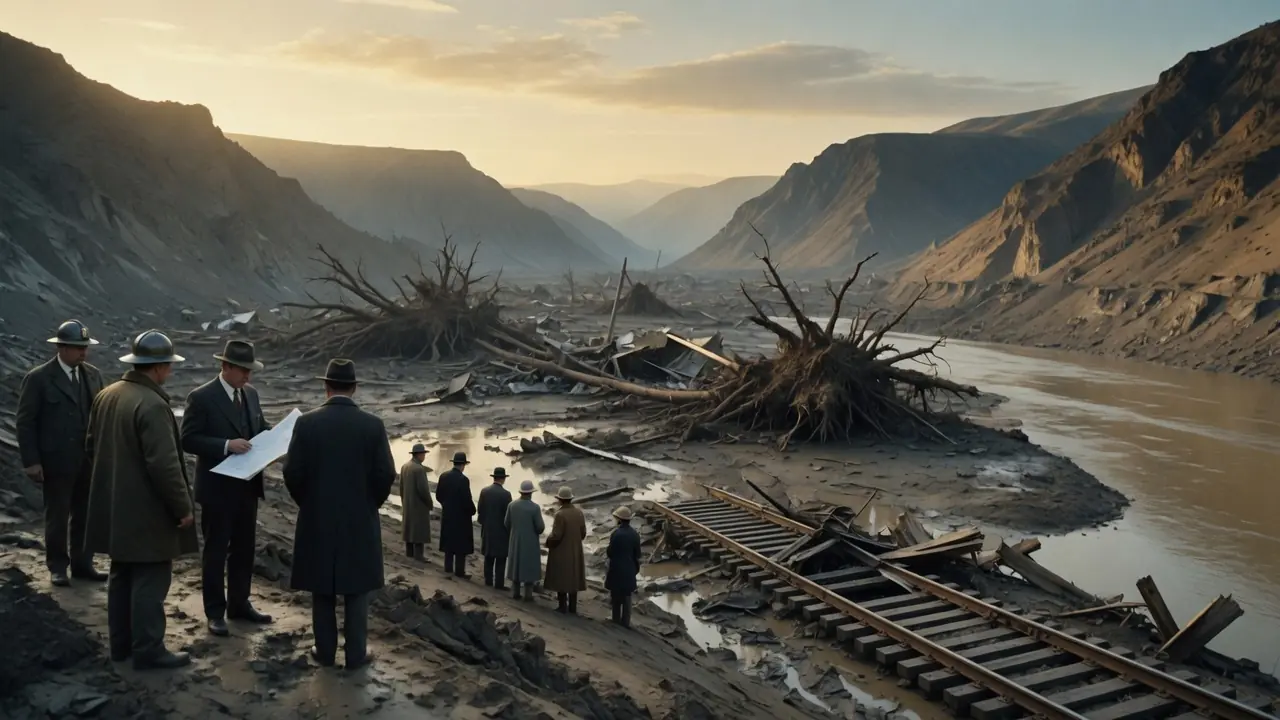
William Mulholland's Testimony
Only days after the collapse, public investigations began.
The man at the center of every question was William Mulholland.
For decades, Mulholland had been celebrated as the engineer who brought water to Los Angeles and made the city's extraordinary growth possible.
Now he faced the greatest disaster of his career.
During the official inquiry, Mulholland did not attempt to shift responsibility onto his assistants or construction crews.
Instead, he accepted personal responsibility.
One of his most remembered statements came during the coroner's inquest, where he declared:
"Don't blame anybody else, you just fasten it on me. If there was an error of human judgment, I was the human."
The quote has been widely documented in historical records and has become one of the defining moments of Mulholland's career.
Although investigators found no evidence of criminal misconduct or intentional negligence, the disaster permanently damaged his reputation.
He remained with the Los Angeles water department for a short time but retired in 1929.
Mulholland rarely spoke publicly about the collapse afterward.
Friends later recalled that the tragedy weighed heavily on him for the rest of his life.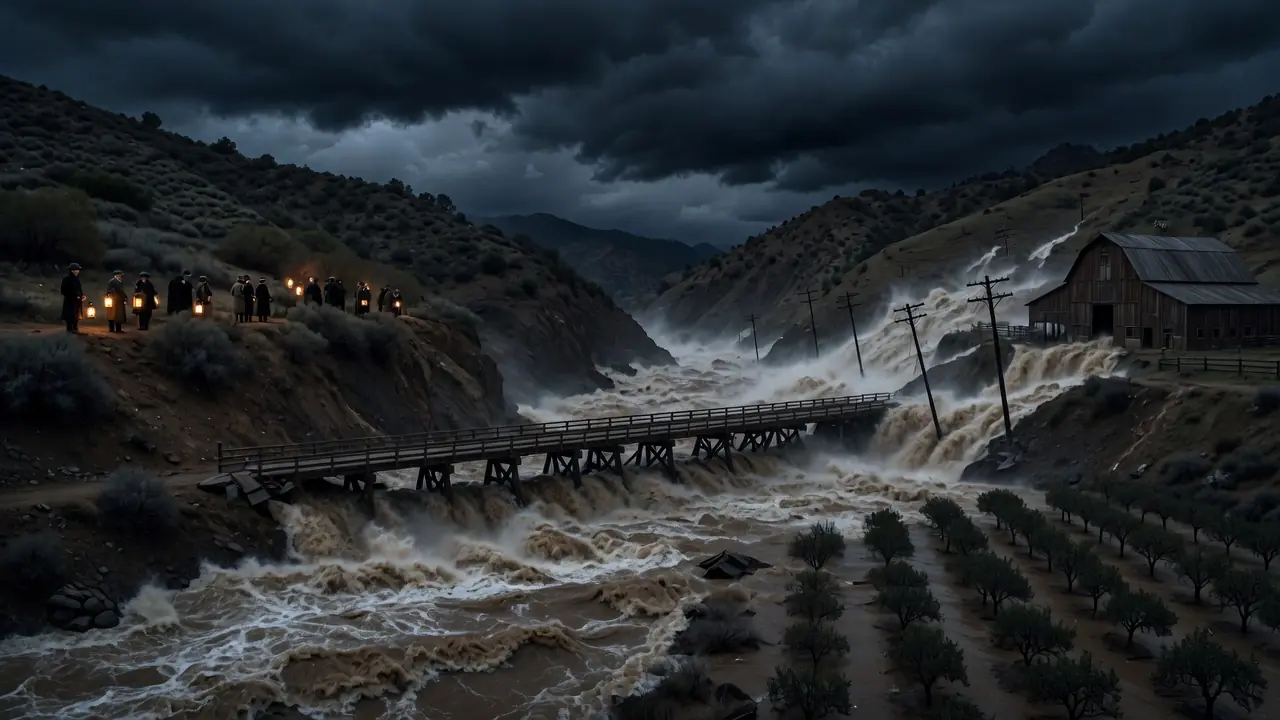
Changing American Engineering
The collapse of the St. Francis Dam transformed dam engineering throughout California and the United States.
Before 1928, many major public works projects depended heavily on the judgment of a single chief engineer.
The disaster demonstrated the dangers of relying on one person's assessment, regardless of experience or reputation.
California responded by introducing far stricter oversight.
Future dam projects required independent geological investigations, detailed engineering reviews, and multiple layers of professional approval before construction could proceed.
The state also strengthened regulations governing the inspection and operation of large dams.
Modern engineering places enormous emphasis on understanding local geology before any major structure is built.
Many of those standards can be traced, at least in part, to the lessons learned after the St. Francis Dam disaster.
The tragedy became a case study taught to generations of engineers, illustrating that even brilliant designs can fail if the ground beneath them is not fully understood.