Fort Blunder: The American Fortress Built on the Wrong Side of the Border
After the War of 1812, the United States wanted one thing on its northern frontier: security.
Lake Champlain had already proven how dangerous that border could be. The long, narrow lake ran between New York and Vermont, stretching north toward British Canada. During the war, British forces had used the region as a possible invasion route. If another conflict came, American officials feared the same corridor could become a doorway into the United States again.
So, in 1816, the U.S. began building a powerful new fortification near Rouses Point, New York, at the northern end of Lake Champlain. It was meant to guard the lake and block any future British advance from Canada. The design was ambitious: an octagonal stone fortress with walls reported to be about 30 feet high. For a young country still learning how to defend itself, it was a serious statement.
There was only one problem.
They were building it in the wrong country.
The mistake came from the border itself. The boundary between the United States and British Canada was supposed to follow the 45th parallel. But older survey markers from the colonial period were inaccurate. When a later survey placed the true 45th parallel farther south, it revealed that the American fort was actually about three-quarters of a mile inside Canadian territory.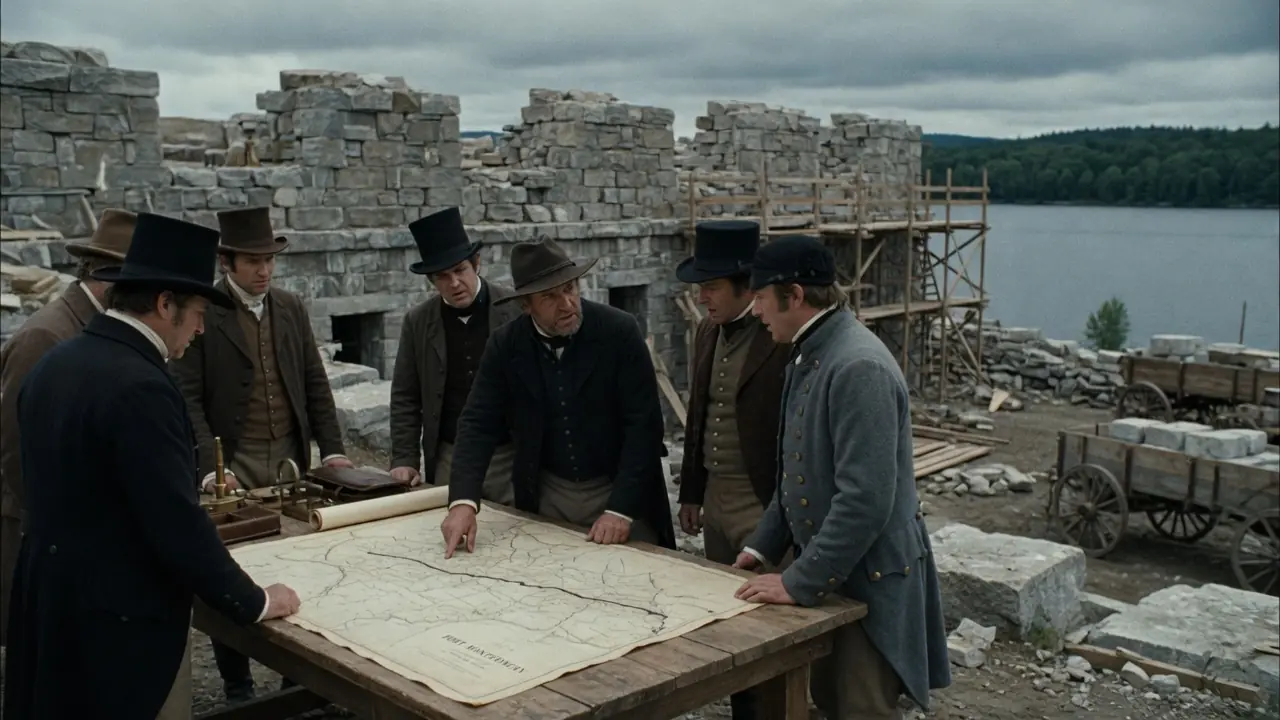
Construction stopped almost immediately.
The fort had no official grand future anymore. It was unfinished, exposed, and politically embarrassing. A military base built to defend America from Canada had accidentally been placed on land that belonged to Canada.
Locals soon gave it the name history remembers best: Fort Blunder.
For years, the abandoned structure sat near the border as a monument to bad surveying. Much of its stone was reportedly scavenged by local residents for homes and buildings nearby. What had begun as a state-of-the-art defense project slowly became a source of jokes, salvage, and embarrassment.
But the story did not end there.
In 1842, the Webster-Ashburton Treaty settled several border disputes between the United States and Britain. As part of the agreement, the land around the abandoned fort site was placed on the American side of the border. In a strange twist, diplomacy rescued the mistake. The United States had not moved the fort. The border had effectively been adjusted around it.
Two years later, in 1844, the U.S. began building a new and much larger fortification on the same site. This second fort was officially named Fort Montgomery, after Revolutionary War general Richard Montgomery. Unlike the earlier unfinished “Fort Blunder,” Fort Montgomery was a major masonry fortress, built over decades and designed to hold more than 100 cannon.
By then, the original mistake had become part of local legend.
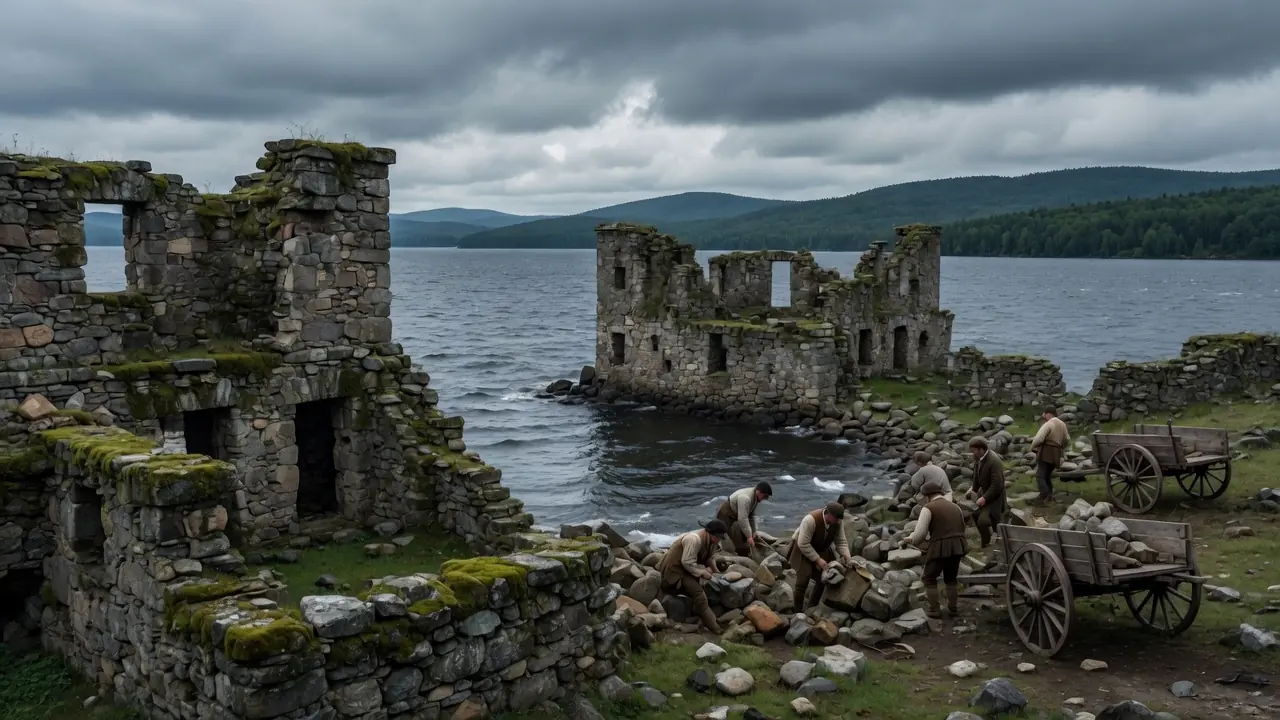
Fort Montgomery never became the scene of a great battle. Its most famous story remained the one that came before it: the time the United States tried to protect itself from Canada by accidentally building a fort in Canada.
The legacy of Fort Blunder is not about combat. It is about borders, maps, and how even governments can make enormous mistakes when geography is misunderstood.
In the end, the fort became a reminder that history is not only shaped by wars and treaties. Sometimes, it is shaped by a surveyor’s line on a map.