Operation Paul Bunyan: The Tree That Nearly Started a War
Prologue
At first glance, it seemed like the kind of problem that belonged to a maintenance crew, not the military.
In the heart of the Korean Demilitarized Zone (DMZ) stood a large poplar tree whose branches had grown so wide that they blocked the line of sight between two United Nations Command (UNC) checkpoints inside the Joint Security Area (JSA) at Panmunjom. For years, the tree had become more than an inconvenience—it had become a point of tension between American, South Korean, and North Korean forces stationed only yards apart.
What happened next transformed a routine tree-trimming mission into one of the Cold War's most dangerous military confrontations. Within days, the United States would respond with one of the largest demonstrations of military force ever assembled for such an unlikely objective: cutting down a single tree.
Historical Background
Since the Korean Armistice Agreement ended active fighting in July 1953, the Korean Peninsula had remained divided, not by peace, but by a ceasefire. Technically, North and South Korea were still at war.
The Joint Security Area at Panmunjom was unlike any other place on Earth. It was the only location inside the DMZ where soldiers from both sides regularly stood face-to-face. Although heavily regulated, confrontations, intimidation, and occasional scuffles were common.
The poplar tree stood near the Bridge of No Return, a symbolic crossing point used during prisoner exchanges after the Korean War. As the tree grew taller over the years, its branches increasingly obstructed visibility between UNC observation posts, creating a legitimate security concern.
Previous trimming operations had taken place without major incident, though North Korean personnel had often protested, claiming the tree had been planted personally by North Korean leader Kim Il Sung. No historical evidence supports that claim, but North Korean guards repeatedly invoked it during disputes over the tree.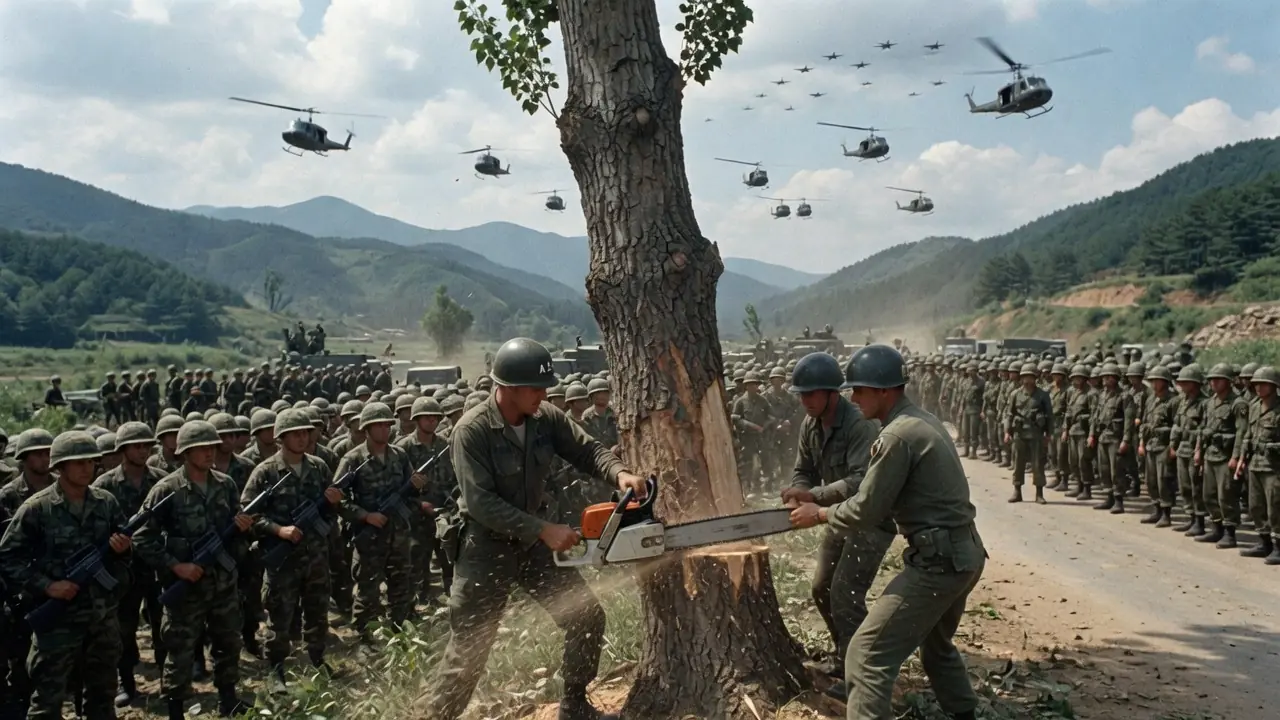
The Axe Murder Incident
On the morning of August 18, 1976, a small United Nations Command work party entered the Joint Security Area to trim the tree.
The group included American officers, South Korean soldiers assigned to security, and civilian workers carrying axes and trimming tools. Among them were Captain Arthur George Bonifas and First Lieutenant Mark Thomas Barrett, both officers in the United States Army.
Shortly after work began, approximately 30 North Korean guards, led by Senior Lieutenant Pak Chul—an officer already known to UNC personnel for previous confrontations—approached the work party.
Pak demanded that the trimming stop immediately.
When the UNC personnel continued following their orders, the situation escalated rapidly.
North Korean guards seized the work party's own axes and attacked.
In the chaos that followed, Captain Bonifas and Lieutenant Barrett were fatally wounded. Several American and South Korean personnel were also seriously injured before the survivors managed to retreat.
The attack shocked military leaders in Seoul, Washington, and around the world. Unlike many previous confrontations inside the DMZ, this incident had resulted in the deliberate killing of American officers during peacetime.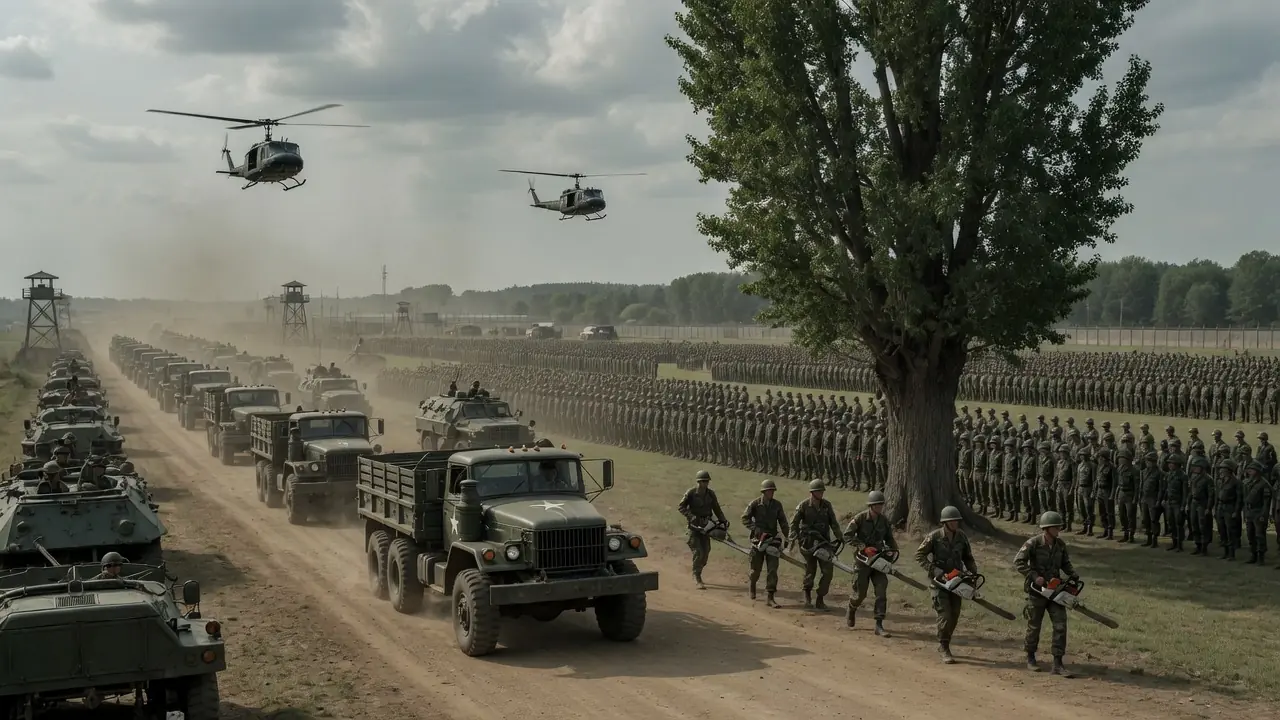
A Crisis at the Height of the Cold War
News of the killings reached Washington almost immediately.
President Gerald Ford, Secretary of State Henry Kissinger, and senior military officials faced a difficult question: how should the United States respond?
Any direct retaliation carried enormous risks.
Only two decades after the Korean War, hundreds of thousands of North Korean, South Korean, and American troops remained stationed along one of the world's most heavily fortified borders. The Soviet Union and China closely watched developments, raising fears that any miscalculation could trigger a much wider conflict.
American leaders ultimately chose a response that balanced restraint with unmistakable military resolve.
Rather than launching an attack, they decided to finish the original mission.
The tree would be cut down.
But this time, no one would interfere.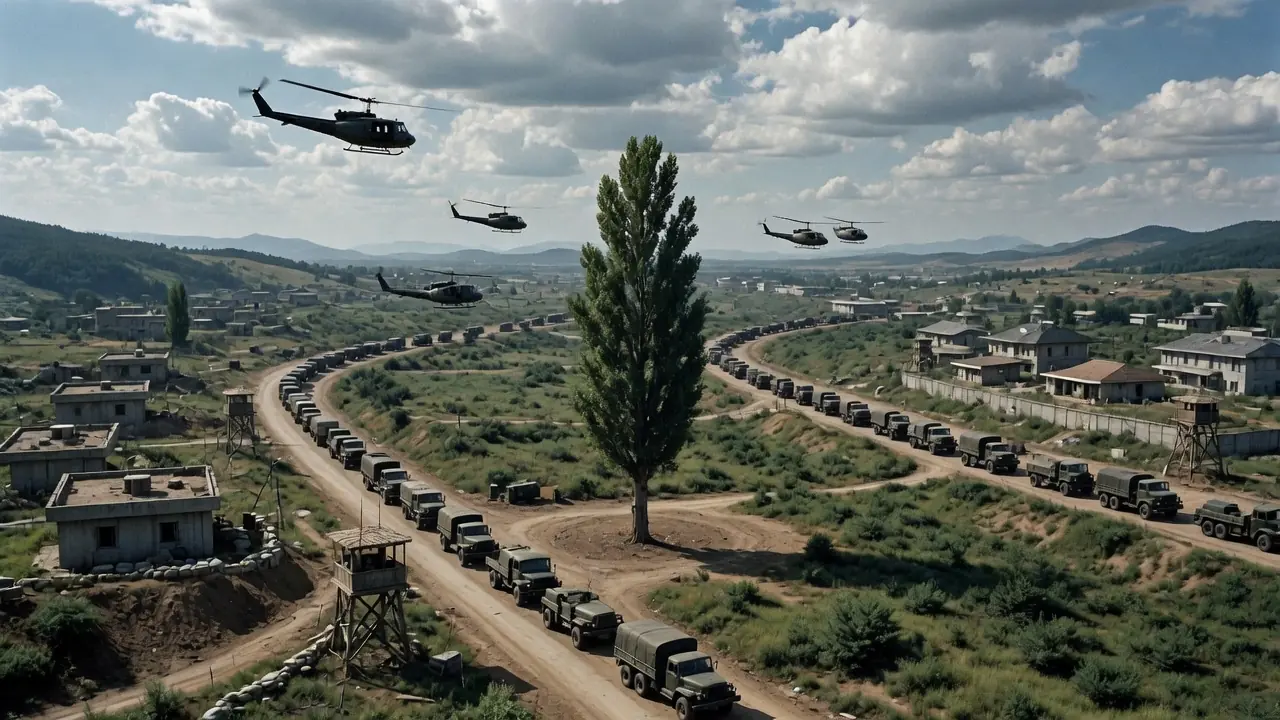
Operation Paul Bunyan
On August 21, 1976, just three days after the killings, the United Nations Command launched Operation Paul Bunyan, named after the legendary American lumberjack.
Although the objective was simply to remove the poplar tree, the military force assembled for the mission was extraordinary.
A convoy of engineers equipped with chainsaws entered the Joint Security Area.
Protecting them were large numbers of American and South Korean troops, including security personnel armed and prepared for immediate combat if necessary.
Just beyond the immediate operation, the show of force expanded dramatically.
Attack helicopters circled overhead.
Approximately 27 helicopters participated in supporting operations.
Nearby airfields placed F-4 Phantom II and F-111 Aardvark fighter aircraft on alert.
B-52 Stratofortress bombers, capable of carrying nuclear weapons although not publicly confirmed to be armed with them during the operation, flew highly visible missions near the Korean Peninsula.
The aircraft carrier USS Midway and additional naval forces were positioned in nearby waters as regional reinforcement.
Across South Korea, American and South Korean forces were placed on heightened readiness. Estimates vary, but roughly 800 security personnel participated directly in protecting the tree-cutting operation within and around the immediate area.
The message was unmistakable.
Any attempt to interfere would meet overwhelming military resistance.
The Operation
As chainsaws roared to life, North Korean soldiers watched from nearby positions.
This time, there was no attack.
Armed soldiers maintained security while engineers methodically cut through the trunk.
Rather than merely trimming the branches as originally planned, the work crews felled the entire tree, removing the source of the dispute altogether.
The operation lasted only a short time.
Despite the enormous concentration of military power on both sides of the DMZ, no shots were fired.
The mission concluded successfully, and the convoy withdrew without casualties.
One of the most dangerous confrontations of the Cold War had ended without escalating into open war.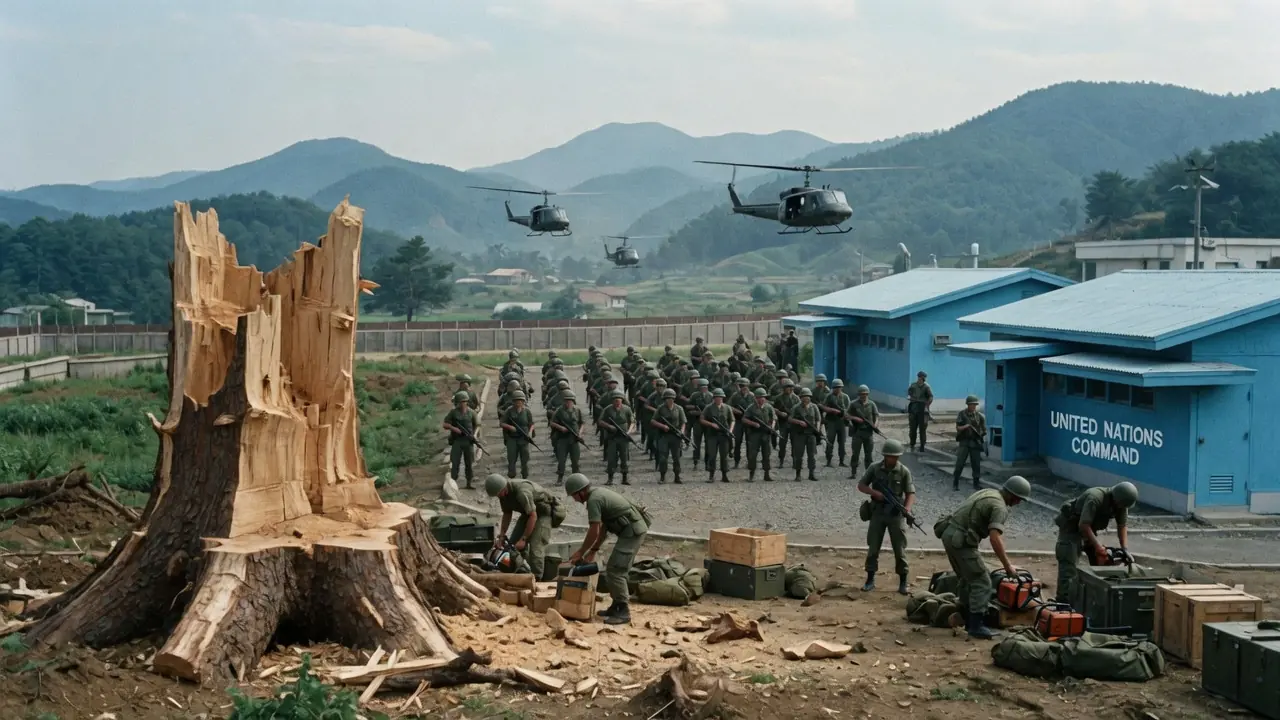
Aftermath
In the days that followed, tensions remained extremely high.
North Korea initially condemned the operation but soon issued an unusual statement expressing what many historians describe as a rare acknowledgment of responsibility. Through diplomatic channels, Kim Il Sung conveyed that the incident was regrettable and that "it was not good that this incident occurred." While the statement stopped short of a formal apology, it helped reduce tensions.
The Joint Security Area underwent significant changes after the incident.
Movement rules were tightened.
The previously informal freedom of movement inside parts of the JSA ended, and each side exercised much stricter control over its own personnel.
The event also reinforced how quickly seemingly minor disputes inside the DMZ could escalate into international crises.