The Last Minute: Henry Gunther and the Final Death of the First World War
Prologue
On the morning of November 11, 1918, the world stood on the edge of peace.
After more than four years of industrial warfare that had claimed millions of lives, representatives of Germany and the Allied Powers had signed an armistice in a railway carriage in the Compiègne Forest, France. The agreement had been finalized hours earlier, at around 5:00 a.m., but it would not take effect until 11:00 a.m.
That six-hour delay meant one heartbreaking reality.
The war was officially over—but the fighting would continue until the very last minute.
Across the Western Front, artillery thundered, machine guns rattled, and soldiers continued to advance. Commanders on both sides followed their orders, even though nearly everyone knew peace was only moments away.
Among those soldiers was Private Henry Nicholas Gunther of the United States Army.
Within the final sixty seconds of World War I, he would make a decision that has puzzled historians ever since.
Historical Background
By the autumn of 1918, Germany's military position had collapsed.
The failure of the Spring Offensive, the arrival of large numbers of fresh American troops, and relentless Allied offensives had forced the German High Command to seek an end to the fighting. At home, the country faced food shortages, political unrest, and the beginning of revolution.
Negotiations for an armistice began in early November.
In the early hours of November 11, German representatives signed the agreement with Marshal Ferdinand Foch, Supreme Allied Commander. Rather than ending the fighting immediately, however, the armistice specified that hostilities would cease at exactly 11:00 a.m.
The delay allowed both armies time to receive official orders.
But it also condemned thousands of soldiers to spend six more hours under fire.
Even after the agreement had been signed, commanders on both sides continued launching attacks. Some hoped to secure stronger tactical positions before the ceasefire. Others simply believed they were obligated to continue fighting until the final second.
By the end of that morning, nearly 11,000 men—killed, wounded, or missing—would become casualties on the very last day of the war.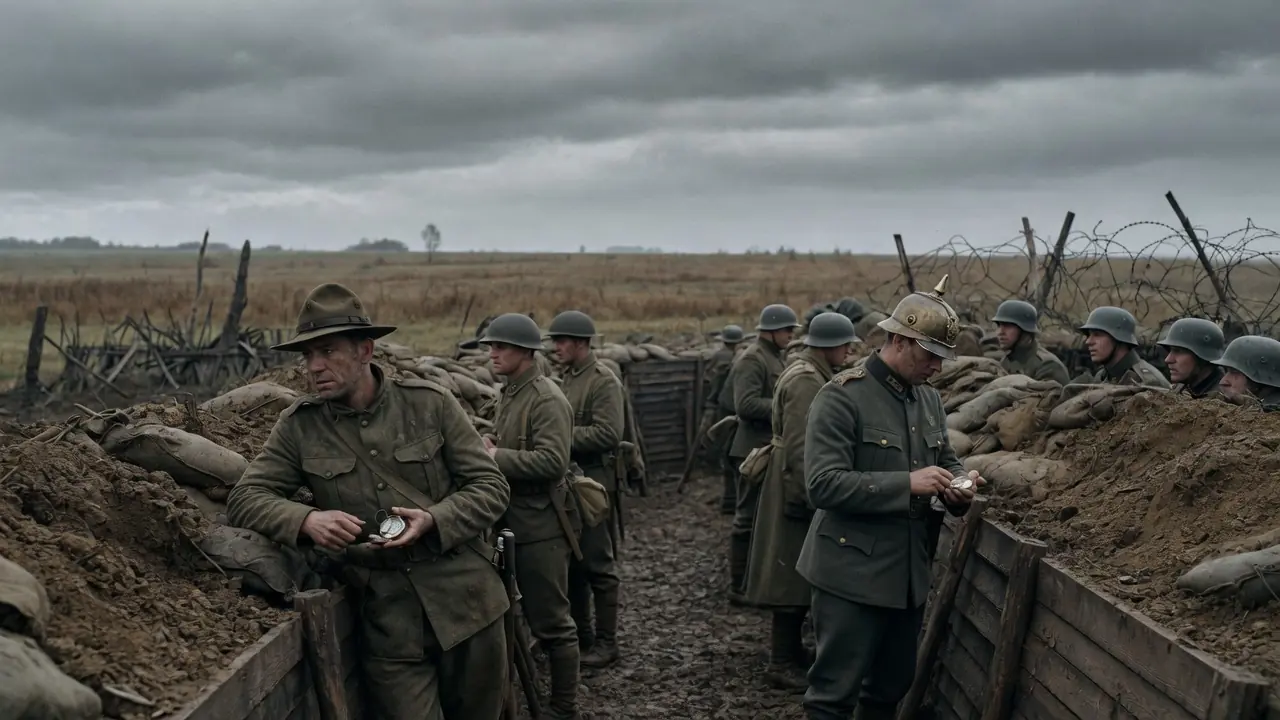
Henry Gunther
Henry Nicholas Gunther was born in Baltimore, Maryland, in 1895 to German-American parents.
He served in Company A, 313th Infantry Regiment, 79th Division of the American Expeditionary Forces.
Only weeks before the armistice, Gunther's military career had taken an unfortunate turn.
After writing a letter home criticizing military conditions, the contents were apparently shared beyond his family. Army censors intercepted the letter, and Gunther was reduced in rank from sergeant to private. Historians believe the demotion deeply affected him, and some have suggested—though no definitive evidence exists—that he may have hoped to restore his reputation through conspicuous bravery.
As the morning of November 11 unfolded, Gunther's unit advanced near the French village of Chaumont-devant-Damvillers, close to the Meuse River.
Everyone knew the ceasefire was approaching.
German soldiers knew it.
American soldiers knew it.
The clock continued to tick toward eleven.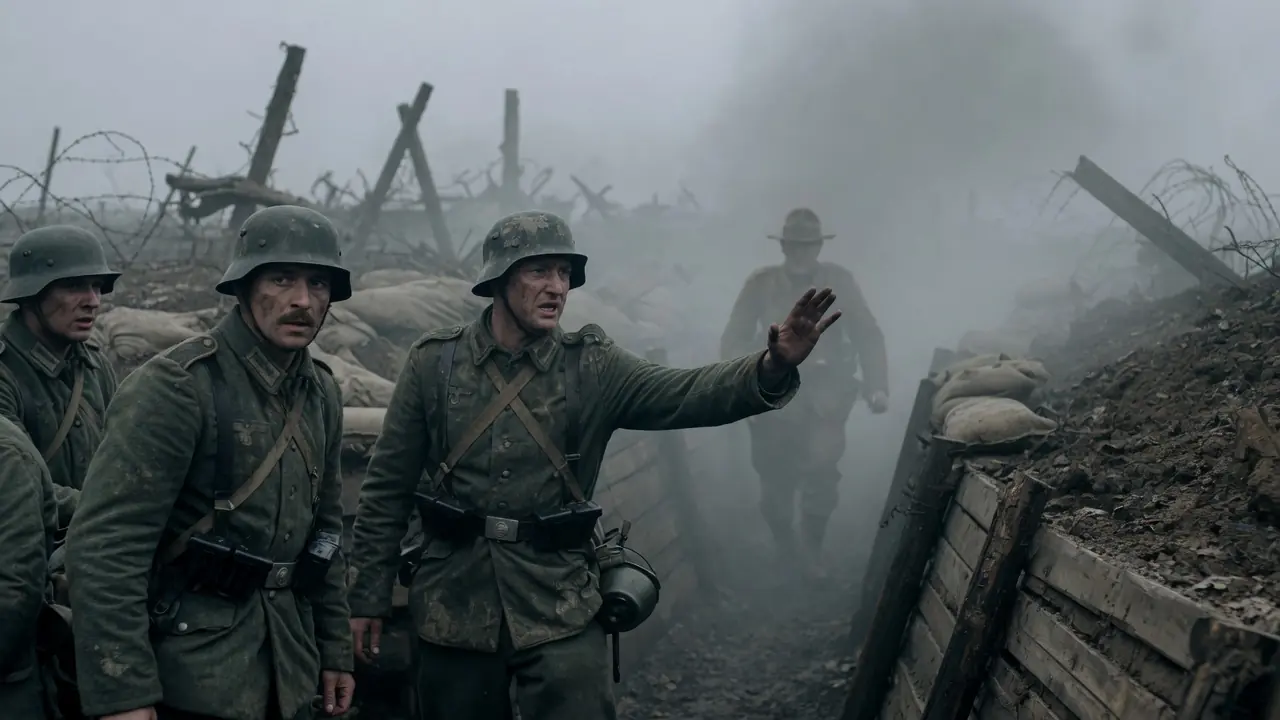
The Final Charge
Shortly before 11:00 a.m., Gunther's company encountered a small German machine gun position.
The German soldiers had little desire to continue fighting.
According to multiple eyewitness accounts recorded after the war, they realized the armistice was only moments away. Rather than immediately opening fire, they reportedly shouted warnings and motioned for Gunther to stop his advance.
Gunther did not stop.
Armed with his rifle and bayonet fixed, he continued charging toward the German position.
As he advanced, he fired his weapon while closing the distance.
The German machine gunners hesitated.
For a few moments, they deliberately fired wide, apparently hoping he would turn back.
Instead, Gunther kept moving forward.
Only when it became clear that he intended to attack the position did the Germans reluctantly fire directly at him.
Gunther was struck and killed instantly.
The time was approximately 10:59 a.m., just moments before the armistice took effect. While many popular retellings claim he died at exactly 10:59:00, the precise second cannot be verified from surviving historical records. What is well documented is that he was killed within the final minute before the ceasefire.
At 11:00 a.m., the guns fell silent across the Western Front.
After more than four years of war, an uneasy quiet settled over Europe.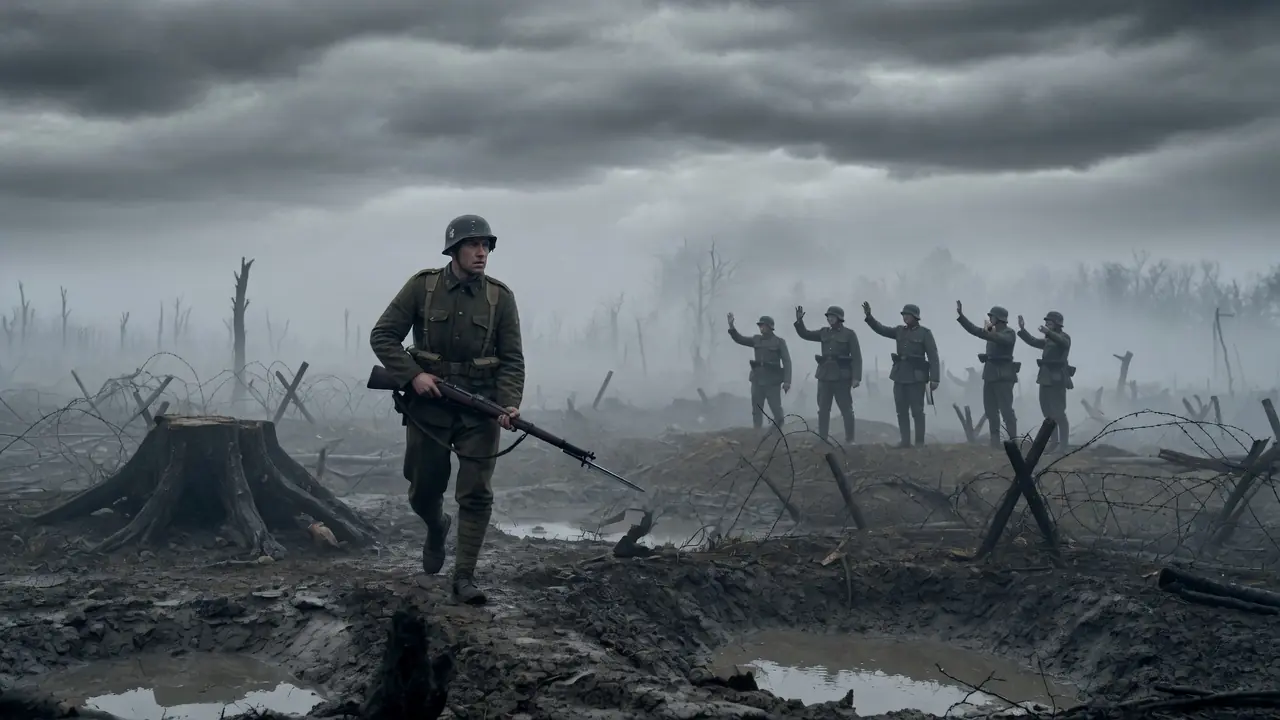
Aftermath
News of Gunther's death spread quickly through the American Expeditionary Forces.
Military authorities later reviewed the circumstances surrounding his final actions. Although historians cannot know exactly what motivated his charge, many contemporaries believed he had been attempting to demonstrate courage after his earlier demotion.
Following the war, the U.S. Army restored Gunther's rank of sergeant posthumously and awarded him the Distinguished Service Cross, recognizing his bravery in action.
He was initially buried in France before his remains were returned to Baltimore, where he was laid to rest with military honors.
Henry Gunther is widely recognized as the last American soldier killed in combat during World War I. While soldiers from other nations also died during the war's final minutes, Gunther's death became one of its most enduring symbols because it occurred when peace was literally seconds away.
His story also highlights one of the war's most controversial realities. Despite the armistice having been signed hours earlier, fighting continued until the exact moment the agreement took effect. Historians have long debated whether those final offensives—and the thousands of casualties they produced—were militarily necessary or represented a tragic consequence of rigid military doctrine.
For many, Henry Gunther's death came to symbolize the profound tragedy of World War I itself: a conflict that consumed millions of lives, and that claimed one final victim even as the world stood on the threshold of peace.