The Pope Who Walked Away: Benedict XVI's Historic Resignation
Prologue
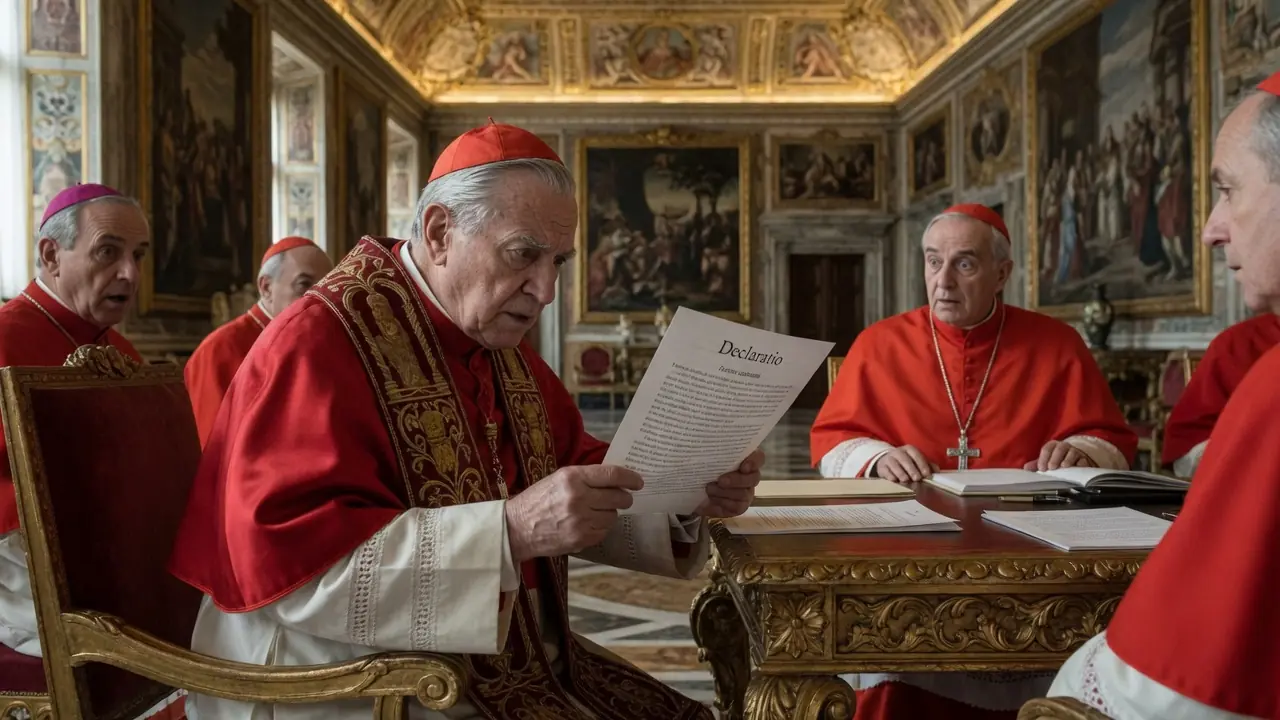
On the morning of February 11, 2013, cardinals gathered inside the Vatican for what appeared to be an ordinary consistory—a formal meeting to discuss the canonization of several saints.
Nothing about the schedule suggested history was about to be made.
Then Pope Benedict XVI began speaking—not in Italian, but in Latin, the traditional language of the Roman Catholic Church. As the elderly pontiff calmly read his prepared statement, confusion spread across the room. Many of the cardinals were listening carefully, translating his words in their minds.
Only gradually did they realize what he was saying.
The Pope was announcing that he would renounce the papacy.
For the first time in nearly six centuries, the head of the Roman Catholic Church had voluntarily decided to step down.
Historical Background
Joseph Ratzinger, born in Bavaria, Germany, in 1927, had long been one of the Catholic Church's foremost theologians. Before becoming pope, he served for more than two decades as Prefect of the Congregation for the Doctrine of the Faith, where he earned a reputation as a careful defender of Catholic doctrine.
Following the death of Pope John Paul II in April 2005, the College of Cardinals elected Ratzinger as the 265th pope, taking the name Benedict XVI.
His papacy unfolded during a period of enormous challenges. The Church faced growing secularization in many parts of the world, declining attendance in some Western countries, financial concerns within the Vatican, and the continuing fallout from clergy sexual abuse scandals. Benedict also undertook significant theological work, publishing major writings on Jesus Christ and emphasizing the relationship between faith and reason.
By the early 2010s, however, observers had begun noticing his increasingly fragile health. Although his mind remained sharp, the physical demands of leading more than one billion Catholics were becoming increasingly difficult.
Unlike many of his predecessors, Benedict came to believe that modern papal responsibilities required a level of physical strength he no longer possessed.
The Announcement That No One Expected
The announcement came near the end of the meeting.
Reading from a prepared Latin text, Benedict declared that after examining his conscience before God, he had reached certainty that his strength, "due to an advanced age," was no longer adequate for the Petrine ministry.
He announced that the See of Rome would become vacant on February 28, 2013, at 8:00 p.m. Rome time.
Many of the cardinals present did not immediately grasp what they had heard.
Latin remains the official language of many Vatican ceremonies, but it is no longer spoken conversationally by most participants. Several cardinals later recalled that the significance of Benedict's words only became clear after the meeting concluded and translations began circulating.
Among those reportedly surprised was Cardinal Angelo Sodano, the Dean of the College of Cardinals, who later publicly thanked Benedict for his service.
News agencies initially scrambled to verify the announcement before broadcasting what seemed almost unbelievable.
For generations of Catholics, the idea of a pope voluntarily resigning belonged to medieval history—not the modern world.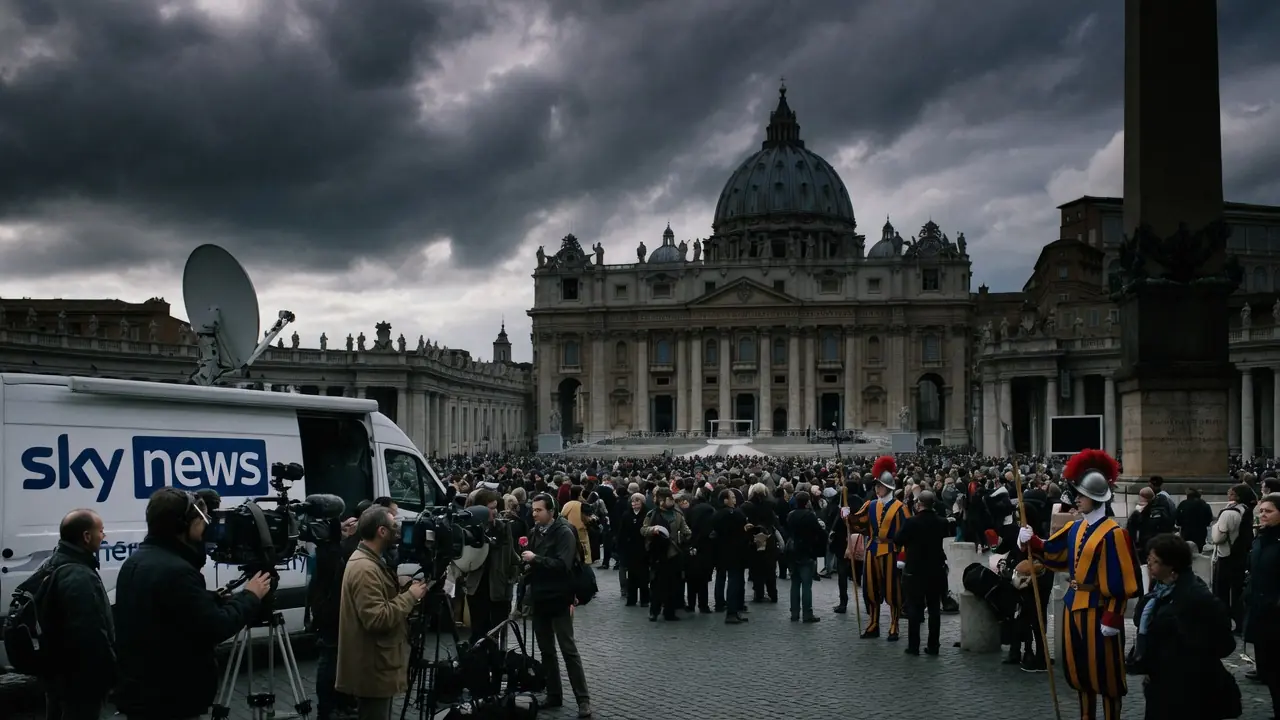
A Decision Without Modern Precedent
Although many headlines described Benedict as "the first pope to resign in 600 years," history is slightly more nuanced.
Several earlier popes had resigned under extraordinary circumstances. The best-known example is Pope Celestine V, who voluntarily abdicated in 1294 after only a few months in office.
The most recent papal resignation before Benedict's was Gregory XII in 1415, during the Western Schism. Gregory resigned as part of an effort to heal a division in which multiple rival claimants each asserted they were the legitimate pope.
What made Benedict's resignation remarkable was that it occurred not because of political crisis or Church division, but because he believed advancing age had diminished his ability to fulfill the office.
His decision effectively reintroduced the idea that the papacy, while a lifelong vocation in most circumstances, could also be relinquished if a pope judged himself physically unable to continue.
The World Reacts
Within hours, global news organizations interrupted regular programming.
Catholics gathered in churches around the world, many expressing disbelief. Religious scholars immediately began discussing the practical implications of having both a reigning pope and a retired pope living simultaneously—a situation virtually unknown in modern history.
Political leaders issued statements praising Benedict's humility.
The Vatican soon confirmed that after leaving office, Benedict would take the title Pope Emeritus and eventually reside in the Mater Ecclesiae Monastery within Vatican City.
Questions emerged that had never before required modern answers.
What would a retired pope wear?
How would he be addressed?
What role, if any, would he play after stepping down?
Most of these questions were resolved through custom rather than centuries of established precedent.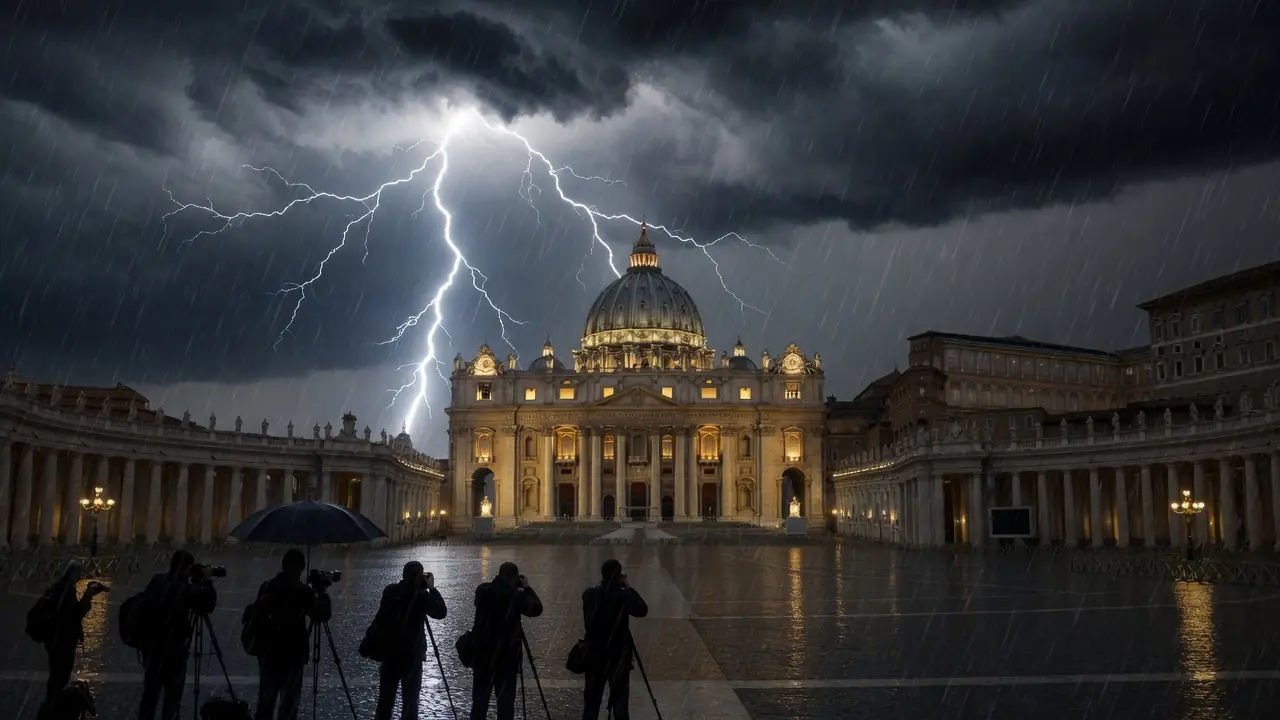
Lightning Over St. Peter's
Perhaps the most memorable image associated with Benedict's resignation was captured later that same day.
As a thunderstorm rolled over Rome, lightning struck the dome of St. Peter's Basilica.
Photographer Alessandro Di Meo of ANSA captured the dramatic moment, and the image quickly spread across the world.
For many observers, the timing seemed almost symbolic.
Some interpreted it as a divine sign, while others simply saw an extraordinary coincidence.
There is no historical or scientific evidence linking the lightning strike to Benedict's decision. Thunderstorms occasionally occur over Rome in February, and the photograph remains remarkable because of its timing rather than any demonstrable supernatural significance.
Even so, the image became one of the defining photographs of the event and remains among the most recognizable Vatican news images of the 21st century.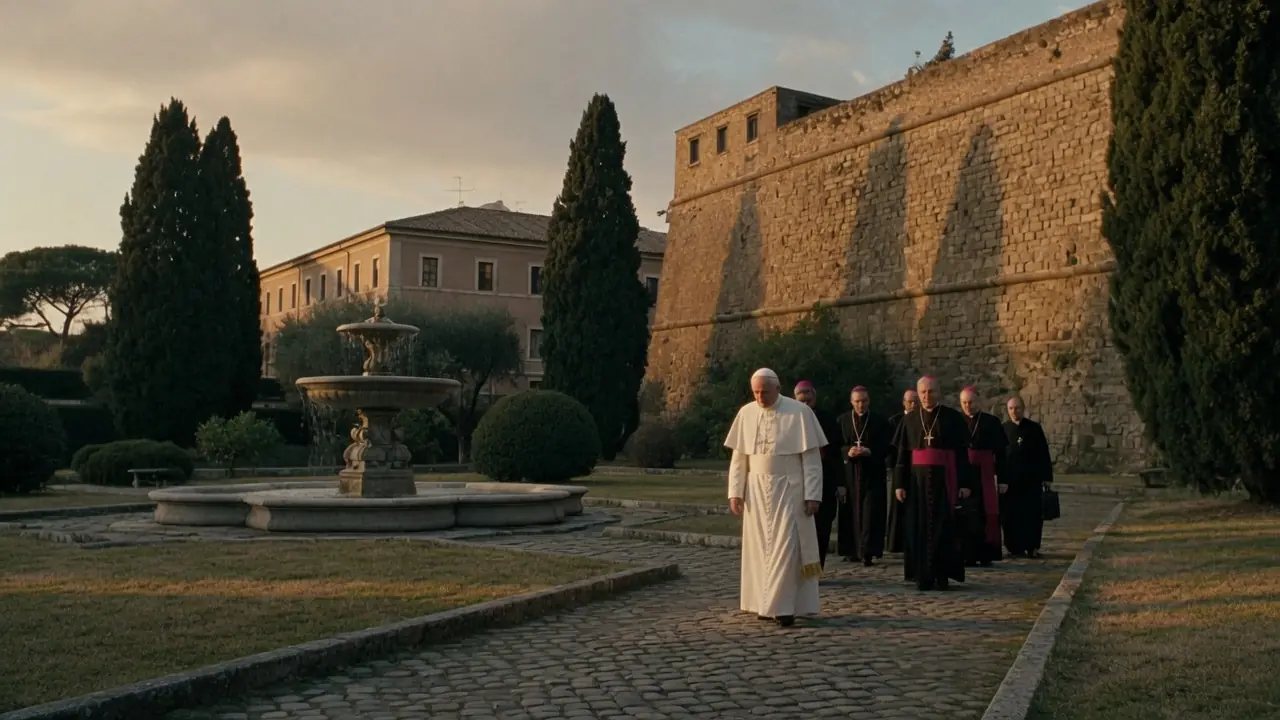
Aftermath
At precisely 8:00 p.m. on February 28, 2013, Benedict's resignation officially took effect.
As he departed the Vatican by helicopter for Castel Gandolfo, the Swiss Guard ended their ceremonial protection of him as reigning pope the moment his papacy concluded.
The Apostolic See entered a period known as sede vacante, during which the papal office remains vacant until a successor is elected.
In March 2013, the College of Cardinals assembled in conclave.
After several rounds of voting, they elected Cardinal Jorge Mario Bergoglio of Argentina.
He became Pope Francis, the first Jesuit pope and the first pope from the Americas.
Meanwhile, Benedict lived quietly inside Vatican City, dedicating himself to prayer and study while largely avoiding public involvement in Church governance.