Abraham Lincoln's Last Plea for Peace: The Cincinnati Speech Before the Civil War
Prologue
On February 12, 1861, Abraham Lincoln turned 52 years old. Instead of celebrating with family or friends, the president-elect spent the day aboard a train winding its way toward Washington, D.C., where he would soon take the oath of office. The nation he was preparing to lead was already coming apart.
Seven Southern states had declared their secession from the Union following Lincoln's election just three months earlier. They had formed the Confederate States of America, elected Jefferson Davis as their president, and seized many federal installations across the South. Yet despite the crisis, no major battle had been fought. The American Civil War had not officially begun.
Lincoln still believed there was a narrow path to peace.
One of the most significant moments of that journey came when his train stopped in Cincinnati, Ohio—a bustling city separated from the slave state of Kentucky by little more than the Ohio River. Speaking to a crowd that included both loyal Union supporters and skeptical Southerners, Lincoln made one of his final public appeals for reconciliation before the first shots of war were fired.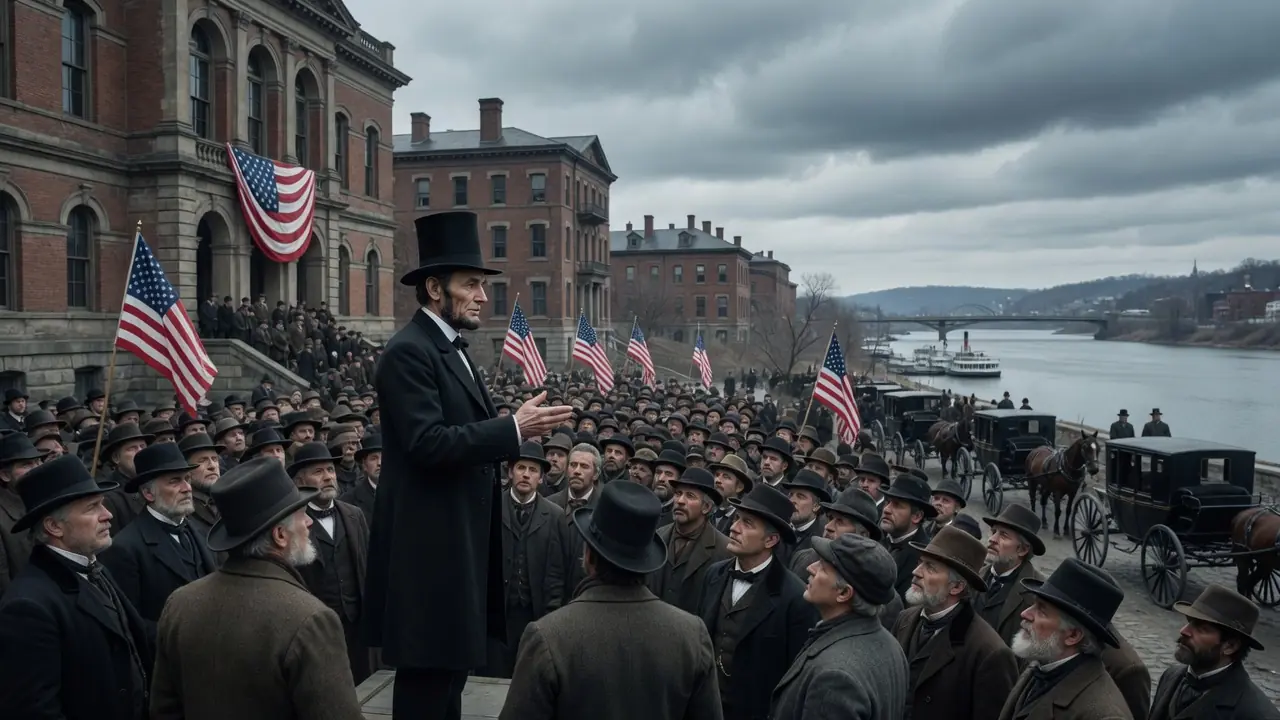
Historical Background
The election of 1860 had exposed deep divisions that had been growing in the United States for decades.
At the center of the conflict stood the issue of slavery. Northern states increasingly opposed the expansion of slavery into western territories, while many Southern leaders viewed any restriction as a threat to their economic system and political influence.
Lincoln, the Republican nominee, won the presidency without carrying a single Southern state. Although he repeatedly insisted he had no constitutional authority to abolish slavery where it already existed, many white Southerners believed his election signaled the beginning of slavery's eventual destruction.
Even before Lincoln left Springfield, Illinois, for Washington, South Carolina and six other Deep South states had already voted to leave the Union. On February 4, 1861, delegates met in Montgomery, Alabama, to establish the Confederate government. Jefferson Davis was elected provisional president just two days after Lincoln departed on his inaugural journey.
Meanwhile, rumors of assassination plots surrounded Lincoln's trip east. Security was unusually tight, yet he insisted on making numerous public appearances, believing Americans deserved to hear directly from their incoming president.
Among the most important stops was Cincinnati.
The city occupied a unique place in America's sectional conflict. Located on the northern bank of the Ohio River, it faced Covington and Newport, Kentucky, where slavery remained legal. Families, businesses, and churches stretched across both sides of the river. Lincoln knew many Kentuckians would be listening carefully to every word he spoke.
Rising Tension
When Lincoln addressed the Cincinnati crowd, he understood he was speaking not only to Ohioans but also to citizens of Kentucky and the wider South.
Many in the audience were openly hostile toward him. Newspapers throughout the South had portrayed him as a dangerous radical intent on destroying Southern society. Although that portrayal ignored much of what Lincoln had actually said during the campaign, distrust had hardened into fear.
Rather than respond with threats, Lincoln appealed to shared history.
He reminded listeners that the nation's founders—including George Washington, Thomas Jefferson, and James Madison—had governed a Union that included both free and slave states. Lincoln argued that his administration intended to treat the Southern states with the same constitutional respect that those early presidents had shown.
During his remarks, he declared:
"We mean to treat you, as near as we possibly can, as Washington, Jefferson, and Madison treated you."
The statement reflected Lincoln's consistent position before the Civil War. He opposed the expansion of slavery but also insisted that, under the Constitution as he understood it, the federal government would not interfere with slavery in states where it already legally existed.
His goal remained preserving the Union.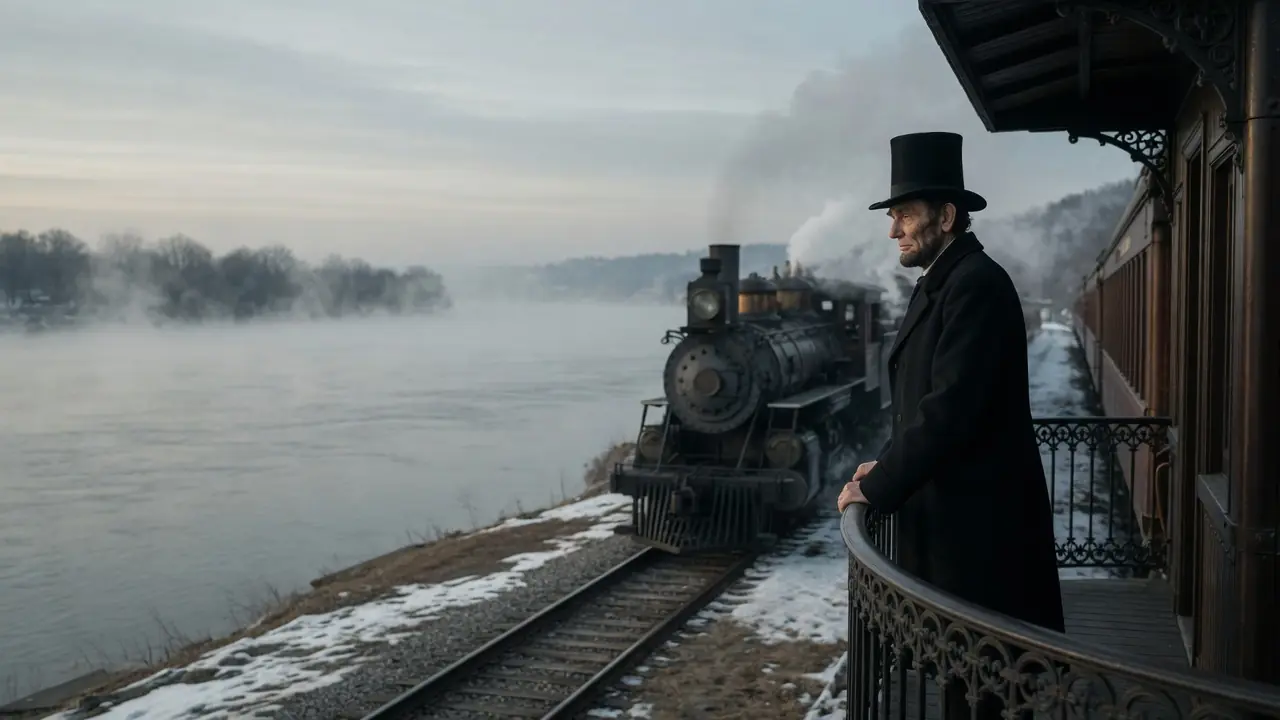
The Main Event
Lincoln's speech balanced reassurance with unwavering resolve.
He acknowledged that many Southerners doubted his intentions. He urged them not to judge him based on rumors or political rhetoric but on the principles established by the nation's founders and the Constitution itself.
Yet there was one point on which he would not compromise.
The Union, he believed, was perpetual. Individual states had no constitutional right to dissolve it unilaterally.
Near the conclusion of his remarks, Lincoln delivered one of the clearest warnings of his pre-presidential journey:
"We shall not, in any event, surrender the Government unless it is forced from us."
The statement was carefully chosen.
It was not a declaration of war.
It was a declaration that the federal government would continue to exist and would not voluntarily abandon its constitutional authority.
Lincoln hoped this firmness might convince secessionists that compromise remained possible without disunion. At the same time, he wanted Union supporters to know that the government would not simply disappear under pressure.
The speech reflected the delicate balance Lincoln tried to maintain throughout the secession crisis: extending every possible assurance short of recognizing the legality of secession.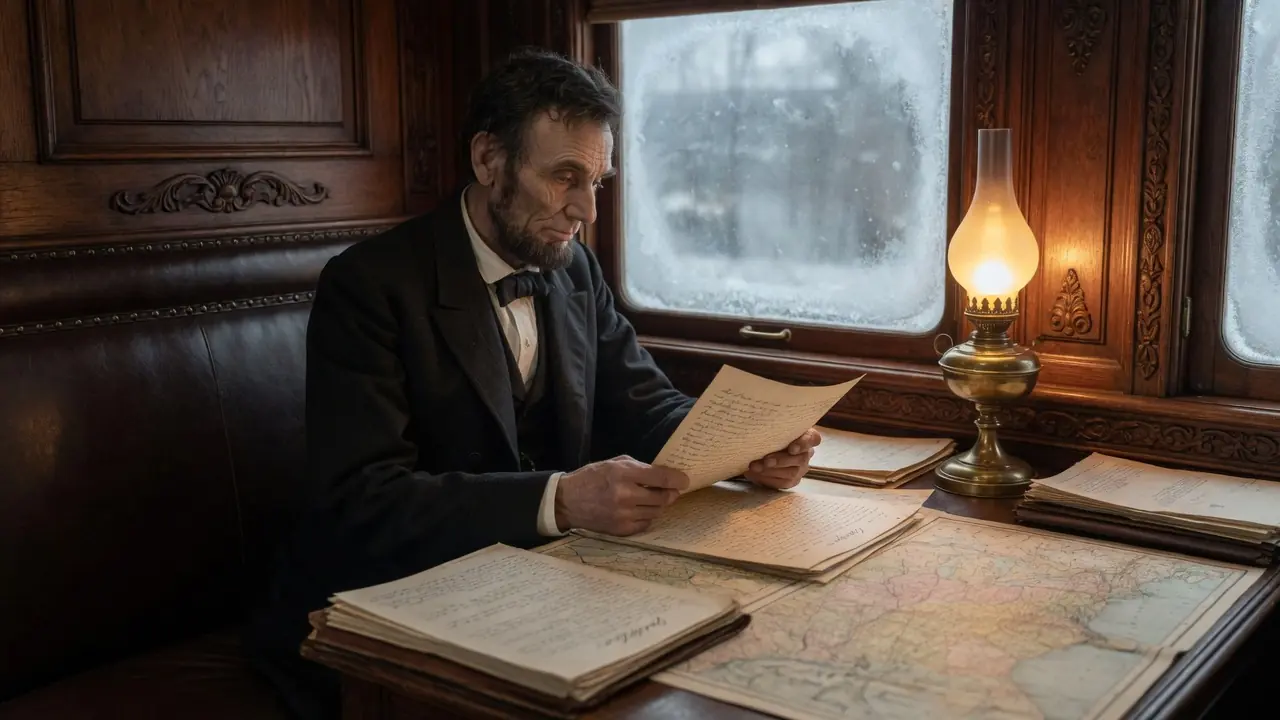
Turning Point
Despite Lincoln's appeals, events were moving beyond the reach of speeches.
The newly formed Confederate government continued organizing its military forces.
Federal forts across the South remained points of confrontation, particularly Fort Sumter in Charleston Harbor, South Carolina. The question of whether the United States would continue supplying the fort became increasingly urgent.
Lincoln reached Washington later in February after secretly passing through Baltimore because of credible concerns about an assassination plot. On March 4, 1861, he delivered his First Inaugural Address, once again assuring Southern states that he had no intention of interfering with slavery where it already existed.
He concluded with another famous appeal:
"We are not enemies, but friends. We must not be enemies."
Even then, reconciliation remained his hope.
But by April, time had run out.
On April 12, 1861, Confederate forces opened fire on Fort Sumter.
The Civil War had begun.
Aftermath
Lincoln's Cincinnati speech soon became one of the final public expressions of his effort to prevent armed conflict through persuasion.
Once war erupted, preserving the Union became the central objective of his presidency.
Over the next four years, the conflict claimed the lives of an estimated 750,000 people according to many modern demographic estimates, though historians continue to debate the exact number. It transformed the United States politically, economically, and socially.
As the war progressed, Lincoln's own policies evolved. What began primarily as a struggle to preserve the Union increasingly became a fight against slavery itself. The Emancipation Proclamation of 1863 and the eventual ratification of the Thirteenth Amendment fundamentally reshaped the nation.
Yet in February 1861, those outcomes were still unknown.
Lincoln was still searching for peace.