The Forgotten Front: The Battle of Attu and the Only World War II Land Battle Fought in North America
Prologue
When most people think of World War II, they picture the beaches of Normandy, the jungles of the Pacific, or the streets of Berlin. Few realize that for nearly a year, enemy forces occupied part of American territory itself.
In 1942, Imperial Japan captured two remote islands in Alaska's Aleutian chain. The occupation marked the first time since the War of 1812 that a foreign power had seized American soil. To most Americans, the islands seemed insignificant. To military planners on both sides of the Pacific, however, they held strategic value.
One year later, one of the war's harshest battles would unfold in one of the most unforgiving environments on Earth. The fight for Attu Island would prove that nature itself could be as deadly as the enemy.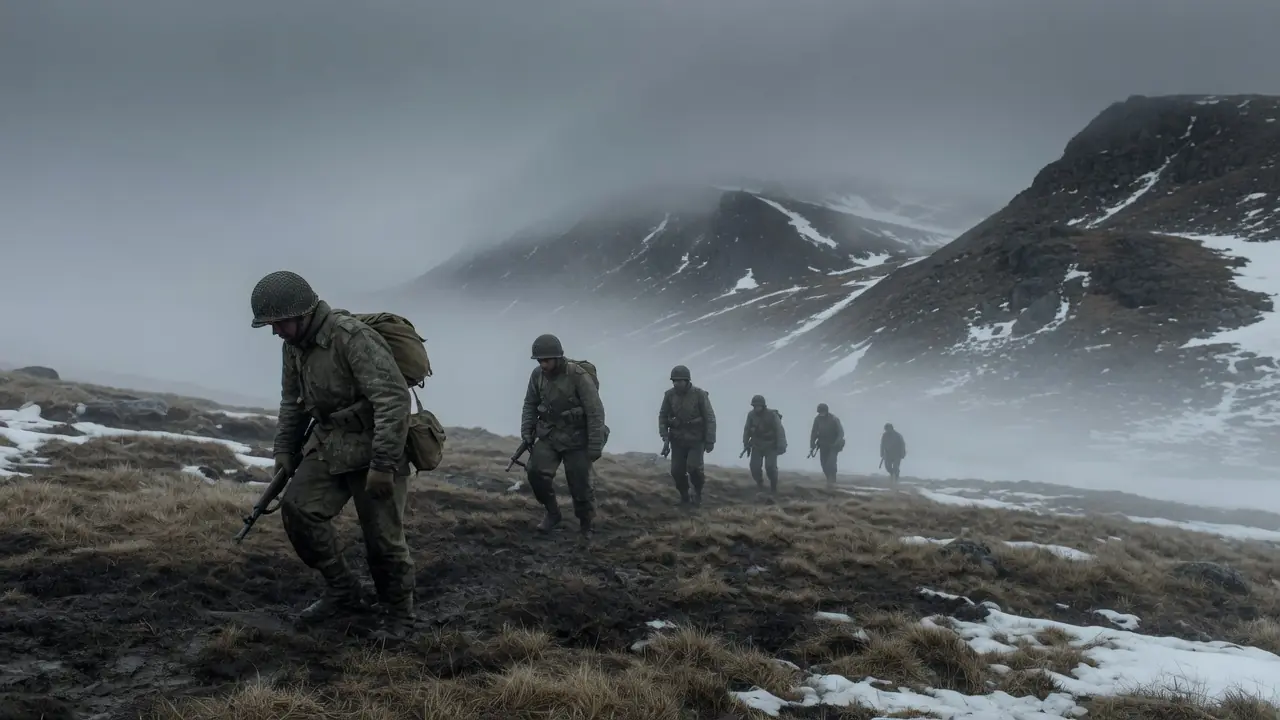
Historical Background
The Aleutian Islands stretch like a long chain of volcanic peaks from mainland Alaska toward Asia, separating the Pacific Ocean from the Bering Sea. Their isolated location, freezing weather, and nearly constant fog made them seem an unlikely battlefield.
By 1942, however, the Pacific War had expanded rapidly. Following the attack on Pearl Harbor, Japan sought to strengthen its defensive perimeter across the Pacific. As part of its broader Operation AL, launched alongside the Battle of Midway, Japanese forces targeted the western Aleutians.
On June 6–7, 1942, Japanese troops occupied Attu and Kiska, the two westernmost inhabited Aleutian Islands. Attu's small civilian population—primarily Unangan (Aleut) residents—was uprooted. Many were taken to Japan, while others were evacuated elsewhere. The occupation shocked the United States, becoming the only successful foreign occupation of American territory during World War II.
Although the islands offered limited economic value, they carried enormous symbolic importance. American leaders could not allow enemy forces to maintain a foothold on U.S. soil.
Preparing to Reclaim American Soil
For nearly a year, Japanese forces fortified Attu.
Approximately 2,300 soldiers, commanded by Colonel Yasuyo Yamasaki, constructed defensive positions across the island's steep ridges, rocky valleys, and mountain slopes. Rather than defending the beaches, Yamasaki planned to draw any American invasion deep into the island before launching determined counterattacks.
The United States prepared Operation Landcrab, assigning the 7th Infantry Division to retake the island.
Military planners expected difficult combat.
What they underestimated was the environment.
Attu was a frozen wilderness. Temperatures hovered near freezing even in spring. Thick fog could reduce visibility to only a few yards. Soldiers climbed slippery mountains covered in snow, mud, and loose volcanic rock while carrying heavy packs. Frostbite, trench foot, exhaustion, and exposure became constant companions.
Many veterans later recalled that the weather was as relentless as the fighting itself.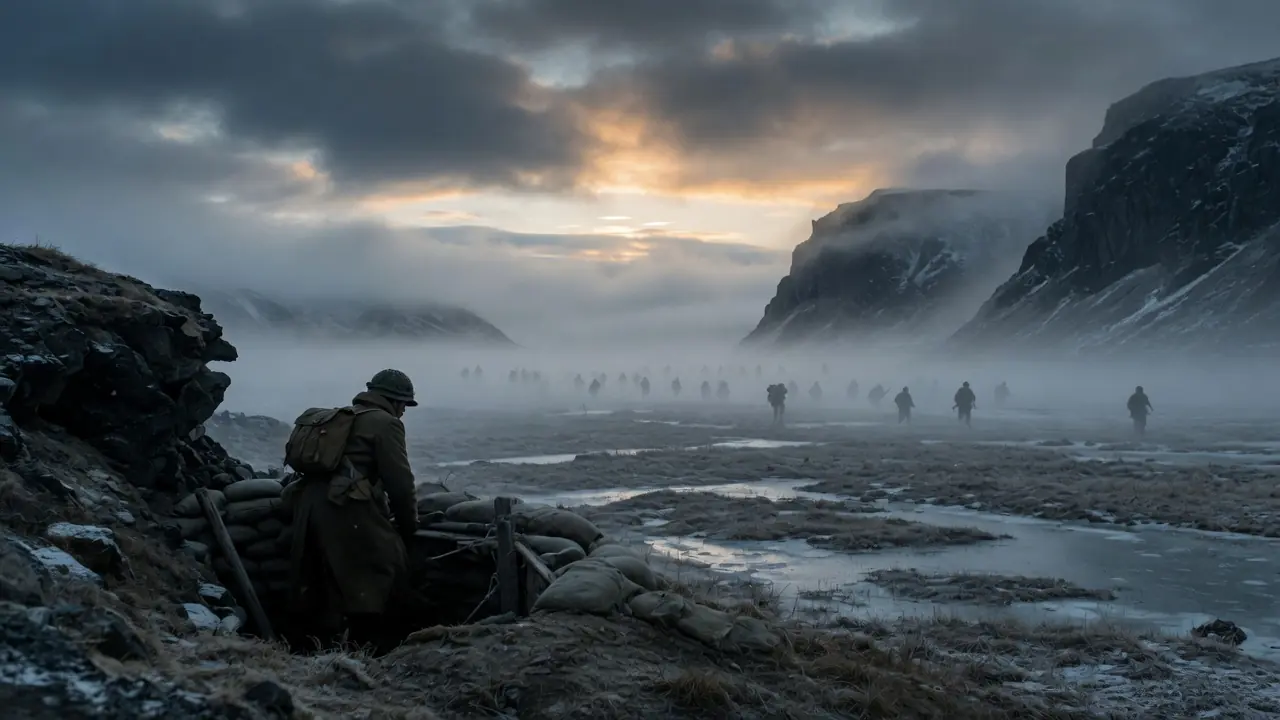
The Battle Begins
On May 11, 1943, American forces landed on Attu.
The initial landings encountered relatively little resistance because Japanese defenders had withdrawn into the island's rugged interior. But as American troops advanced inland, they entered a maze of steep ridges, hidden caves, and fortified positions.
Every hill became a battlefield.
Dense fog often prevented artillery observers from seeing their targets. Air support was frequently grounded by poor weather. Soldiers advanced only a few hundred yards at a time before encountering machine-gun nests or sniper fire hidden among the rocks.
The miserable terrain slowed both sides.
Mud swallowed vehicles.
Supplies had to be carried by hand across mountains.
Casualties mounted steadily—not only from combat, but from exposure to the unforgiving climate.
The Largest Banzai Charge in the Aleutians
After nearly three weeks of continuous fighting, Colonel Yamasaki understood that defeat was inevitable.
Rather than surrender, he chose one final assault.
Before dawn on May 29, 1943, approximately 800 to 1,000 surviving Japanese soldiers, joined by many wounded who could still fight, launched a massive banzai charge against American positions near Engineer Hill. (Popular internet accounts often state that all 2,300 Japanese soldiers participated, but by this stage of the battle, most had already been killed or wounded.)
The attack smashed through parts of the American front lines.
Hand-to-hand combat erupted as Japanese troops charged with rifles, bayonets, grenades, and improvised weapons.
Field hospitals and rear-echelon units suddenly found themselves fighting for survival.
The assault became one of the largest and most desperate banzai charges of the Pacific War.
Eventually, American forces regrouped and halted the attack after hours of brutal fighting.
Colonel Yamasaki was killed during the final assault.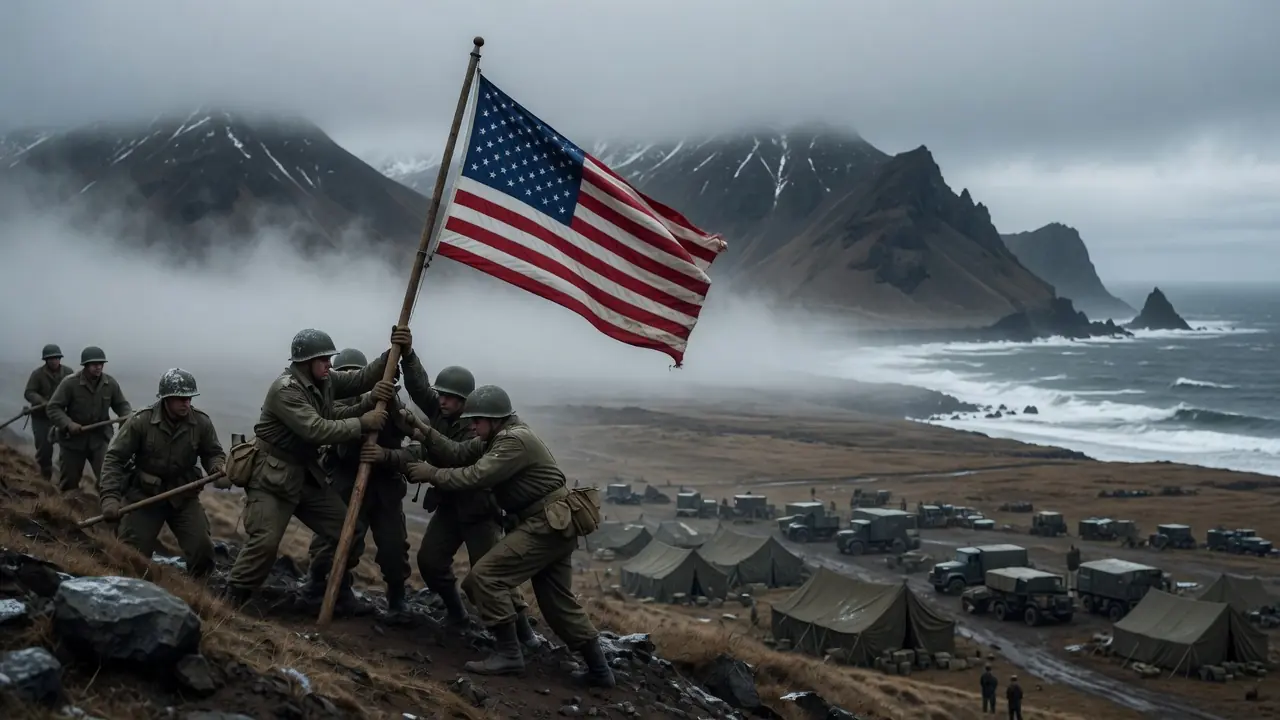
Victory at a Tremendous Cost
By May 30, 1943, organized Japanese resistance had ended.
The battle had lasted just under three weeks.
American forces suffered 549 killed, more than 1,100 wounded, and several thousand additional casualties from disease, frostbite, and other non-battle injuries caused by the brutal environment.
Of the approximately 2,350 Japanese defenders, only 28 were taken prisoner. The overwhelming majority died during the battle or took their own lives rather than surrender, reflecting the Imperial Japanese Army's military doctrine at the time.
Attu had been reclaimed.
Several months later, Japanese forces secretly evacuated nearby Kiska Island under cover of heavy fog before Allied troops arrived, bringing the Aleutian Campaign to a close.